Sourcing cheap athletic wear is not about chasing the lowest quote in your inbox. For brands, gyms, schools, clubs and online retailers, the real goal is to lower cost without creating the kind of quality problems that turn into returns, bad reviews, delayed launches and dead inventory.
The gap between a profitable order and an expensive mistake often comes down to the sourcing process. If your supplier gets the fabric weight wrong, cuts the sizing inconsistently or prints logos that crack after a few washes, the unit price no longer matters. You paid less upfront, but you lost margin later.
A smarter approach is to control the details that affect performance, consistency and landed cost before bulk production starts. This guide walks through how to source affordable athletic apparel while protecting the areas customers actually notice: fit, comfort, durability, color, branding and wash performance.
Redefine “cheap” as cost-efficient, not low-grade
Cheap athletic wear should mean well-priced apparel that still performs for its intended use. It should not mean thin fabric, weak seams or generic products that feel disposable after two training sessions.
For buyers in the USA, Canada, Europe, Australia, Germany, Poland and Brazil, the best sourcing decisions usually balance four factors: product quality, order flexibility, customization options and total landed cost. A low unit price can be useful, but only when it fits into the full business model.
| Cost decision | Safe way to reduce cost | Risky shortcut |
|---|---|---|
| Fabric | Choose a proven mid-weight performance fabric suited to the sport | Pick the cheapest fabric without checking opacity, stretch or shrinkage |
| Branding | Use one strong decoration method per style | Add multiple complex logos, trims and labels before testing demand |
| MOQ | Start with a controlled low MOQ for new designs | Overbuy untested styles just to reach a lower unit price |
| Packaging | Use clean, brand-appropriate packaging | Pay for premium packaging before confirming sell-through |
| Production | Standardize fits, colors and trims across styles | Change specifications every order and lose consistency |
This is the mindset shift that protects your margin. You are not just buying garments. You are buying customer confidence, repeatability and the ability to reorder without surprises.
Start with a clear product specification before asking for quotes
Many quality gaps begin before a supplier ever touches fabric. If you send vague requests like “need cheap gym shirts” or “send price for leggings,” suppliers have to guess. One supplier may quote basic polyester, another may quote a higher-stretch blend, and a third may include custom labels and packaging. The prices will look comparable, but the products will not be.
A strong tech pack or product specification gives each supplier the same target. It also helps you compare quotes fairly.
At minimum, your specification should include:
- Garment type, such as training T-shirt, compression shorts, tracksuit, hoodie or team uniform
- Fabric composition, weight and stretch requirement
- Fit type, such as athletic fit, relaxed fit, compression fit or oversized fit
- Size range and target market measurements
- Stitching and construction preferences
- Logo method, such as sublimation, screen printing or embroidery
- Labeling, hang tags, poly bags and packaging needs
- Target order quantity and expected reorder plan
If you are developing gym apparel rather than buying blanks, it helps to review examples of custom wholesale gym clothes so you can think through fabric, fit, branding and private-label requirements before requesting production pricing.
Choose the right sourcing model for your business stage
The best sourcing route depends on whether you need speed, originality, cost control or brand ownership. A startup testing its first drop has different needs than a school ordering uniforms or a private-label brand planning seasonal collections.
| Sourcing model | Best for | Main advantage | Main limitation |
|---|---|---|---|
| Stock blanks | Very small tests, urgent local needs | Fast availability | Limited differentiation and fit control |
| Wholesale athletic wear | Retailers needing simple inventory | Easier ordering and lower setup work | Less control over fabrics and branding |
| Cut-and-sew manufacturing | Brands, teams and gyms needing custom products | Full control over fit, fabric and design | Requires better specifications and sampling |
| Private-label production | Online stores and growing apparel brands | Brand ownership and repeatable collections | Needs planning around labels, packaging and reorders |
For many growing brands, cut-and-sew production offers the strongest long-term value because you can control the garment from pattern to packaging. Extreme Sportswear supports custom sportswear manufacturing, private-label production, low MOQ orders, fast sampling, sublimation printing, screen printing, embroidery and fabric customization from Pakistan for international buyers.
That flexibility matters when you want affordable pricing but do not want your product to look like every other generic item in the market.
Compare suppliers on more than unit price
A cheap quote can hide expensive problems. Before placing a bulk order, evaluate how the manufacturer works, not just what they charge.
Ask direct questions about production capability, sample timelines, customization methods, fabric sourcing and quality control. A reliable manufacturer should be able to explain what is possible at your target budget and where cutting cost may create risk.
Pay attention to these supplier signals:
- Clear communication about fabric, printing, trims and sizing
- Willingness to produce samples before bulk production
- Experience with sportswear, activewear, teamwear or uniforms
- Ability to handle low MOQ or staged production for new buyers
- Realistic production timelines rather than vague promises
- Knowledge of export packaging and documentation
- Consistency between sample quality and bulk production expectations
If you are still building your supplier list, this guide on how to find unbranded gym clothing wholesale suppliers online can help you understand where buyers usually search and what to verify before committing.
Use sampling to catch expensive issues early
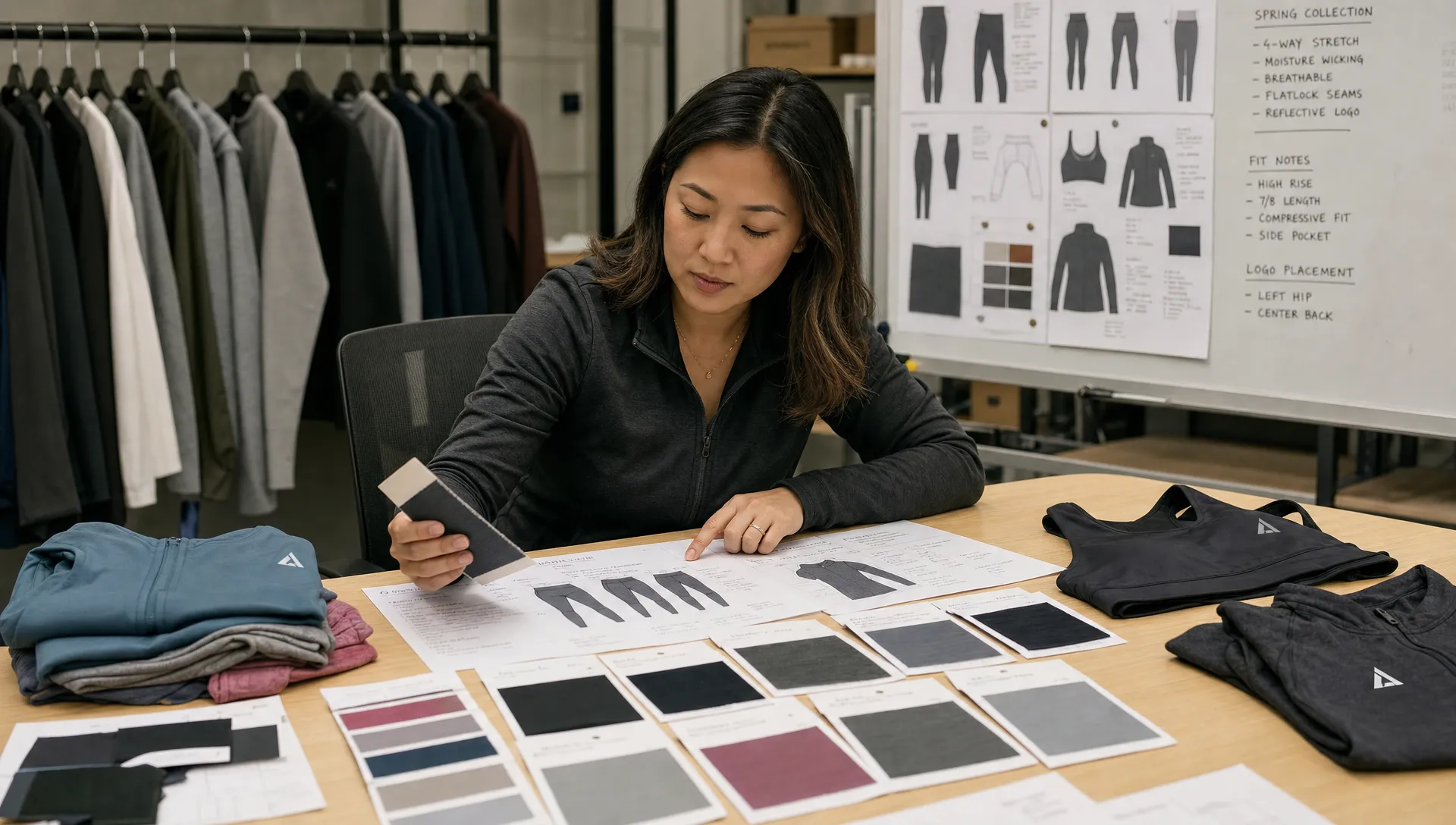
Skipping samples to save money is one of the most common ways buyers create costly quality gaps. A sample is not just a visual preview. It is your chance to test fit, fabric behavior, logo placement, stitching and comfort before production scales.
For athletic wear, sampling should answer practical questions. Does the shirt cling when sweaty? Are leggings squat-proof? Does the waistband roll? Does the embroidery feel too heavy? Does the sublimated color match your brand palette? Are the sleeves, inseam and rise suitable for your target market?
| Sample type | What it checks | When to use it |
|---|---|---|
| Prototype sample | Overall design, fabric choice, basic fit and construction | Before approving a new style |
| Size set sample | Fit consistency across sizes | Before producing multiple sizes |
| Pre-production sample | Final approved version with correct labels, trims and artwork | Before bulk production begins |
| Shipment sample | Random product from finished goods | Before balance payment or dispatch |
For brands that want repeat orders, the sample should also become your reference standard. Keep one approved sample sealed and documented. If future bulk production drifts from that approved version, you have something concrete to compare against.
Know where you can save and where you should not
Not every product detail deserves the same budget. Some decisions can reduce cost with little customer impact, while others directly affect performance and perceived value.
You can often save safely by reducing unnecessary design complexity. For example, a clean training short with one logo and standard drawcord may sell better than a heavily customized version with multiple panels, contrast stitching, rubber patches and specialty trims. Every added detail can increase setup time, waste and labor.
Fabric and fit are different. Customers feel those immediately. If the fabric is too thin, too hot, too stiff or too weak, the product will look cheap no matter how good the branding is.
A practical rule is to protect the parts that touch performance:
- Fabric hand feel, stretch and recovery
- Seam strength in high-stress areas
- Waistband comfort and stability
- Colorfastness and wash performance
- Fit consistency across sizes
- Logo durability after repeated wear and washing
You can simplify decoration, packaging or color count, but do not blindly downgrade core fabric and construction. Those choices are what separate affordable athletic wear from disposable apparel.
Build a quality control checklist before production
Quality control should not be left to “please make good quality.” That phrase means different things to different people. Define the checks your supplier must follow and confirm how issues will be handled before bulk production begins.
For athletic apparel, your checklist should cover measurements, stitching, fabric, printing, labeling and packing. If you sell in the United States, the Federal Trade Commission provides guidance on textile labeling requirements, including fiber content and country of origin. For the European Union, textile fiber labeling is covered under Regulation (EU) No 1007/2011.
| QC area | What to check | Why it matters |
|---|---|---|
| Measurements | Chest, waist, hip, inseam, sleeve length and garment length | Prevents fit complaints and size returns |
| Fabric | Weight, stretch, opacity, hand feel and color | Confirms the bulk fabric matches the approved sample |
| Stitching | Seam type, skipped stitches, loose threads and stress points | Reduces tearing during training or repeated washing |
| Decoration | Logo placement, print clarity, embroidery density and color match | Protects brand presentation |
| Labels | Size, care, fiber content and country of origin | Helps meet market requirements |
| Packing | Poly bags, cartons, size ratios and barcode placement | Prevents warehouse and fulfillment problems |
Calculate landed cost, not just factory price
A factory quote only tells part of the story. The real cost of cheap athletic wear includes everything required to get the product ready for sale in your market.
Your landed cost may include product cost, sample cost, artwork setup, labels, packaging, freight, duties, customs brokerage, inspection fees, payment fees, warehousing and defect allowance. If you compare suppliers only by FOB or ex-factory price, you may choose a quote that looks cheaper but becomes more expensive after shipping or corrections.
A simple landed cost formula is:
Landed cost per unit = total product cost + customization + packaging + freight + duties + inspection + payment and handling fees, divided by total sellable units.
For U.S. importers, classification and duties depend on product type, fiber content and construction. The U.S. Customs and Border Protection guide to importing into the United States is a useful starting point, but apparel importers should also confirm HS codes with a qualified customs broker.
This is especially important for athletic wear because small specification changes can affect classification. A cotton hoodie, polyester compression shirt, woven tracksuit pant and sublimated team jersey may not be treated the same way.
Use low MOQ strategically
Low MOQ is valuable when you are testing a new market, launching a first collection or producing for a specific gym, team or club. It lets you validate demand without tying too much cash into inventory.
The mistake is treating low MOQ as a permanent substitute for planning. Small runs usually cost more per unit because setup, sampling and production preparation are spread across fewer garments. That can still be the right decision if it prevents overstock, but once a product proves demand, you should evaluate larger batches or repeat-order planning.
If you are preparing for a larger order, this article on buying from a fitness wear manufacturer explains why bulk production can improve pricing, customization and long-term supply planning.
A good sourcing strategy often looks like this: start with a low MOQ to test the style, gather feedback, refine the fit, then reorder the winners in larger quantities. That creates a lower-risk path to better margins.
Negotiate by simplifying the product, not pressuring quality
If a supplier’s quote is above your target, ask what can be adjusted without damaging the garment. Professional manufacturers can usually recommend cost-saving changes if you give them the right direction.
Instead of saying “make it cheaper,” ask questions such as:
- Can we reduce cost by using a standard fabric that is already available?
- Would fewer colorways improve production efficiency?
- Can we keep the same garment quality but simplify packaging?
- Is there a better decoration method for this order size?
- What price break is available at the next MOQ level?
- Which trims are increasing cost the most?
This approach keeps the conversation focused on engineering value. You may discover that a small design adjustment saves more money than pushing the manufacturer to use weaker fabric or rushed labor.
Watch for red flags before sending a deposit
Not every supplier offering cheap athletic wear is equipped to deliver consistent results. Some are trading companies with limited control over production. Others may be legitimate factories but inexperienced with performance apparel.
Be careful if a supplier refuses samples, avoids written specifications, gives unusually low prices without explaining materials or cannot show relevant sportswear experience. Also be cautious with unrealistic delivery promises. Fast production is useful, but athletic wear still requires pattern work, fabric preparation, cutting, sewing, decoration, finishing and inspection.
The biggest red flag is inconsistency. If the supplier changes fabric details, ignores measurements or answers technical questions vaguely before you order, those problems usually become larger during production.
Create a repeatable sourcing workflow
A reliable process helps you source affordable athletic wear again and again without rebuilding everything from scratch. It also makes it easier to compare suppliers, improve margins and scale winning styles.
Use this workflow as a practical baseline:
- Define your target customer, activity and retail price.
- Build a product specification with fabric, fit, sizes, decoration and packaging.
- Request quotes from manufacturers using the same specification.
- Compare total value, not just unit price.
- Order samples and test fit, comfort, wash performance and branding.
- Approve a final pre-production sample in writing.
- Confirm QC standards, tolerances, labeling and packing before bulk production.
- Inspect finished goods before shipment when possible.
- Track customer feedback and improve the next order.
This is how you avoid quality gaps while still keeping costs competitive. The process takes more discipline upfront, but it reduces guesswork and protects your brand after the products reach customers.
Frequently Asked Questions
What is the best way to source cheap athletic wear for a new brand? Start with a clear product specification, request samples from experienced sportswear manufacturers and use low MOQ production to test demand before scaling. Avoid choosing a supplier based only on the lowest quote.
Can cheap athletic wear still be good quality? Yes, if the savings come from efficient production, simplified design, smart fabric selection and controlled MOQs rather than weak materials or poor construction.
What should I check in an athletic wear sample? Check fit, fabric feel, opacity, stretch recovery, stitching, logo placement, print or embroidery durability, labels and wash performance. Compare the sample against your written specification.
Is cut-and-sew better than buying wholesale blanks? Cut-and-sew is better when you need custom fit, private labeling, fabric control or unique designs. Wholesale blanks can work for very small or urgent orders, but they limit differentiation.
How do I avoid overpaying for low-cost athletic wear? Calculate landed cost instead of only factory price. Include freight, duties, packaging, inspection, payment fees and defect allowance so you understand the real cost per sellable unit.
Source affordable athletic wear with fewer quality risks
Extreme Sportswear helps brands, gyms, teams and retailers produce custom athletic wear with flexible manufacturing options, including private label production, low MOQ orders, fast sampling, cut-and-sew services, sublimation printing, screen printing, embroidery, uniform manufacturing and fabric or packaging customization.
If you want lower pricing without sacrificing the details that make customers reorder, start with a clear brief and let an experienced sportswear manufacturer help you refine the product before bulk production.