Men’s athletic apparel is no longer limited to gym tees, running shorts and basic tracksuits. In 2026, buyers are sourcing pieces that can move from training to travel, from club sport to streetwear and from private-label retail to branded team programs without feeling generic.
For brands, teams and distributors, this creates an opportunity: the right men’s athletic apparel line can serve multiple customer needs with fewer, better-developed products. Instead of chasing every trend, the smarter approach is to source pieces with strong repeat potential, clear performance value and enough customization space to build brand identity.
If you are planning a new collection, the trends below are worth discussing with your manufacturer before you approve fabrics, fits and decoration methods.
Start a Custom Men’s Athletic Apparel Project
Why men’s athletic apparel sourcing is changing in 2026
The men’s activewear market is being shaped by three buyer behaviors at once. First, customers want apparel that performs during real movement, not just clothing that looks sporty. Second, they expect the same item to fit into daily life, whether that means commuting, travel, coaching, recovery or casual weekend wear. Third, retailers and team buyers are under pressure to reduce dead stock by sourcing tighter capsules that can be reordered.
That is why sourcing decisions in 2026 should start with use case, not just style. A gym short, for example, may need stretch, a secure waistband, a liner, phone storage and a fabric that dries quickly after high-sweat training. A club warm-up jacket may need sublimation panels, durable zippers, a clean retail fit and enough branding space for sponsors.
This performance-meets-lifestyle direction also connects with wider category shifts. If you are building both team and retail ranges, Extreme Sportswear’s guide to fashion sportswear trends reshaping team and retail lines is a useful companion to this men-focused sourcing overview.
Quick view: men’s athletic apparel trends to prioritize
Before going deeper, here is a practical sourcing map for 2026 collections.
| Trend | Best product types | Why buyers want it | Sourcing priority |
|---|---|---|---|
| Hybrid training-to-lifestyle apparel | Performance tees, joggers, hoodies, overshirts | Works beyond the gym and improves perceived value | High |
| Lightweight technical fabrics | Running tops, shorts, base layers, polos | Supports heat management, movement and daily comfort | High |
| 2-in-1 shorts and liner systems | Gym shorts, running shorts, trail shorts | Adds support, storage and premium function | High |
| Minimal premium branding | Private-label basics, retail activewear, travel sets | Looks more elevated and easier to style | Medium to high |
| Retail-inspired teamwear | Training kits, warm-ups, travel tracksuits | Makes teams look professional off the field too | High |
| Responsible material choices | Core tees, fleece, team uniforms, packaging | Helps brands meet customer and retail expectations | Medium |
| Inclusive men’s fit ranges | Tops, bottoms, uniforms, compression pieces | Reduces returns and improves reorder confidence | High |
| Custom decoration mixes | Sublimation, embroidery, screen printing | Lets buyers build stronger identity across price points | High |
1. Hybrid training-to-lifestyle pieces
The strongest men’s athletic apparel trend for 2026 is versatility. Buyers are moving away from single-purpose items and toward pieces that can handle training, travel and casual wear without looking out of place.
This is especially valuable for private-label brands because hybrid apparel raises the number of occasions a customer can wear each item. A clean performance tee can work for gym sessions, layering and daily errands. A tapered jogger can sit between activewear and casualwear. A stretch hoodie can be used for warm-ups, recovery, travel days and branded merchandise.
For sourcing, the key is balance. If the design looks too technical, it may not work outside the gym. If it looks too casual, customers may not trust it for training. In 2026, the best hybrid products will use performance fabrics with cleaner cuts, quiet branding and thoughtful finishing.
Consider sourcing:
- Lightweight stretch tees with a smooth hand feel
- Tapered joggers with secure pockets and stable waistbands
- Hoodies with shape retention and athletic paneling
- Quarter-zips that work for gym, golf, travel and coaching
- Training polos for clubs, corporate wellness programs and events
A custom manufacturer with cut-and-sew capability can help adjust panel lines, lengths, pocket placement and trims so the same product feels athletic without becoming too sport-specific.
2. Lighter fabrics with real performance value
Fabric is one of the biggest buying signals in men’s activewear. Customers may not know the exact GSM, yarn or knit structure, but they can immediately feel whether a garment is breathable, clingy, heavy, scratchy or premium.
In 2026, brands should pay close attention to lightweight fabrics that still hold shape. This matters for markets such as the USA, Australia, Brazil and parts of Europe where warm-weather training, outdoor sports and travel-friendly apparel all influence buying decisions.
Popular fabric directions include polyester-spandex blends for stretch, mesh panels for airflow, interlock or jersey knits for training tops and brushed performance fabrics for cool-weather layers. Moisture management is still expected, but it should be paired with softness and durability. A shirt that dries quickly but feels rough will struggle to earn repeat orders.
When briefing your manufacturer, ask for fabric options based on the activity level and target retail price. A gym tee for high-intensity training needs a different hand feel and recovery than a lifestyle active tee. A team polo may need decoration stability more than maximum stretch.
For a deeper look at what buyers check before ordering, read this guide to sports clothing features that matter most to buyers.
3. 2-in-1 shorts and smarter liner systems
Men’s shorts are becoming more technical. Basic mesh shorts still have a place, especially for entry-level teamwear and promotional programs, but premium buyers increasingly want built-in function.
The 2-in-1 short is one of the most source-worthy items for 2026. It combines an outer woven or knit shell with an inner compression-style liner, giving wearers support, coverage and comfort during running, gym training, HIIT, trail sessions and court sports.
Good 2-in-1 shorts are not only about adding a liner. The waistband must stay secure without digging in. The liner should reduce friction without riding up. The outer shell needs enough movement for squats, sprints and lateral work. Pocket placement also matters because phones, keys and cards are now part of the training experience.
For buyers, this category is useful because it offers visible value. Customers can understand why the product costs more than a basic short. For brands, it also creates space for custom colorways, contrast liners, printed panels, reflective details, logo placement and packaging upgrades.
4. Premium basics with minimal branding
Logo-heavy activewear is not disappearing, but men’s athletic apparel is moving toward a more refined look in many retail and club channels. Customers want pieces that feel branded without looking loud.
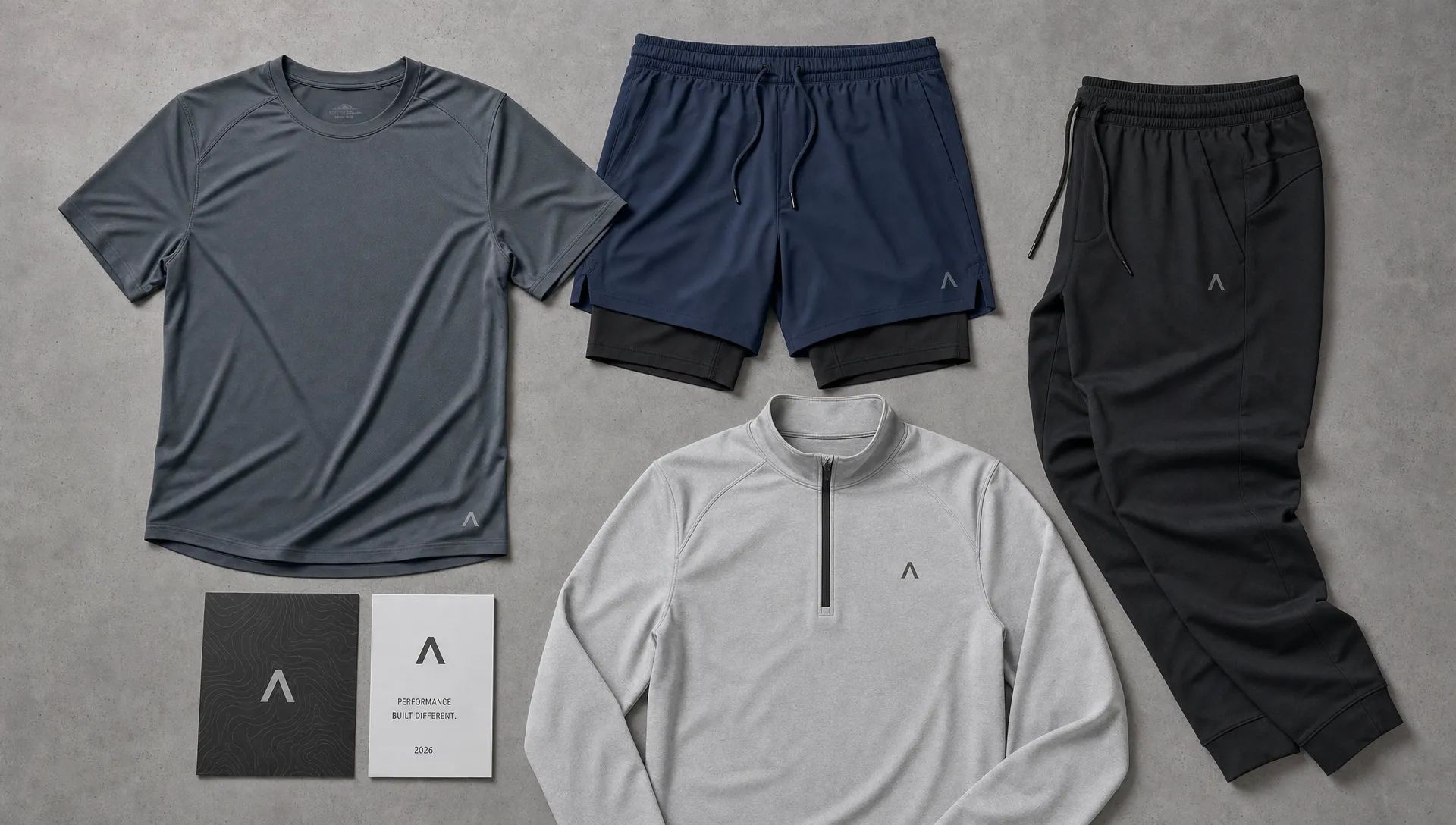
This trend is especially important for private-label activewear. A premium basic can become a repeat-purchase product if the fit, fabric and finish are consistent. Instead of relying on oversized graphics, brands can build value through cleaner necklines, better stitching, subtle labels, tonal embroidery, silicone patches or small screen-printed marks.
The premium basics worth sourcing in 2026 include core training tees, long sleeves, sleeveless tops, joggers, shorts, hoodies and zip jackets. These items are not exciting because they are complicated. They are profitable because they can become the foundation of a collection.
Fit consistency is critical. If a customer loves a tee and reorders it in another color, the shoulder width, body length and sleeve shape should feel familiar. This is where sampling, grading and production communication matter as much as design.
5. Retail-inspired teamwear and travel sets
Teamwear is becoming more lifestyle-oriented. Athletes still need uniforms that perform on the field or court, but clubs, schools, academies and corporate teams also want apparel that looks professional during travel, warm-ups, media days and events.
This creates sourcing demand for coordinated capsules rather than one-off uniforms. A modern men’s team package might include a competition jersey, training tee, warm-up jacket, travel pant, hoodie and polo. The pieces should feel connected through color, branding and fit, but each item needs to work on its own.
Sublimation printing remains highly relevant for jerseys and high-color team graphics because it allows strong visual customization without adding heavy surface layers. Embroidery can elevate polos, jackets and travel pieces. Screen printing can work well for training tees, merchandise and event apparel.
The main trend is not simply decoration. It is the shift toward team apparel that resembles retail sportswear. Buyers want their players, staff and supporters to feel proud wearing the kit outside match day.
6. Responsible sourcing without vague sustainability claims
Sustainability remains a buying consideration, but 2026 customers are more skeptical of vague claims. Phrases like “eco-friendly” or “green” do not carry much weight unless the buyer can explain what changed in the material, packaging or production choice.
For brands selling into Europe, responsibility is also becoming more connected to regulation and transparency. The European Commission’s Strategy for Sustainable and Circular Textiles has pushed textile brands to think more carefully about durability, recyclability and product information.
For men’s athletic apparel sourcing, a practical approach is better than overpromising. Buyers can start with more durable fabrics, better stitching, packaging customization that reduces unnecessary plastic and material options that fit their budget and positioning. The goal is to make responsible decisions that can be communicated honestly.
Ask your manufacturer what fabric and packaging options are available, then decide what matches your market. A premium European activewear line may need a different sustainability story than a local team uniform program in Brazil or a gym merchandise drop in Canada.
7. Inclusive fits for different men’s body types
Men’s athletic bodies are not one shape. A runner, powerlifter, football player, tennis player and casual gym user often need different proportions, even if they wear the same labeled size.
In 2026, better fit development is becoming a sourcing advantage. Brands that only scale garments up and down without considering body shape can end up with tight shoulders, loose waists, short rises, restrictive thighs or sleeves that do not sit correctly.
For tops, buyers should review shoulder width, chest ease, sleeve opening, body length and hem shape. For bottoms, review rise, thigh room, inseam, waistband stretch and pocket behavior during movement. For compression or fitted garments, recovery and seam comfort are especially important.
Inclusive fit does not always mean carrying every possible size from the beginning. For low MOQ programs, buyers can test core sizes and expand based on demand. What matters is that the base pattern is built for real movement and that size grading is checked before bulk production.
8. Custom capsules instead of disconnected products
One of the smartest sourcing trends for 2026 is capsule planning. Rather than ordering random products, buyers are building small groups of items that can be merchandised together, photographed together and reordered together.
A capsule might include five to eight pieces in two or three color stories. For example, a gym brand could source a performance tee, tank, 2-in-1 short, jogger, hoodie and cap in black, slate and seasonal green. A team buyer could source a jersey, training tee, warm-up jacket, travel pant and polo using the same color system.
Capsules are useful because they make branding more consistent and simplify purchasing. They also help buyers test a market without overcommitting. Extreme Sportswear offers low MOQ orders, cut-and-sew services, sublimation printing, screen printing, embroidery and fabric and packaging customization, which can support this kind of focused collection development.
If repeat orders are part of your strategy, you may also find value in this guide on how to source sports wear that customers want to reorder.
Discuss Your 2026 Sourcing Plan
What buyers should ask before sourcing men’s athletic apparel
Trends only matter if they can be produced consistently. Before moving into sampling, buyers should prepare a clear brief that connects product purpose with construction details.
Strong sourcing questions include:
- What sport, activity or lifestyle use is this product made for?
- Which market will it sell in, such as the USA, Canada, Europe, Australia, Germany, Poland or Brazil?
- Should the fit be relaxed, regular, athletic, slim or compression?
- Which decoration method suits the garment, fabric and order size?
- Does the product need custom packaging or private-label branding?
- What is the expected reorder pattern if the first run sells well?
The more specific the answers, the easier it is for a manufacturer to recommend fabrics, trims, printing methods and construction details. This also helps avoid one of the most common sourcing problems: approving a good-looking sample that does not match the end customer’s real use.
Common sourcing mistakes to avoid in 2026
Many men’s activewear problems start before production. They come from unclear briefs, copied sizing, mismatched fabrics or decoration choices that were not tested properly.
A few mistakes are especially costly. Choosing fabric based only on photos can lead to poor hand feel or weak stretch recovery. Using the same fit across gym wear, running wear and teamwear can create comfort issues. Placing heavy prints on high-stretch areas may affect performance. Ignoring packaging and labeling until the end can make a private-label product feel unfinished.
Another mistake is overbuilding the first collection. A large product range may look impressive, but it can create inventory risk. For many brands, a tight capsule with strong core items, clean branding and reorder potential is a better first move.
Fast sampling can help buyers test ideas before committing to bulk production. Use samples to check movement, shrinkage, decoration placement, color matching, pocket function and size consistency. If possible, have real athletes or target customers wear the sample during the intended activity, not just try it on in front of a mirror.
How a custom manufacturer can support 2026 trends
Men’s athletic apparel sourcing in 2026 requires more than selecting a blank garment and adding a logo. Buyers need control over fit, fabric, color, decoration and finishing if they want products that feel distinct.
A custom sportswear manufacturer can help translate trend ideas into production-ready garments through cut-and-sew development, fabric selection, custom trims, private-label branding and suitable decoration methods. For teamwear, uniform manufacturing and sublimation printing can support bold designs and coordinated kits. For premium retail lines, embroidery, screen printing, tonal branding and packaging customization can help create a more polished product experience.
Extreme Sportswear is based in Pakistan and specializes in custom sportswear, activewear, teamwear and private-label apparel for international buyers. For brands that want flexibility, low MOQ orders and export-quality manufacturing can make it easier to test a focused men’s athletic apparel collection before scaling.
Frequently Asked Questions
What men’s athletic apparel should brands source in 2026? Brands should prioritize versatile performance tees, 2-in-1 shorts, tapered joggers, hoodies, quarter-zips, training polos and retail-inspired teamwear. These products work across gym, travel, club sport and lifestyle use.
Are 2-in-1 shorts worth adding to a men’s activewear line? Yes, if your customers train, run or play sports where support and secure storage matter. A well-developed 2-in-1 short offers clear performance value and can command stronger perceived quality than a basic short.
Which decoration method is best for men’s sportswear? It depends on the garment. Sublimation works well for colorful team uniforms and all-over graphics. Screen printing suits tees and promotional apparel. Embroidery is a strong choice for polos, jackets, hoodies and premium branding.
How can private-label brands reduce risk when sourcing activewear? Start with a focused capsule, test samples carefully and choose products with reorder potential. Low MOQ orders can help brands validate fit, fabric and customer demand before expanding the range.
What makes men’s athletic apparel feel premium? Premium activewear usually comes from better fabric hand feel, consistent fit, clean stitching, stable trims, comfortable waistbands, refined branding and packaging that matches the product positioning.
Build a men’s athletic apparel line ready for 2026
The best 2026 collections will not be the ones with the most products. They will be the ones with the clearest purpose: performance fabrics, better fit, versatile styling, strong decoration choices and enough customization to stand apart.
If you are sourcing men’s athletic apparel for a brand, team, gym, club or retail program, Extreme Sportswear can help develop custom sportswear, activewear, teamwear and private-label apparel with options for cut-and-sew production, sublimation, screen printing, embroidery, low MOQ orders and packaging customization.