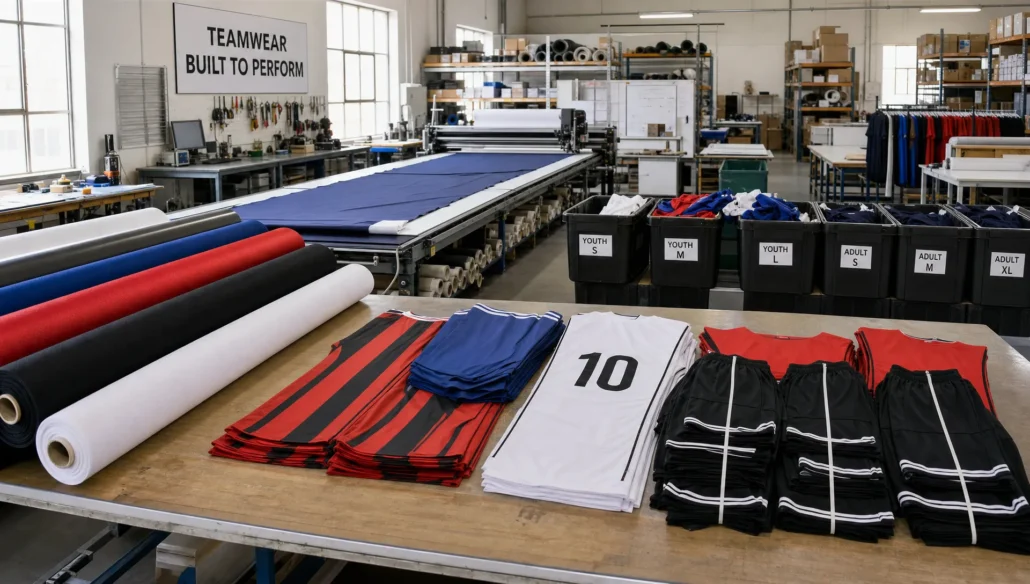
Ordering uniforms for one roster is simple. Ordering for a club, academy, school district or private label program is where mistakes become expensive. A reliable bulk soccer uniform manufacturer does more than sew jerseys and shorts. It helps you control size data, artwork files, fabric choices and reorder records so the next batch matches the first one.
Sizing and reorder problems usually appear after the first season. New players join, a goalkeeper needs a different cut, a sponsor changes, or a youth team grows faster than expected. If the original order was handled with loose measurements and scattered design files, every reorder becomes a guessing game. The fix is a production system that treats every uniform as part of a repeatable program, not a one-time purchase.
Why bulk soccer uniform orders break down after season one
Most teams focus on how the kit looks, which is understandable. The crest, colors and sponsor placement matter. But when orders reach 50, 200 or 1,000 pieces, the biggest risk is usually not design. It is inconsistent fit and missing production information.
A common example is the “medium problem.” One supplier’s medium fits like another supplier’s small. Adult and youth sizing may not scale evenly. Female players may need a different fit profile. Goalkeepers may prefer extra room for movement. If the team only collects S, M, L and XL without comparing those sizes to garment measurements, many players will receive uniforms that look correct on paper but feel wrong in training.
Reorders create another layer of risk. If the factory cannot access the original pattern, fabric weight, decoration method, thread color and logo placement, the next shipment may be close but not identical. For clubs that compete across the USA, Canada, Europe, Australia, Germany, Poland or Brazil, visual consistency matters because teams often add players throughout the year.
What a bulk soccer uniform manufacturer should document before production
A production-ready order starts with documentation. Before cutting fabric, a manufacturer should confirm the garment specification, size chart, artwork, decoration method and packaging requirements. This is especially important when the buyer is managing multiple age groups, club branches or resale inventory.
The table below shows the core information that should be locked before a bulk order goes into production.
| Control point | What to confirm | Why it prevents problems |
|---|---|---|
| Size chart | Body measurements and finished garment measurements | Reduces fit disputes and wrong-size reorders |
| Fabric | Material type, weight and stretch expectations | Keeps comfort and performance consistent |
| Pattern | Jersey cut, short cut, sleeve shape and fit profile | Helps future batches match the original order |
| Artwork | Vector files, color codes, sponsor placement and numbers | Avoids mismatched prints and logo placement errors |
| Decoration | Sublimation, screen printing, embroidery or mixed methods | Ensures the reorder uses the same production process |
| Order records | Player names, numbers, sizes and team groups | Makes add-on orders faster and more accurate |
For a brand or club buyer, a bulk soccer uniform manufacturer should also make the approval process clear. You should know what needs to be signed off before production begins, what can still be changed after sampling and what will trigger delays or extra cost.
Build a sizing system before you collect player orders
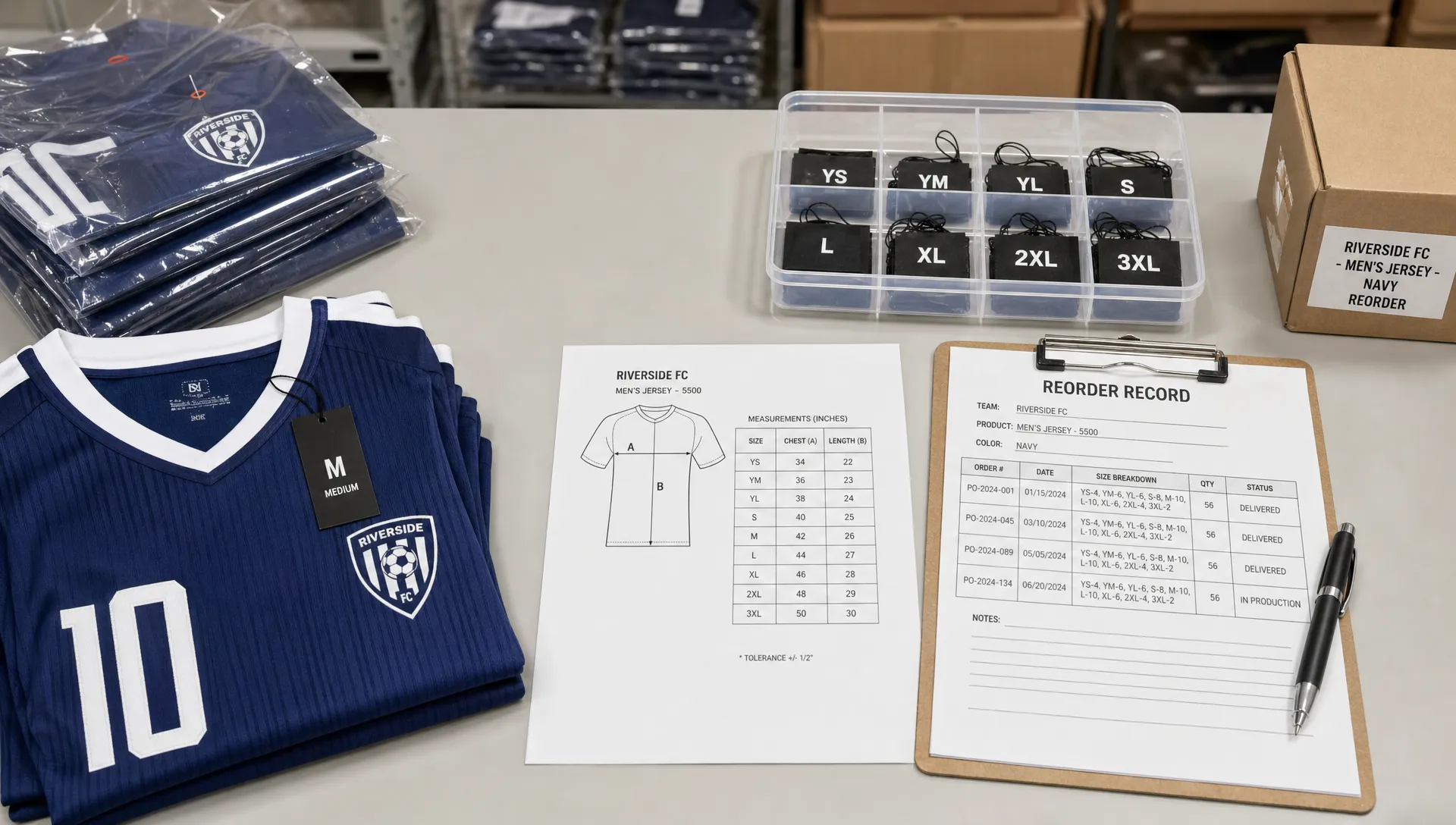
The best time to prevent sizing problems is before players submit their sizes. A size chart is useful, but it is not enough on its own. Bulk buyers should ask for finished garment measurements, not only body measurements. Finished garment measurements show the actual chest width, length, sleeve length and short dimensions of the product a player will wear.
If possible, use a size set or sample run for key sizes. This is particularly useful for clubs with youth players, mixed adult squads or international teams where sizing expectations differ by region. A player in Germany, Brazil or the United States may interpret “large” differently based on the sportswear they already own.
A bulk soccer uniform manufacturer can help you create a practical size process by separating teams into youth, adult and fit-specific groups. For example, a club may choose standard adult fits for senior squads, slimmer cuts for academy teams and roomier goalkeeper jerseys. The key is to record those decisions so the next order does not restart from zero.
Keep your sizing workflow simple:
- Collect player height, chest, waist and preferred fit, not just letter size.
- Compare those details with finished garment measurements.
- Record each player’s final approved size in a master order sheet.
- Use the same size chart for reorders unless the pattern is intentionally changed.
Reorders depend on records, not memory
A reorder should never rely on someone saying, “Make it like last time.” That phrase sounds simple, but it leaves too much open to interpretation. If your first order used sublimation, exact artwork placement and a specific polyester fabric, every one of those details should be stored in a production file.
For soccer clubs and apparel brands, the most useful reorder record is a master tech pack. It does not need to be complicated for the buyer, but it should contain enough information for the factory to reproduce the uniform accurately. A good tech pack includes artwork files, garment measurements, fabric details, print method, trim details, label information, packaging notes and order history.
When comparing suppliers, ask how they store previous order details. If you are still evaluating options, this guide on how to choose a soccer team uniform manufacturer explains the broader checks buyers should make before committing to production.
Choose decoration methods that are easier to repeat
Design decisions affect reorder accuracy. Sublimation is popular for soccer uniforms because the design is printed into the fabric, which can help maintain lightweight performance and reduce issues with peeling graphics. Screen printing and embroidery can also work well, especially for specific logos, badges or private label details, but they require careful placement records.
If your team uses gradients, patterns, sponsor logos and player numbers, ask whether the same artwork file will be kept for future production. For full custom designs, sublimated soccer uniforms are often worth considering because colors, names and numbers can be integrated into the garment design rather than added as separate layers.
A bulk soccer uniform manufacturer should also discuss fabric availability. Fabric lots can vary slightly over time, especially when reorders happen months later. This does not mean reorders are impossible, but it does mean the manufacturer should communicate if a fabric, trim or color needs to be matched, replaced or approved again.
Plan reorders around your roster cycle
The easiest reorder is the one you planned before you needed it. Soccer organizations often know when roster changes are likely to happen. Youth academies add players after trials. Schools need uniforms before the season starts. Clubs may need extras for tournaments, travel squads or goalkeeper rotations.
A simple reorder calendar can prevent rushed decisions. If your season starts in March, do not wait until late February to order replacement kits. If your private label brand launches a new design, decide in advance whether you will hold extra inventory or reorder in smaller batches.
For international buyers, customs, shipping windows and approval time should be considered early. A bulk soccer uniform manufacturer with export experience can help you think through sampling, production and delivery planning, but the buyer still needs to provide approvals quickly. Delays often come from missing size confirmations, late sponsor artwork or changes after production files are already approved.
Uniform planning also sits alongside broader player operations. Clubs that want consistent standards may combine organized kit management with structured fitness and nutrition support, including services like personal training and nutrition coaching covered by insurance for individual athletes who qualify. Better player support does not replace good uniform records, but it reinforces the same idea: systems reduce guesswork.
What buyers should send before requesting a bulk quote
A clear quote request helps the manufacturer respond accurately. Instead of sending only a jersey photo and estimated quantity, prepare the basic information that affects cost, sampling and production. This saves time and reduces the chance of surprises later.
Send the manufacturer these details when possible:
- Estimated quantity by jersey, short, sock or full kit.
- Youth and adult size breakdown if available.
- Team colors, logo files, sponsor artwork and numbering needs.
- Preferred decoration method, such as sublimation, screen printing or embroidery.
- Fabric preferences, packaging needs and private label requirements.
- Target delivery location and season deadline.
A bulk soccer uniform manufacturer can usually guide you if some details are missing, but the more complete your request is, the easier it becomes to identify production risks before they turn into sizing or reorder problems.
How Extreme Sportswear supports scalable soccer uniform programs
Extreme Sportswear is a Pakistan-based custom clothing manufacturer that produces sportswear, activewear, teamwear and private label apparel for international buyers. For soccer programs, the key advantage is not just customization. It is the ability to build a repeatable manufacturing process around your team or brand.
The company offers cut-and-sew production, custom sportswear manufacturing, low MOQ options, fast sampling, sublimation printing, screen printing, embroidery, uniform manufacturing, fabric customization and packaging customization. Those capabilities matter when buyers need one supplier to handle design, fit, branding and repeat production without losing control of the original specifications.
If you are comparing soccer kit options, review Extreme Sportswear’s custom soccer uniforms to see how custom teamwear can be structured for club, school and brand needs.
FAQ
How do I avoid sizing mistakes when ordering bulk soccer uniforms? Use finished garment measurements, collect player body measurements and request samples or a size set when possible. Do not rely only on S, M, L and XL because sizing standards vary by manufacturer and region.
What should I ask a bulk soccer uniform manufacturer before ordering? Ask about size charts, sampling, artwork approval, fabric availability, decoration methods, reorder records, private label options and production timelines. The goal is to confirm that the supplier can repeat the same uniform later.
Are sublimated soccer uniforms better for reorders? Sublimation can be helpful for reorders because colors, numbers and logos are built into the design file. Reorder accuracy still depends on stored artwork, fabric details and approved production records.
Can I order different sizes and designs in one bulk order? In many custom manufacturing programs, buyers can organize orders by team, size group, artwork and player number. Confirm the exact structure with the manufacturer before sampling and production.
When should teams start planning uniform reorders? Start as soon as you know likely roster changes, tournament needs or replacement requirements. Reorders are smoother when the original production file is saved and the team has an updated size record.
Ready to remove sizing and reorder problems?
If your club, academy, school or apparel brand needs bulk soccer uniforms that can be repeated with confidence, Extreme Sportswear can help you build a clearer production process from sampling to reorder planning.