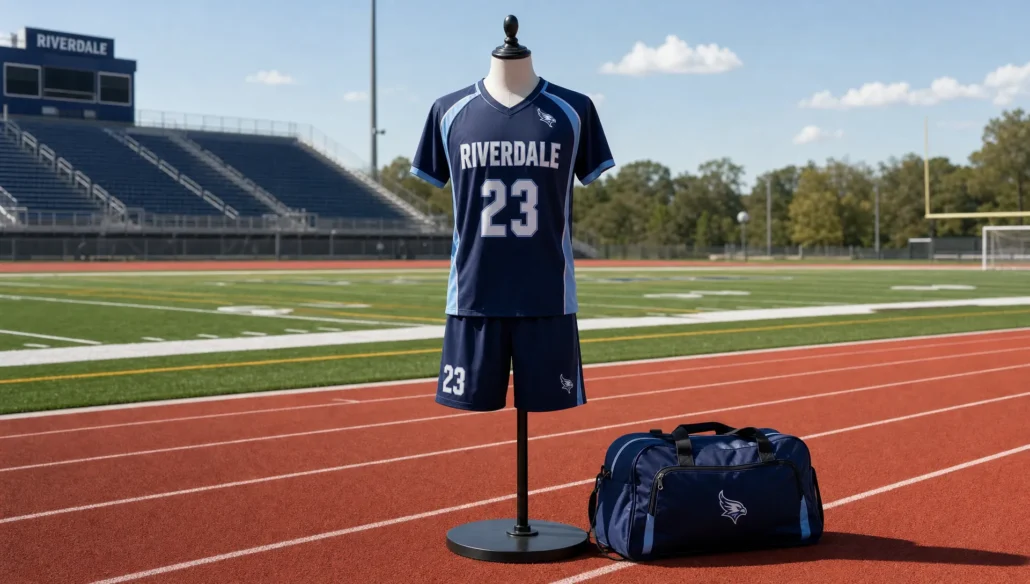
Designing a custom uniform online should make life easier, not create a chain of expensive revisions. Yet many teams, clubs, gyms, schools, and private-label brands run into the same issues: unreadable numbers, mismatched colors, awkward logo placement, wrong sizes, or artwork that cannot be produced cleanly.
The good news is that most mistakes are preventable when you design with manufacturing in mind from the beginning. A strong sports uniform is not just a good-looking mockup. It has to perform during movement, survive repeated washing, represent the team clearly, and translate accurately from screen to fabric.
Below is a practical, mistake-reducing guide to help you design your own sports uniform online with more confidence before sending it to production.
Start With the Sport, Not the Template
A common mistake is opening an online design tool and choosing the most exciting layout before thinking about the sport itself. The best uniform design starts with the way the garment will be used.
Basketball uniforms need freedom of movement around the shoulders and hips. Soccer kits need breathable fabrics, clear numbering, and designs that stay visible at speed. Baseball jerseys may need button-front construction, sleeve balance, and strong name and number visibility from a distance. Training apparel may prioritize stretch, moisture control, and brand consistency across multiple pieces.
Before choosing patterns or colors, define the practical requirements:
- The sport or activity the uniform is made for
- Indoor or outdoor use
- Expected weather or temperature
- League rules for numbers, sponsor placement, or color contrast
- Whether the garment is for game day, training, travel, or retail
- How many sizes and body types the order must cover
This first step keeps the design grounded. A uniform can look impressive online but still fail if the number is hidden by a graphic, the fabric choice is wrong for the activity, or the fit does not match the team’s needs.
Choose the Right Production Method Early
Your design choices should match the production method. If you design first and ask about printing later, you may discover that gradients, tiny text, or complex placements are difficult to reproduce the way you imagined.
Extreme Sportswear offers customization services such as sublimation printing, screen printing, embroidery, cut-and-sew production, fabric customization, and packaging customization. Each method has strengths, and choosing the right one early helps avoid rework.
| Method | Best for | Common online design mistake | How to avoid it |
|---|---|---|---|
| Sublimation printing | All-over graphics, bold patterns, polyester sportswear | Placing important details too close to seams or edges | Keep names, numbers, and logos inside safe zones |
| Screen printing | Logos, simple graphics, bold text, team branding | Using too many small details or colors without checking feasibility | Simplify artwork and confirm print requirements before approval |
| Embroidery | Crests, premium logos, polos, jackets, caps | Using tiny lettering or thin lines that lose clarity | Use clean shapes and ask for embroidery-friendly artwork guidance |
| Cut-and-sew production | Fully customized uniforms and private-label apparel | Treating the garment like a flat poster instead of separate panels | Review front, back, sleeves, collar, side panels, and trim separately |
If your goal is a bold all-over team jersey, sublimation is often a strong option. If you want a clean logo on a training top, screen printing or embroidery may be better depending on the garment and finish. The key is to design for the method, not against it.
Make Readability a Priority
Sports uniforms are viewed in motion, from a distance, under different lighting, and often through cameras. That means readability matters as much as style.
Names and numbers should be easy to identify quickly. Avoid putting dark numbers on dark backgrounds, thin fonts on busy patterns, or player names across curved areas where they may distort. If you are designing for a league, school, or tournament, check any rules for number size, placement, and contrast before finalizing the design.
A simple test works well: zoom out on your mockup until it is small on your screen. If you cannot read the number or identify the team color quickly, the design may be too complex.
For team identity, use visual hierarchy. The most important elements should stand out first, usually the team name, number, logo, and primary color. Secondary graphics, textures, and sponsor marks should support the design rather than compete with it.
Control Colors Before Production
Color mistakes are one of the biggest frustrations in online uniform design. Screens display color with light, while fabric and ink reflect color physically. A shade that looks bright on your laptop may appear different on polyester, mesh, fleece, or cotton blends.
To reduce surprises, use clear color references when possible. If your team or brand already has official colors, share those codes with your manufacturer. If you are choosing new colors, avoid relying only on what you see on one screen. Different monitors and phones can make the same design look warmer, cooler, brighter, or darker.
Contrast is especially important in sportswear. A navy and black combination might look premium in a mockup but disappear during gameplay. Neon colors can look energetic but may overpower logos or sponsor marks. White details can look clean, but they may need careful placement in high-contact sports or muddy outdoor environments.
Color inspiration can come from outside teamwear too. Apparel brands that use bold prints, such as vibrant woven cotton boxer shorts, show how strong patterns can feel playful while still staying balanced. For sports uniforms, use that same design lesson carefully: let bold graphics create energy, but keep the functional areas readable.
Think About Fit and Sizing Before You Add Names
Sizing is not just an order form detail. It affects how the finished design looks on real athletes. A graphic that looks centered on a medium jersey may shift visually on a 3XL. A name that fits across an adult back may look cramped on a youth size. Shorts, sleeves, collars, and side panels can also change proportion across sizes.
The safest approach is to collect size information before final approval. Do not guess based only on everyday T-shirt size, especially for competitive teams or youth players who may be between sizes.
| Sizing factor | Why it matters | Mistake to avoid |
|---|---|---|
| Body measurements | Helps match the garment to real athletes | Ordering based only on age or casual clothing size |
| Fit preference | Some teams prefer relaxed fits, others want athletic cuts | Assuming everyone wants the same silhouette |
| Youth and adult grading | Designs scale differently across size ranges | Using one mockup to judge every size |
| Layering needs | Outdoor sports may require base layers underneath | Choosing a fit that is too tight for actual use |
| Reorder planning | Teams often add players later | Not saving final size, color, and artwork details |
For basketball teams, this is especially important because jerseys and shorts need to move well together. If you are planning a full kit, reviewing examples of custom basketball uniforms can help you think through both pieces as one coordinated design instead of treating the jersey and shorts separately.
Prepare Artwork Files the Right Way
A clean online mockup does not always mean the artwork is production-ready. Low-resolution logos, screenshots, stretched images, or unlicensed fonts can cause delays and quality issues.
Whenever possible, prepare vector files for logos and graphic elements. Vector artwork can scale without losing sharpness, which is important for chest logos, sleeve patches, numbers, and large sublimated graphics. If you only have a small JPG or PNG, ask whether it needs to be recreated before production.
Also check every text element before approval. Player names, numbers, sponsor names, team slogans, and location names should be reviewed by more than one person. A typo on a screen is easy to fix. A typo on finished uniforms is much more expensive.
A simple pre-production artwork review should include:
- Team name spelling
- Player names and numbers
- Sponsor logos and placement approval
- Font style and readability
- Logo resolution and file format
- Front, back, sleeve, collar, and short design details
- Color references and any required brand codes
If you are ordering as a business owner or apparel brand, it is also worth reviewing the broader process of ordering custom sportswear online from manufacturers so your design, quote, sampling, and production steps stay aligned.
Use Online Mockups as a Guide, Not the Final Reality
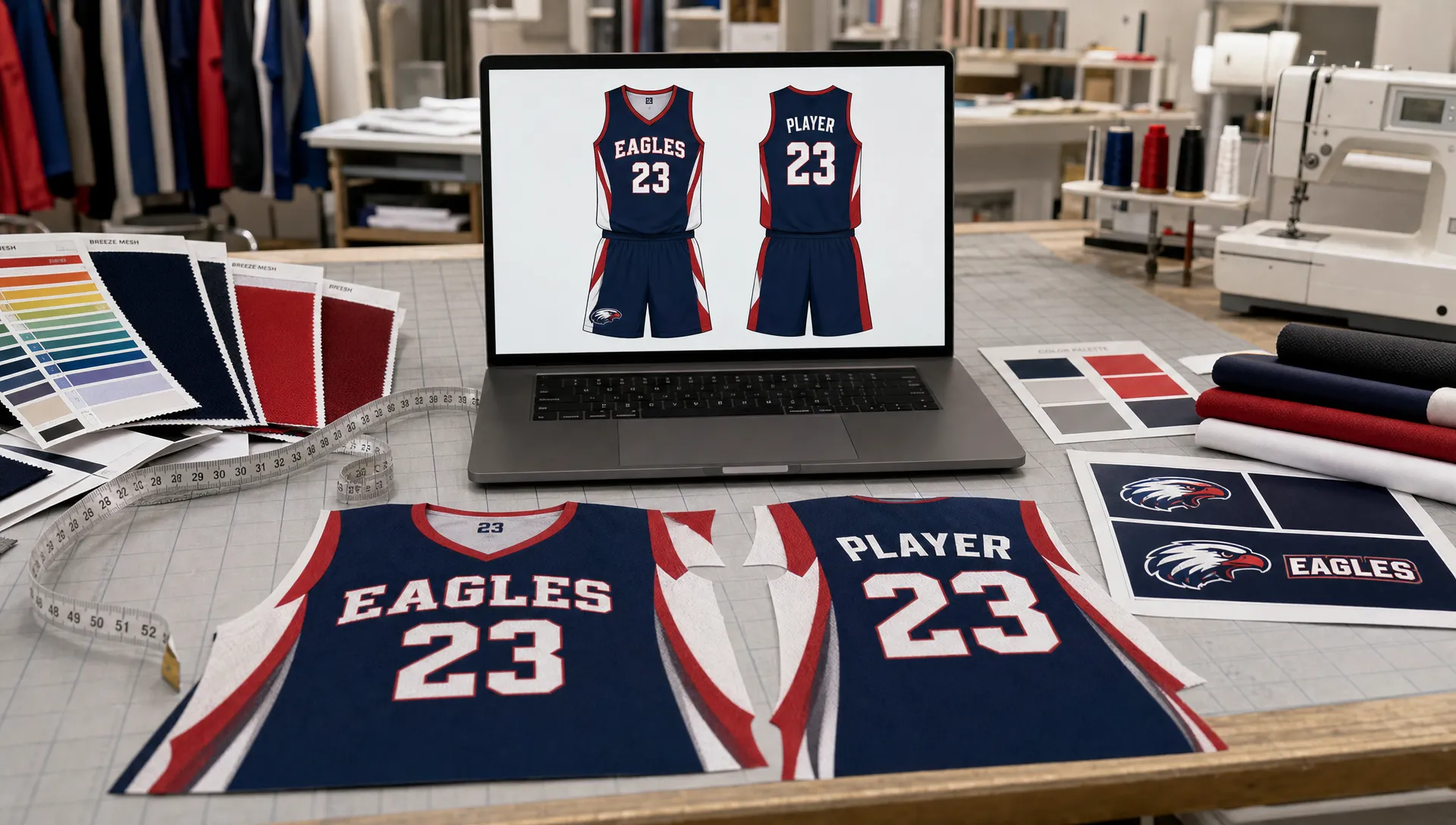
Online design tools are useful, but a mockup is still a simplified preview. It may not show every seam, panel curve, fabric texture, stitching line, or size variation. Treat the mockup as a communication tool, then confirm production details with your manufacturer.
For example, if your design includes a stripe that travels from the sleeve onto the body, ask how it will align across seams. If a logo sits near a side panel, confirm whether it could be affected by stitching. If you use an all-over pattern, decide where the pattern should be most controlled and where variation is acceptable.
This matters most for cut-and-sew uniforms because garments are built from separate pieces. Front panels, back panels, sleeves, collars, cuffs, waistbands, and shorts panels can each affect the final look. A design that ignores construction may look flat and perfect online but feel unbalanced when sewn.
Keep the Design Consistent Across the Whole Uniform
A uniform is a system, not a single jersey. If you are designing tops, shorts, warmups, socks, or training gear, the full set should feel connected.
Consistency does not mean every item must be identical. It means the same visual language should carry across the collection. Use a shared color palette, related graphic elements, consistent logo placement, and compatible fonts. If the jersey is highly detailed, the shorts may need to be simpler. If the top is minimal, a subtle side-panel detail on the shorts can add identity without overwhelming the kit.
Soccer kits are a good example because the jersey, shorts, and sometimes socks must read as one complete look. If you are working on a football or soccer project, studying customizable soccer uniform design options can help you plan placement, stitching, and sublimation details more realistically.
Ask for a Sample Before Scaling the Order
Sampling is one of the best ways to prevent large-order mistakes. A sample allows you to review color, fabric feel, sizing, print quality, stitching, and overall construction before committing to the full run.
This is especially valuable for new teams, first-time private-label buyers, or brands testing a new product category. Even if the sample is not perfect, it gives you a clear path to corrections. You can adjust the collar, reposition a logo, increase number contrast, change fabric, refine the fit, or simplify a graphic before production.
Extreme Sportswear offers fast sampling as part of its custom manufacturing services, which can help teams and brands move from idea to approved product more efficiently. The important part is to treat the sample as a decision-making tool, not just a formality.
When reviewing a sample, look at it in real conditions. Have an athlete try it on. Check movement, stretch, breathability, and visibility. Take photos indoors and outdoors. Wash it according to care instructions if your timeline allows. The more realistically you test the sample, the fewer surprises you will face later.
Communicate Like a Manufacturer, Not Just a Designer
Many online uniform mistakes happen because the design conversation is too visual and not specific enough. A manufacturer needs clear production information, not just a screenshot.
Your final design package should answer practical questions. What fabric do you want? Which print method is being used? Where exactly should each logo go? Are there separate men’s, women’s, and youth fits? Do you need custom labels or packaging? Are you ordering for a team, retail brand, school, club, or event?
The more precise you are, the easier it is for the manufacturer to quote, sample, and produce accurately. This is particularly important for private-label apparel, where labels, trims, packaging, and repeat consistency matter as much as the garment design.
If you are not sure how to describe something, use reference images and mark them clearly. Say what you like about the reference, such as the collar shape, sleeve trim, side panel, or number style. Do not assume the manufacturer will interpret a reference the same way you do.
Build a Realistic Timeline
Designing online can feel instant, but custom manufacturing still involves review, sampling, material preparation, printing, cutting, sewing, quality control, and shipping. Rushing the design stage often creates delays later.
A practical timeline should allow room for:
- Initial concept and design review
- Artwork cleanup if needed
- Quote confirmation
- Sample production and feedback
- Final size list and roster confirmation
- Bulk manufacturing
- Quality checks and shipping coordination
If you need uniforms for a tournament, product launch, school season, or event, work backward from the deadline. Add buffer time for revisions, especially if the order includes many player names, multiple sizes, or custom packaging.
Low MOQ manufacturing can be helpful for smaller teams, startups, and limited runs because it lets you test designs without overcommitting. Still, even small orders benefit from careful planning and a complete approval process.
A Quick Pre-Approval Checklist
Before you approve the design, pause and review it as both a designer and a buyer. This final check can save money, time, and frustration.
Confirm that the uniform meets the sport’s practical needs. Make sure the design is readable from a distance. Check that colors are referenced clearly. Review every name, number, and logo. Confirm sizing, fabric, print method, and placement. Ask whether the design works across the full size range. If possible, approve a sample before moving to bulk production.
The goal is not to make the design process complicated. The goal is to remove preventable mistakes before they become physical products.
Frequently Asked Questions
Can I design my own sports uniform online without professional design experience? Yes. Online tools and manufacturer support make it easier to create a custom uniform, but you should still focus on readable numbers, clean artwork, correct sizing, and production-friendly design choices.
What is the biggest mistake teams make when designing uniforms online? The most common mistake is approving a design based only on appearance. A good uniform also needs the right fabric, print method, fit, number visibility, and construction details.
Should I use sublimation, screen printing, or embroidery for my uniform? It depends on the garment and design. Sublimation is strong for all-over sports graphics, screen printing works well for many bold logos and text designs, and embroidery is often used for premium crests or smaller brand details.
Do I need a sample before placing a full custom sportswear order? A sample is strongly recommended, especially for new designs, private-label apparel, or larger team orders. It lets you check fit, color, fabric, stitching, and print quality before bulk production.
How can I avoid sizing problems with custom uniforms? Collect accurate measurements, confirm fit preferences, review youth and adult sizes separately, and avoid guessing based only on casual clothing size. If possible, compare your needs with a manufacturer’s size guidance before final approval.
Ready to Design With Fewer Mistakes?
A great uniform starts with creativity, but it succeeds through clear planning. When you design your own sports uniform online, think beyond the mockup. Consider the sport, fabric, print method, fit, color, artwork quality, and production details before you approve the order.
Extreme Sportswear helps teams, clubs, businesses, and private-label brands create custom sportswear with options such as cut-and-sew manufacturing, sublimation printing, screen printing, embroidery, low MOQ orders, fabric customization, and packaging customization. If you want a custom uniform that looks sharp and performs well, start with a clear design brief and work with a manufacturer that understands sportswear production from concept to completion.