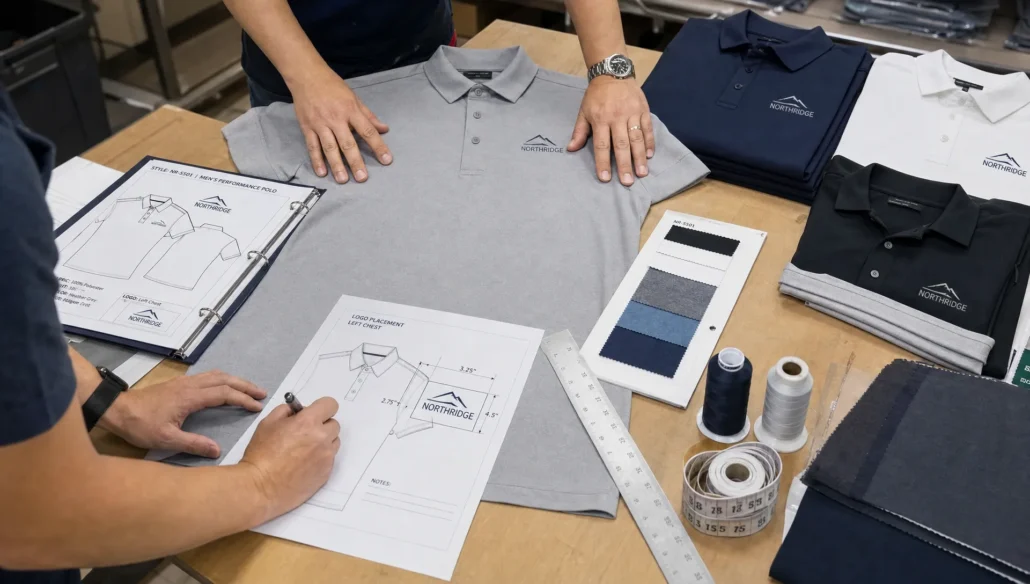
When employees, sales teams, field technicians or event staff wear your logo, their apparel becomes a public touchpoint. A custom corporate apparel manufacturer is no longer just a supplier, it becomes part of your brand control system. The right partner helps make every polo, jacket, hoodie, uniform and promotional garment look intentional, feel consistent and represent your company professionally.
For companies operating across the USA, Canada, Europe, Australia, Germany, Poland or Brazil, corporate apparel has to do more than carry a logo. It must support brand recognition, employee confidence, customer trust and repeatable quality across locations. A weak manufacturing partner can turn a strong brand into inconsistent colors, poor stitching, uncomfortable fits and delayed campaigns.
Why a custom corporate apparel manufacturer is a brand safeguard
A custom corporate apparel manufacturer protects your brand by controlling the details that customers notice first and employees feel every day. That includes color matching, logo placement, fabric selection, sizing, stitching quality, finishing, labeling and packaging.
Corporate apparel often appears in high-visibility settings such as trade shows, retail floors, delivery routes, hospitality teams, gyms, construction sites and client meetings. If one batch looks different from the next, the inconsistency reflects on your company before anyone reads your brochure or hears your sales pitch.
Good manufacturing partners reduce that risk by translating your brand assets into production-ready specifications. They do not simply ask for a logo file and start printing. They confirm artwork formats, decoration method, garment construction, placement measurements and intended use so the final product fits the job.
If you are still deciding how uniforms should support professionalism across your team, Extreme Sportswear has also covered practical reasons to invest in custom uniforms for employees.
Brand protection starts before production
The most important work often happens before fabric is cut. A reliable custom corporate apparel manufacturer will turn your concept into clear technical instructions so production teams can repeat the same result across sizes, styles and reorder cycles.
This starts with a product brief. The brief should define who will wear the apparel, how often it will be used, what climate it must suit and what brand details cannot change. A warehouse team may need breathable, durable workwear. A corporate sales team may need sharp polos or softshell jackets. A fitness brand may need stretch, moisture control and strong seams.
The role of samples and approvals
Samples protect your brand from expensive assumptions. Before a full order, samples allow you to check fabric hand feel, fit, print clarity, embroidery density, zipper quality, trims and packaging presentation.
Fast sampling is especially valuable when apparel is tied to events, product launches, seasonal campaigns or team onboarding. It gives you time to correct logo scale, adjust garment length or change decoration methods before production begins.
A sample is not just a preview. It is a decision point where brand, comfort and durability meet.
How manufacturing choices influence public perception
Every production choice sends a brand signal. A custom corporate apparel manufacturer helps align those choices with the impression your company wants to create, whether that impression is premium, athletic, practical, youthful, formal or sustainability-focused.
Cut-and-sew production gives brands more control than off-the-shelf blanks because the garment can be built around the intended look and function. Fabric weight, panel shape, collar structure, cuffs, pocket placement and finishing all affect how the garment performs and how professional it appears.
Decoration method matters too. Sublimation printing is useful for full-color designs and performance teamwear. Screen printing can suit bold graphics and larger runs. Embroidery gives logos a textured, durable finish that often works well on polos, jackets, caps and formal corporate apparel.
| Brand risk | How manufacturing protects against it |
|---|---|
| Inconsistent logo colors | Artwork checks, color references and sample approvals |
| Poor employee adoption | Better fit, fabric selection and comfort testing |
| Weak professional image | Consistent finishing, trims, labels and packaging |
| Short garment life | Proper stitching, fabric choice and quality checks |
| Reorder mismatch | Documented specifications and retained production records |
For companies building apparel under their own name, the same principles apply to private label programs. You can explore more about the value of working with a private label apparel manufacturer if your brand plans to sell or distribute custom garments.
Quality control keeps your brand consistent
A professional custom corporate apparel manufacturer should treat quality control as a process, not a final glance before shipping. Quality starts with raw material inspection, continues through cutting and sewing then finishes with measurement checks, decoration review and packaging inspection.
Consistency is especially important for multi-location companies. If your European office reorders uniforms six months after your North American team, the apparel should still look like part of the same system. That requires recorded specifications, approved samples and clear production standards.
Quality control also protects the wearer experience. Uneven seams, stiff labels, shrinking fabric, poor ventilation or a scratchy embroidery backing can make employees avoid the uniform. Once people stop wearing brand apparel consistently, the branding value drops.
The International Organization for Standardization explains that ISO 9001 quality management focuses on consistent products, customer satisfaction and continual improvement. Even when a buyer is not requiring a specific certification, that mindset is useful when evaluating apparel suppliers.
Protecting brand identity through customization
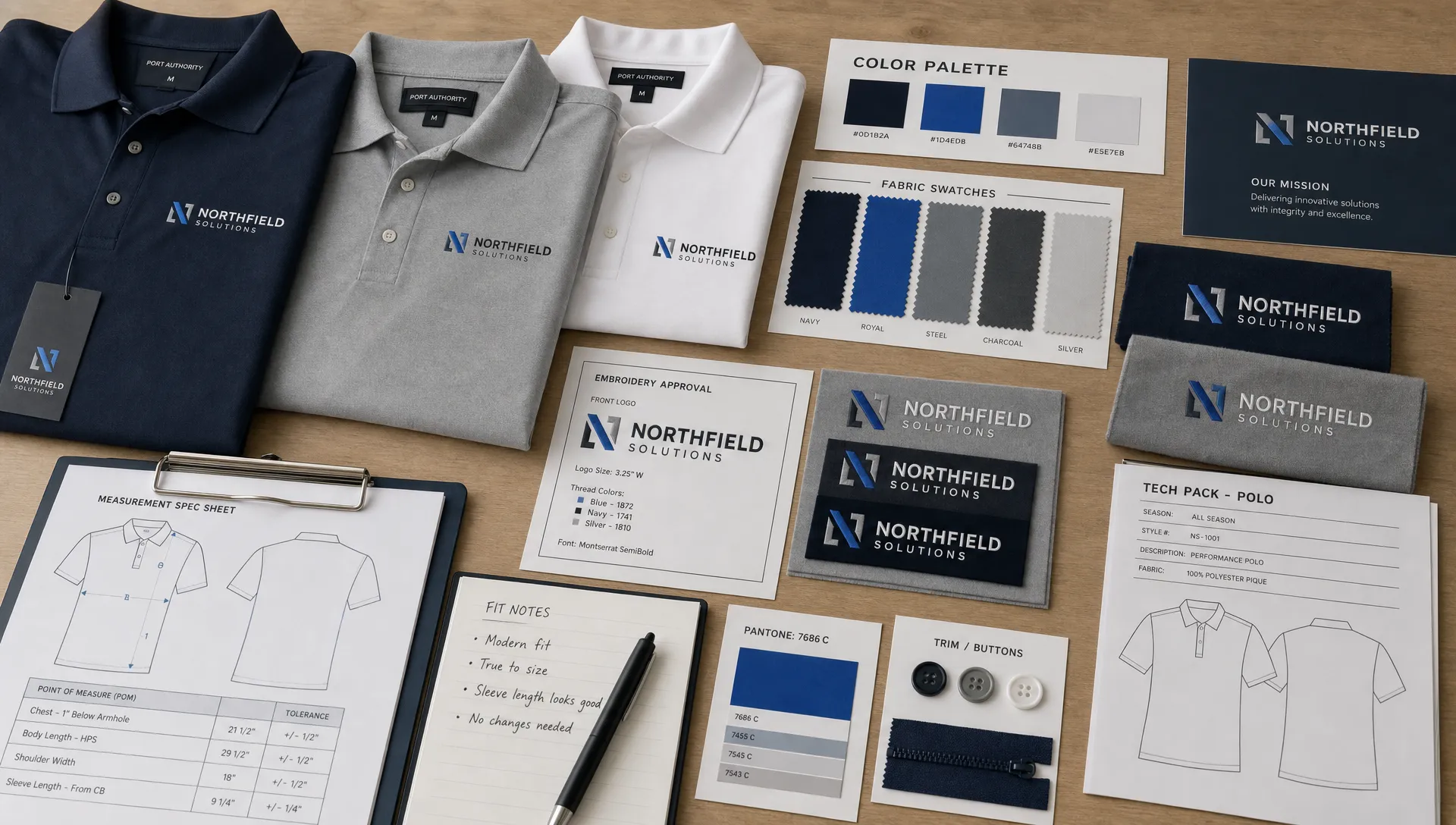
Your logo is only one part of your identity. A custom corporate apparel manufacturer can help protect the full brand system through controlled use of colors, trims, labels, neck tapes, hang tags, packaging and garment silhouettes.
For example, two companies may both order black polo shirts, but the brand experience can be completely different. One may need a clean executive look with subtle embroidery and structured collars. Another may need athletic polos with stretch fabric, breathable side panels and bold sleeve branding. Customization makes those choices intentional.
Apparel details that carry brand meaning
Small details often carry more brand value than buyers expect. A contrast zipper pull, woven label, custom neck print, branded poly bag or carefully placed sleeve mark can make corporate apparel feel like part of a complete identity instead of a generic uniform.
Fabric and packaging customization are also important for companies selling merchandise, onboarding employees or presenting apparel to partners. The garment is not only worn, it is opened, touched, stored, photographed and shared.
For brands that want full control over design, fit and presentation, cut-and-sew services can offer a more flexible route than modifying ready-made garments.
Supply chain reliability protects campaigns and budgets
Late apparel can damage more than a schedule. If uniforms miss a trade show, product launch, conference, retail opening or sports event, the brand loses visibility and the buyer may need rush replacements at a higher cost. A dependable custom corporate apparel manufacturer protects your brand by making timelines realistic and communication clear.
Reliable production planning includes confirming order quantities, size breakdowns, sample approvals, decoration files, packaging needs and shipping expectations before production begins. For international buyers, export experience matters because documentation, packing standards and logistics coordination affect delivery.
Low MOQ options can also protect younger brands or growing teams from over-ordering. Instead of tying up cash in excessive inventory, a company can test apparel, gather feedback and scale with more confidence.
If you are preparing your first order, this guide on ordering custom sportswear online from manufacturers explains the basic steps buyers should expect.
What to ask before choosing a manufacturing partner
Choosing a custom corporate apparel manufacturer should involve more than comparing unit prices. Low pricing can become expensive if the final garments damage your brand image, arrive late or need to be remade.
Ask how the manufacturer handles artwork review, sampling, sizing, fabric sourcing, print testing, embroidery, cut-and-sew production and final inspections. You should also ask whether they can support private label details such as labels, tags and packaging if those matter to your brand.
Clear communication is a major brand protection tool. A strong supplier will ask questions before giving a final answer, because apparel quality depends on use case, fabric, decoration method, quantity, budget and delivery timeline.
Useful questions include:
- Can you produce a sample before bulk production?
- Which decoration method is best for our logo and garment type?
- How do you keep colors and sizing consistent for reorders?
- Can you support low MOQ orders for a pilot launch?
- What quality checks happen before shipping?
- Can you customize labels, packaging and garment construction?
The answers help you separate order takers from true production partners.
Why global buyers work with Pakistan apparel manufacturers
Pakistan has a strong textile and garment manufacturing base, which makes it a practical sourcing destination for corporate apparel, sportswear, activewear, teamwear and private-label clothing. For buyers in the USA, Canada, Europe, Australia and other markets, working with an export-focused manufacturer can offer a balance of customization, production capability and cost control.
Extreme Sportswear is based in Pakistan and specializes in custom sportswear, activewear, teamwear and private-label apparel. Its services include cut-and-sew production, sublimation printing, screen printing, custom embroidery, uniform manufacturing, fabric customization and packaging customization.
That combination matters because brand protection is easier when your supplier can manage multiple parts of the garment under one production process. Instead of coordinating separate vendors for blank garments, decoration and packaging, buyers can work through a more unified workflow.
Frequently Asked Questions
How does a custom corporate apparel manufacturer protect brand consistency? It protects consistency by documenting specifications, confirming colors, creating samples, checking logo placement and applying quality control before bulk orders ship.
Is custom corporate apparel better than buying blank garments and adding a logo? Custom production gives you more control over fit, fabric, trims, labels and packaging. Blank garments can work for simple needs, but they may limit brand differentiation.
What decoration method is best for corporate apparel? It depends on the garment and logo. Embroidery often suits polos and jackets, screen printing works well for bold graphics and sublimation is useful for full-color performance designs.
Can small businesses order custom corporate apparel? Yes. Low MOQ manufacturing can help small businesses, startups, gyms, agencies and growing teams test branded apparel without committing to excessive inventory.
What should I prepare before contacting a manufacturer? Prepare your logo files, preferred garment types, quantity, size range, colors, budget, delivery timeline and any private-label requirements such as neck labels or packaging.
Protect your brand with corporate apparel built to represent it
Your apparel should make your company look organized, credible and consistent every time someone wears it. Extreme Sportswear helps brands and teams create custom sportswear, workwear, uniforms and private-label apparel with flexible customization options and export-quality manufacturing.