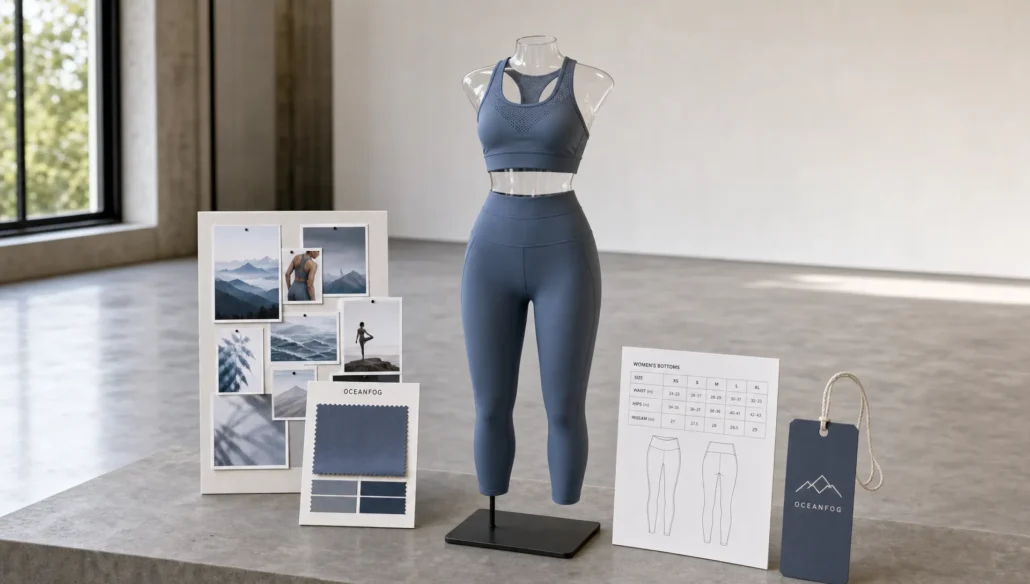
A first collection can make or break the way buyers understand your brand. It is not simply a set of products. It is your first proof of quality, positioning, fit, price, and taste.
For new active wear brands, the biggest mistake is trying to launch too much at once. More styles may feel exciting, but every extra product adds pattern work, sampling, fabric decisions, size grading, inventory risk, photography, and quality control. A stronger strategy is to build a focused collection that customers can understand quickly and trust immediately.
The goal is simple: launch fewer pieces, make them better, and ensure every item has a clear reason to exist.
Start With a Sharp Brand Position
Before choosing fabrics or sketching silhouettes, define who your first collection is for. Activewear is a crowded market, and customers already have options from global performance brands, boutique fitness labels, and lifestyle athleisure companies. Your first collection needs a point of view.
Ask practical questions before you design:
- Is your customer training in the gym, running outdoors, practicing yoga, playing team sports, or wearing athleisure daily?
- Are you competing on technical performance, premium comfort, modest design, bold visuals, sustainability, affordability, or team customization?
- Is your collection built for men, women, unisex styling, youth teams, or a specific community?
- What price range will your customer accept, and what quality level must you deliver to justify it?
A brand for high-intensity training needs different products than a brand built around wellness, travel, and everyday comfort. A teamwear label needs different construction priorities than a premium studio-wear brand. When you define the use case early, design decisions become easier and more consistent.
If you are still shaping your brand foundations, Extreme Sportswear’s guide to starting a clothing brand from scratch offers a broader step-by-step view of identity, market research, sourcing, and launch planning.
Build a Capsule, Not a Catalog
A first collection should feel complete without becoming complicated. Think of it as a capsule collection: a small group of products that mix together, photograph well together, and tell one clear story.
For many active wear brands, a strong first collection includes one or two hero products supported by simple companion pieces. The hero product is the item you want customers to remember you for. It could be a sculpting legging, a performance training short, a heavyweight pump cover, a sublimated team jersey, or a fitted running top.
Here is a simple way to structure a first activewear collection:
| Product role | Purpose | Example styles |
|---|---|---|
| Hero item | Creates brand recognition and drives the launch story | Leggings, training shorts, team jersey, sports bra |
| Core basics | Makes the collection wearable and easy to buy | Performance tees, tanks, compression tops |
| Layering piece | Adds higher perceived value and outfit-building potential | Hoodie, track jacket, quarter zip |
| Bottom companion | Completes the look and increases average order value | Joggers, shorts, biker shorts |
| Brand detail item | Reinforces identity without adding too much complexity | Cap, socks, drawstring bag |
The best first collections often feel intentional because they repeat key design details. Use the same color palette, logo placement logic, trims, and fabric story across the line. If one item looks like it belongs to a different brand, it may weaken the collection.
A focused lineup also helps with production. Fewer fabrics and trims can reduce sampling confusion, improve consistency, and make minimum order quantities easier to manage.
Choose Fabrics Based on Activity, Not Only Appearance
Fabric choice is one of the most important decisions in activewear. A product may look good in photos, but customers judge it during movement, sweat, washing, and repeated wear.
Start by matching fabric qualities to the activity. Gym training usually needs stretch, durability, and recovery. Running products need breathability and lightweight construction. Yoga and studio pieces need softness, flexibility, and opacity. Teamwear may require sublimation-friendly polyester fabrics that can hold sharp prints and colors.
When reviewing fabrics, look beyond the first touch. A fabric that feels soft on a swatch may not perform well after stitching, stretching, or washing. Consider these factors:
- Stretch and recovery: Does the fabric return to shape after movement?
- Opacity: Does it remain covered during squats, bends, and bright lighting?
- Moisture management: Does it help move sweat away from the body?
- Weight: Is the GSM suitable for the product and season?
- Durability: Does it resist pilling, seam stress, and repeated washing?
- Print or decoration compatibility: Does it work with sublimation, screen printing, embroidery, or heat transfer branding?
Color also matters. For a first drop, avoid launching too many colors. Three to five coordinated shades are usually easier to produce, photograph, and sell than ten unrelated options. Start with commercial colors, then add seasonal shades once you know what customers actually buy.
Design for Fit, Movement, and Repeatability
Activewear is not judged on a hanger. It is judged during movement. That means pattern development, seam placement, waistband construction, sleeve shape, rise, inseam, and compression all affect customer satisfaction.
A strong first collection should be tested on real bodies before bulk production. Fit samples should be reviewed on different sizes, not only one model size. For leggings and shorts, test squats, lunges, sitting, and walking. For tops, test overhead movement, twisting, and arm mobility. For teamwear, check whether players can move comfortably in the product during sport-specific motion.
Repeatability is just as important as the first fit. If your sample fits well but bulk production varies too much, customers will notice. Clear specifications help avoid this. Your tech pack should include measurements, tolerances, stitch details, trims, labels, artwork placement, fabric composition, and packaging instructions.
This is where an experienced manufacturer becomes valuable. The right partner can help translate your ideas into production-ready garments instead of leaving you to guess through every technical detail.
Use Sampling as a Decision System
Sampling is not a formality. It is the stage where your brand protects itself from expensive mistakes. New founders sometimes approve samples based on appearance only, but performance apparel needs deeper review.
A practical sampling process may include several stages:
| Sample stage | What to check | Why it matters |
|---|---|---|
| Prototype sample | Shape, design direction, basic construction | Confirms the idea can become a garment |
| Fit sample | Measurements, comfort, movement, size balance | Improves wearability before production |
| Print or decoration sample | Logo placement, color accuracy, print feel | Prevents branding issues in bulk orders |
| Pre-production sample | Final fabric, trims, labels, packaging, stitching | Acts as the approved standard for bulk |
Do not rush approvals. Wash samples, wear them, stretch them, and photograph them. If possible, let a few people from your target audience test the garments and give structured feedback. Ask whether the product feels supportive, breathable, flattering, durable, and worth the intended price.
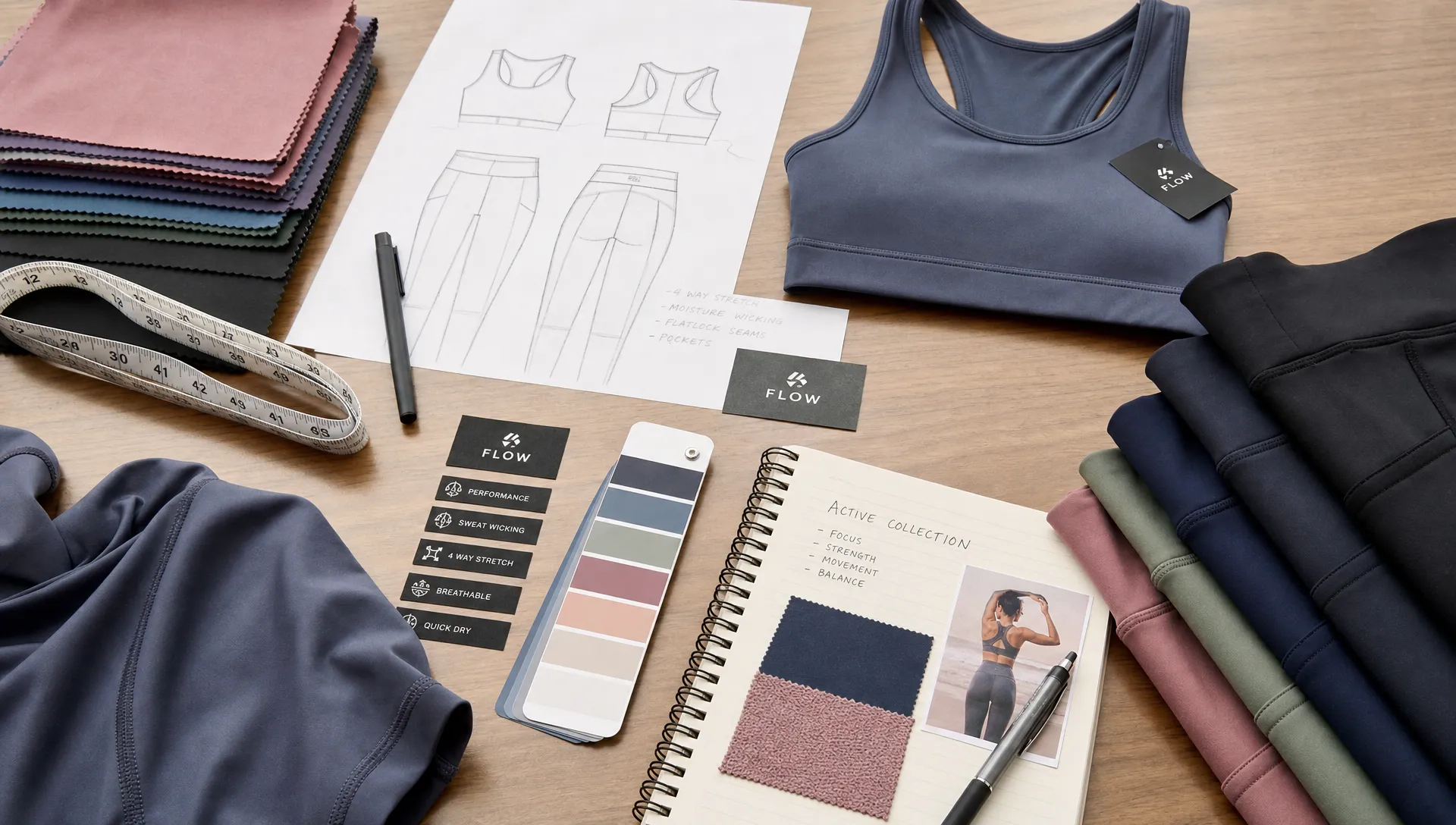
Plan Branding and Customization Early
Branding should be built into the product from the beginning, not added at the last minute. For activewear, small details can create a premium impression when they are consistent and practical.
Consider how your logo will appear across the collection. A bold chest logo might work for gym culture, while a minimal heat transfer may suit a premium studio brand. Teamwear may require large printed names, numbers, and sponsor placements. Private-label collections may need custom neck labels, woven labels, hang tags, and branded packaging.
Common customization options include:
- Sublimation printing for all-over graphics and team uniforms
- Screen printing for bold logos and graphic placements
- Embroidery for caps, polos, jackets, and premium details
- Heat transfer labels for soft interior branding
- Custom trims such as drawcords, zippers, patches, and waistbands
- Branded polybags, hang tags, and packaging inserts
The key is consistency. Your first collection should train customers to recognize your brand language. If your logo scale, label style, and packaging look different on every item, the brand may feel less mature.
Price the Collection Before You Fall in Love With It
A beautiful product is not enough if the numbers do not work. Before finalizing your first collection, calculate your target retail price, expected production cost, shipping cost, packaging cost, marketing cost, and profit margin.
Many active wear brands underestimate how much inventory and logistics affect cash flow. A style with too many colors and sizes can tie up money quickly. For example, launching one legging in five sizes and five colors creates 25 stock keeping units for just one product. Add a matching bra and top, and complexity grows fast.
To reduce risk, start with controlled depth. Choose fewer colors, focus on the sizes most relevant to your customer, and reorder based on demand. If you are producing for teams or private-label clients, low minimum order quantities can help you test designs before committing to larger runs.
Operational planning matters too. As your brand grows, think about how you will store inventory, event displays, returns, and packaging materials. Some brands use small warehouses, fulfillment partners, or secure overflow storage, while others compare practical options like premium shipping containers for sale when they need additional space for stock, fixtures, or mobile retail setups.
Choose a Manufacturer That Understands Activewear
Your first collection depends heavily on your manufacturing partner. Activewear requires more than basic sewing. It requires knowledge of stretch fabrics, performance construction, print techniques, sizing, cutting, and quality control.
When comparing manufacturers, ask about their experience with the product category you are building. A factory that mainly produces casual cotton basics may not be the right fit for compression leggings or sublimated uniforms. Look for a partner that can support development from sample to bulk production.
Important manufacturer capabilities include fabric sourcing, pattern development, cut-and-sew production, sublimation printing, screen printing, embroidery, size grading, packaging customization, and export-ready quality control. If you need a deeper checklist, this article on what workout clothing brands need from a manufacturer explains the production support that matters most for performance apparel.
Extreme Sportswear works with brands and teams that need custom sportswear, activewear, teamwear, private-label apparel, low MOQ orders, fast sampling, cut-and-sew services, and custom decoration options. For a first collection, that combination can help founders test the market without starting with an oversized production commitment.
Prepare the Launch Before Production Finishes
Do not wait until the bulk order arrives to start marketing. Your launch plan should be built while production is underway.
Start with product positioning. Each item needs a simple explanation: who it is for, what activity it supports, why the fabric was chosen, and how it fits. Customers want confidence before they buy, especially from a new brand.
Your launch assets should include clear product photography, fit notes, size charts, close-up detail shots, lifestyle images, short videos for social platforms, and product descriptions that explain benefits without exaggeration. If your collection includes technical details such as sweat-wicking fabric, four-way stretch, flatlock seams, or sublimation printing, explain them in customer-friendly language.
The first launch should also capture feedback. Track returns, size exchanges, customer reviews, best-selling colors, slow-moving sizes, and comments about fit. These insights should guide your second collection. Strong brands improve with every drop.
Keep the First Collection Focused, Then Expand With Data
A first collection is not the final version of your brand. It is the foundation. The smartest active wear brands use their first drop to prove demand, refine fit, understand customer preferences, and build trust.
Expansion should come after learning. If your black training shorts sell quickly but bright seasonal colors move slowly, your next order should reflect that. If customers love the fabric but ask for longer inseams, adjust the pattern. If a hoodie has strong margins and high customer satisfaction, it may become a permanent core item.
This approach protects your brand from guesswork. Instead of chasing every trend, you build a collection strategy based on real buying behavior.
For more product selection guidance, Extreme Sportswear’s article on choosing the right fitness apparel for your brand can help you connect brand positioning with fabric, fit, construction, and customer expectations.
Frequently Asked Questions
How many pieces should an activewear brand launch with first? Most new brands benefit from a focused capsule rather than a large catalog. A practical first collection may include a few core styles, one hero product, and limited color options to reduce inventory risk and improve quality control.
What is the most important product in a first activewear collection? The most important product is the hero item, the piece that best represents your brand promise. It should be memorable, well-tested, commercially appealing, and strong enough to lead your marketing story.
Should a new activewear brand use custom manufacturing or blanks? Blanks can be faster for very simple launches, but custom manufacturing gives more control over fit, fabric, branding, trims, and product differentiation. For brands that want long-term identity, custom production is usually more strategic.
Why is sampling so important for activewear? Sampling helps confirm fit, movement, fabric behavior, print quality, stitching, and overall comfort before bulk production. Because activewear is worn under physical stress, testing is essential.
Can active wear brands start with low MOQ production? Yes, low MOQ production can help new brands test the market with less financial risk. It is especially useful for first collections, limited drops, teamwear, and private-label experiments.
Build Your First Collection With the Right Production Partner
A strong first collection is focused, tested, and built around a clear customer. It does not need dozens of styles. It needs the right styles, the right fit, the right fabric, and the right manufacturer behind it.
If you are ready to develop custom sportswear, activewear, teamwear, or private-label apparel, Extreme Sportswear can help you move from concept to sample to production with export-quality manufacturing, customization options, and low MOQ support.