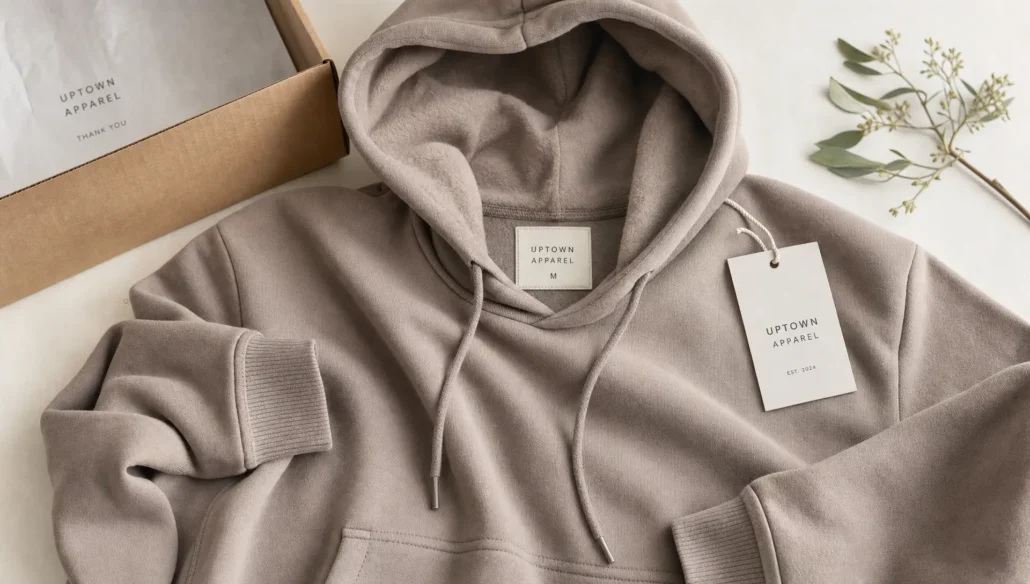
A brushed fleece hoodie does not become premium because it is soft. Softness gets a shopper to touch it. Premium shelf appeal comes from the way the hoodie holds shape, carries color, presents branding and still feels intentional after the first wash.
For brands selling into the USA, Canada, Europe, Australia, Germany, Poland and Brazil, this matters because hoodies sit in a crowded category. A buyer may compare your product against streetwear labels, gym brands, college merch and private-label basics within seconds. The hoodie has to communicate quality before anyone reads the hangtag.
That appeal is built long before the hoodie reaches a store rail or e-commerce product page. It starts with fabric engineering, brushing control, fit development, trims, decoration and production consistency. The right brushed fleece hoodie manufacturer helps turn those decisions into a retail-ready garment that looks more expensive than a generic blank.
What makes brushed fleece feel premium?
Brushed fleece is usually made with a smooth outer face and a raised inner surface. During finishing, the inner side is mechanically brushed to lift fibers and create a soft nap. That raised texture is what gives the hoodie its warm, plush handfeel.
Premium brushed fleece has balance. If it is too light, it can look flimsy on a hanger. If it is too bulky without structure, it can sag at the pocket, hood and cuffs. The best retail result comes from matching fabric weight, fiber blend, rib quality and pattern design to the product’s intended market.
A lifestyle hoodie for boutique shelves may need a dense, structured drape. A teamwear hoodie may prioritize durability, color consistency and print clarity. A gym or activewear hoodie may need a cleaner surface, better recovery and easier care. The fabric should match the promise of the label.
| Shelf cue | What the shopper notices | Manufacturing decision behind it |
|---|---|---|
| Soft handfeel | The hoodie feels plush when touched | Controlled brushing, suitable yarn and correct finishing |
| Clean silhouette | The hoodie looks structured, not limp | Fabric GSM, pattern balance and rib recovery |
| Rich color | The garment looks consistent across sizes | Dyeing control, shade matching and batch approval |
| Premium details | The hoodie feels branded, not generic | Labels, drawcords, eyelets, stitching and packaging |
| Lasting appeal | The garment still looks good after use | Shrinkage control, pilling checks and wash testing |
Fabric choices that influence shelf appeal
Fabric is the first quality signal. Before a shopper studies the stitching, they see weight, color depth and surface smoothness. A brushed fleece hoodie with the right fabric looks fuller when folded, photographs better online and gives retailers more confidence in the product.
Cotton-rich fleece often appeals to customers who want a natural handfeel and breathable comfort. Cotton-polyester blends can improve durability, shape retention and easier care depending on construction. Polyester-rich fabrics may support certain performance or sublimation needs, especially when bright graphics are central to the design. There is no single best blend for every market; the right choice depends on price point, use case and decoration method.
GSM also matters, but it should not be selected only for heaviness. A heavier hoodie can feel premium, yet a poorly balanced heavy fleece may still twist, shrink or lose shape. A medium-weight fabric with good density, smooth face yarn and stable rib can outperform a heavier fabric that was brushed aggressively to create temporary softness.
Brands should evaluate fabric through samples, not spec sheets alone. Ask for swatches, handfeel comparisons and washed samples before approving bulk production. If you want a reference point for how fleece texture and hoodie features come together, Extreme Sportswear’s printed fleece hoodie shows the kind of details buyers often review when assessing fabric, lining, fit and pocket construction.
Brushing quality separates premium from basic
The brushing process is one of the most important reasons a fleece hoodie feels elevated. Good brushing creates a uniform, soft inner nap without making the garment look fuzzy or unstable. Poor brushing may feel impressive at first touch, but it can lead to linting, pilling and a tired appearance after washing.
For premium shelf appeal, the inside of the hoodie should feel plush while the outside remains clean enough for decoration. Screen prints need a stable surface. Embroidery needs fabric that can support stitching without puckering. Applique, puff print, woven patches and silicone badges all depend on the fabric surface and garment structure beneath them.
Quality-focused manufacturers should also understand how finishing affects size consistency. Brushing can alter handfeel and dimension, so shrinkage testing and fit checks should be part of the development process. For formal textile testing, organizations such as AATCC publish widely used methods for evaluating laundering, colorfastness and appearance changes. A brand does not need to become a lab, but it should know which checks protect the final product.
A simple sample approval process can prevent expensive mistakes:
- Review unwashed and washed samples side by side.
- Check inside brushing for even texture and excessive shedding.
- Measure key points before and after washing.
- Test decoration on the final approved fabric, not on a substitute.
- Confirm bulk fabric shade under consistent lighting.
These steps help ensure the hoodie that looked premium in the first sample still looks premium when the full order arrives.
Construction gives the hoodie its retail shape
Shelf appeal is not only about fabric. Construction determines how the hoodie hangs, folds and frames the body. A premium brushed fleece hoodie should have enough structure in the shoulder, hood, hem and cuffs to hold its shape in-store and on model photography.
The hood is especially important. A thin, collapsing hood can make even soft fleece look cheap. A double-layer hood, clean seam alignment and balanced drawcord placement create a stronger visual impression. For pullover styles, the kangaroo pocket must sit flat without pulling the front panel out of shape. For zip hoodies, zipper quality, tape stability and center-front alignment become part of the premium signal.
Rib fabric is another detail buyers often underestimate. Cuffs and hems need recovery, meaning they should stretch comfortably and return to shape. Weak ribbing makes a hoodie look worn before it has been sold. Strong ribbing frames the garment and helps the fleece body look more structured.
| Construction detail | Premium effect | Risk if ignored |
|---|---|---|
| Balanced hood shape | Looks fuller on hanger and on body | Hood collapses or twists |
| Stable rib cuffs and hem | Gives the garment a finished frame | Cuffs stretch out quickly |
| Clean pocket placement | Front panel looks smooth | Pocket pulls, waves or sags |
| Reinforced seams | Supports heavier fleece | Seams strain during wear |
| Consistent topstitching | Signals careful workmanship | Garment looks uneven or rushed |
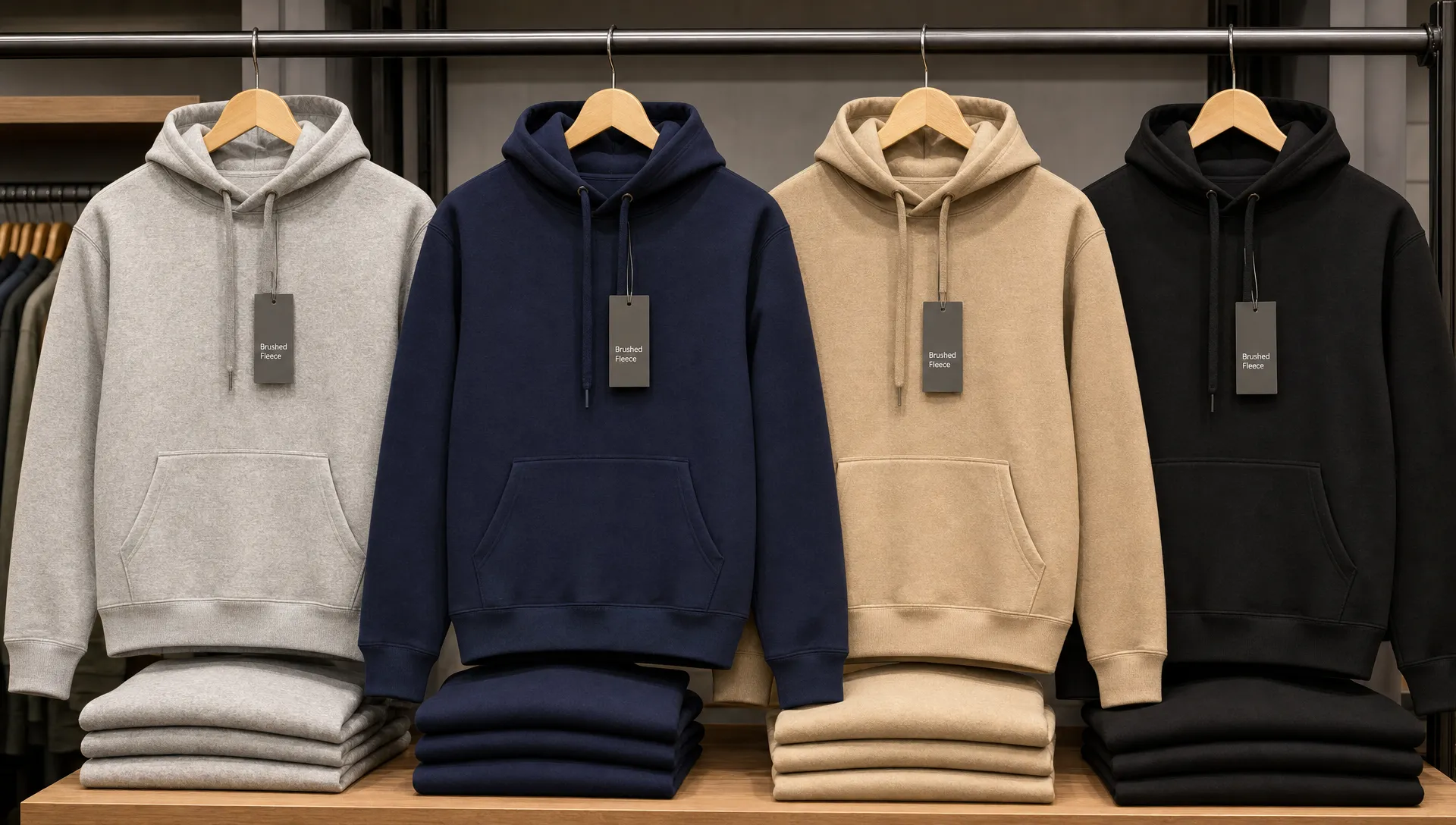
Branding turns softness into a sellable story
A hoodie can feel good and still look generic. Branding is what gives the product a reason to command a higher retail price. That does not mean covering the garment in logos. Premium branding is often subtle: a woven neck label, clean size tab, matching drawcord tips, a tonal embroidery hit or packaging that feels consistent with the collection.
Private-label brands should think about the hoodie as a complete retail unit. The customer sees the outside, then the label, then the hangtag, then the fit. If every touchpoint feels connected, the garment earns trust. If the fabric is soft but the label is scratchy, the drawcords feel cheap or the packaging is careless, the product loses its premium signal.
Decoration should be selected based on the hoodie’s design purpose. Screen printing works well for bold graphics when the fleece face is smooth and stable. Embroidery adds perceived value, especially for chest logos and small brand marks. Sublimation can suit polyester-rich fabrics and all-over graphic concepts. Custom patches, labels and trims can help a hoodie line stand apart without overcomplicating production.
For brands comparing fleece against loopback options, a French terry hoodie option can offer a different texture and seasonal feel. Brushed fleece usually leans warmer and plusher, while French terry often feels lighter and more breathable. The right choice depends on climate, customer expectation and retail positioning.
Why premium shelf appeal matters for wholesale buyers
Wholesale buyers do not judge a hoodie only by how it looks in a tech pack. They think about returns, reviews, margins and sell-through. A brushed fleece hoodie with strong shelf appeal can support better product photography, stronger first impressions and easier merchandising across colors.
In physical retail, a hoodie must look attractive when stacked, hung or tried on. In e-commerce, shelf appeal becomes thumbnail appeal. The hood shape, color depth, fabric texture and model fit all influence whether a shopper clicks. This is especially important in mature markets where customers are used to comparing product images quickly.
For teamwear, clubs and promotional collections, premium fleece can also protect brand perception. A school, gym, esports team or corporate merch buyer wants apparel that members will actually wear. If the hoodie feels soft but loses shape after a few washes, the brand attached to it takes the blame.
This is where manufacturing consistency becomes commercial value. A great sample is not enough. Premium shelf appeal depends on repeatable production across sizes, colors and reorders.
How the right manufacturer protects the premium signal
A capable brushed fleece hoodie manufacturer does more than sew panels together. The manufacturer helps translate your target retail price, audience and design idea into a practical production plan. That includes advising on fabric, fit, decoration, labels, packaging and quality checks.
For overseas buyers, communication is part of quality. Clear sample approvals, accurate measurements, fabric references and packaging instructions reduce the risk of surprises. This is especially important when developing private-label apparel for multiple markets, where sizing expectations, care labels and retail presentation may differ.
Extreme Sportswear is based in Pakistan and specializes in custom sportswear, activewear, teamwear and private-label apparel. Its services include cut-and-sew production, low MOQ orders, fast sampling, sublimation printing, screen printing, embroidery, uniform manufacturing, fabric customization and packaging customization. For hoodie programs, that flexibility helps brands test product ideas, refine details and scale collections with more control.
If you are building a broader fleece category, not just one hoodie style, you can also review Extreme Sportswear’s custom high quality sweatshirts for wholesale cut-and-sew sweatshirt and hoodie options.
Mistakes that make brushed fleece hoodies look cheap
Many hoodie projects lose premium value through small decisions that seem harmless during costing. Cutting a few cents from rib quality, drawcords, labels or finishing can weaken the entire retail impression.
Common issues include using fleece that feels soft in the sample but pills quickly, approving decoration before confirming final fabric, ignoring shrinkage after washing, choosing a hood pattern that collapses or using generic packaging for a product positioned as premium. Another frequent mistake is treating all markets the same. A heavyweight fleece hoodie that suits a Canadian winter capsule may not be the best choice for a warmer Australian or Brazilian drop.
Price matters, but premium appeal usually comes from alignment rather than expensive materials alone. Fabric, fit, trims, branding and packaging should all support the same market position. If one element feels lower grade than the rest, shoppers notice.
Buyer checklist before ordering brushed fleece hoodies
Before placing an order, brands should move beyond “soft fleece” and ask questions that connect product design to retail performance.
| Question to ask | Why it matters |
|---|---|
| What fabric composition and GSM options are available? | Helps match warmth, drape, cost and target market |
| Can I review washed samples before bulk approval? | Shows shrinkage, pilling and handfeel changes |
| Which decoration methods suit this fleece face? | Prevents cracking, puckering or poor print clarity |
| Are labels, trims and packaging customizable? | Supports private-label shelf appeal |
| How are measurements checked in production? | Protects fit consistency across sizes |
| Can the MOQ support a test drop? | Helps brands validate colors or styles before scaling |
A good manufacturer should welcome these questions. They show that the buyer is thinking like a retailer, not just sourcing the lowest-cost hoodie.
Frequently Asked Questions
What makes brushed fleece hoodies look premium? Premium brushed fleece hoodies combine soft inner brushing with a clean outer surface, balanced GSM, strong rib recovery, well-shaped hoods, consistent stitching and thoughtful branding. The hoodie should look structured on the shelf and feel comfortable when worn.
Is brushed fleece better than French terry for hoodies? Brushed fleece is usually warmer and plusher because the inner surface is raised for softness. French terry has a looped interior that often feels lighter and more breathable. Neither is always better; the right choice depends on season, market and product positioning.
What should I ask a brushed fleece hoodie manufacturer before ordering? Ask about fabric composition, GSM, brushing quality, shrinkage testing, pilling checks, decoration compatibility, label options, packaging customization, MOQ and sample timelines. Also request washed samples before approving bulk production.
Can brushed fleece hoodies be made for private labels? Yes. Private-label brushed fleece hoodies can include custom neck labels, size tabs, hangtags, embroidery, screen printing, sublimation where suitable, trims, drawcords and packaging. Confirm available options with the manufacturer during sampling.
Why does construction matter if the fabric is already soft? Soft fabric attracts attention, but construction keeps the hoodie looking premium. Hood shape, pocket placement, rib recovery and seam quality affect how the garment hangs, photographs and performs after wear.
Make your next fleece hoodie line look premium
A premium hoodie is not built from one feature. It is the result of fabric, brushing, fit, trims, branding and manufacturing control working together. If your brand is planning a brushed fleece hoodie collection for retail, teamwear or private label, start with a manufacturer that understands how shelf appeal is created at production level.