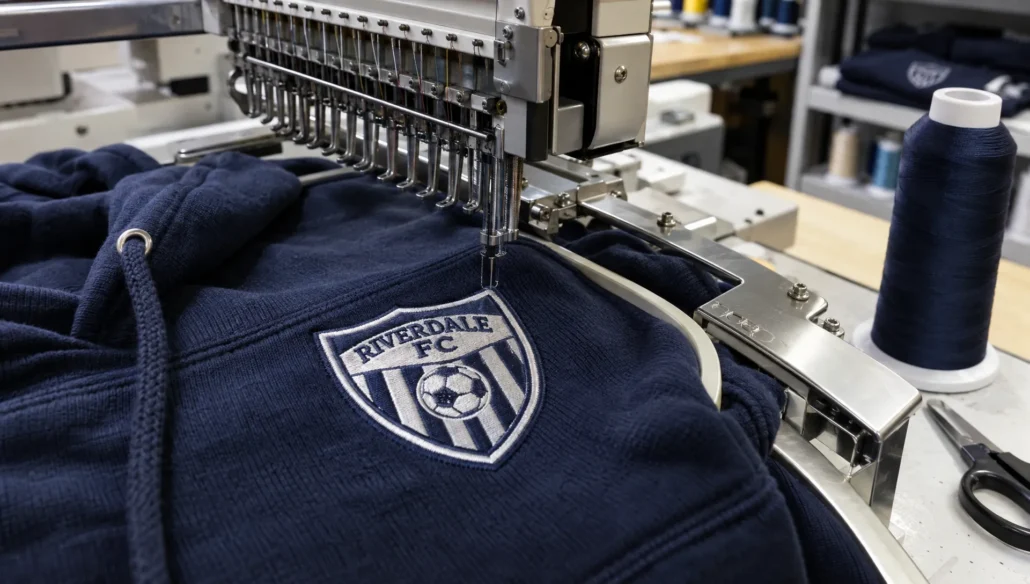
A team store can do more than supply uniforms. With custom sports merchandise, it can serve players, parents, alumni and supporters who want to represent the club beyond match day. The opportunity is to offer products people will actually wear, at prices that support the store’s costs, without tying up too much cash in inventory.
For clubs, schools and sports organizations, expanding successfully means choosing a focused product range, testing demand and creating a straightforward buying experience. Start with the customers your current store overlooks, then build the collection around their needs.
Identify the gaps in your current team store
Before adding products, review what already sells and what customers repeatedly request. Separate purchases made out of necessity, such as required playing kits, from purchases driven by preference, such as a comfortable hoodie in team colors.
Order history can reveal useful gaps. Parents may buy youth uniforms but have no adult supporter option. Alumni may want a subtle club logo rather than a player-style jersey. Athletes may need training apparel that is unavailable outside the annual uniform order.
If your sales history is limited, use a short customer survey or collect expressions of interest at games. Ask about preferred garments, sizes and acceptable price ranges. A stated preference is not a confirmed sale, but it gives you a better starting point than choosing products solely because they look appealing.
Use custom sports merchandise to reach more buyers
A wider audience does not require a huge catalog. It requires clear reasons for different customers to buy.
| Customer group | Product direction to test | Buying occasion |
|---|---|---|
| Players | Training shirts, shorts and warm-up apparel | Preseason or replacement purchases |
| Parents and supporters | Everyday T-shirts and hoodies | Games, gifting and casual wear |
| Alumni | Understated apparel with heritage branding | Reunions and club anniversaries |
| Coaches and volunteers | Coordinated polos or training tops | Events and regular team duties |
| Youth families | Youth-sized supporter apparel | Junior competitions and family purchases |
Treat these as ideas to validate, not guaranteed best sellers. Climate, club culture and purchasing power will influence the right mix. A heavy hoodie may work well for a winter season but be less useful for a summer tournament.
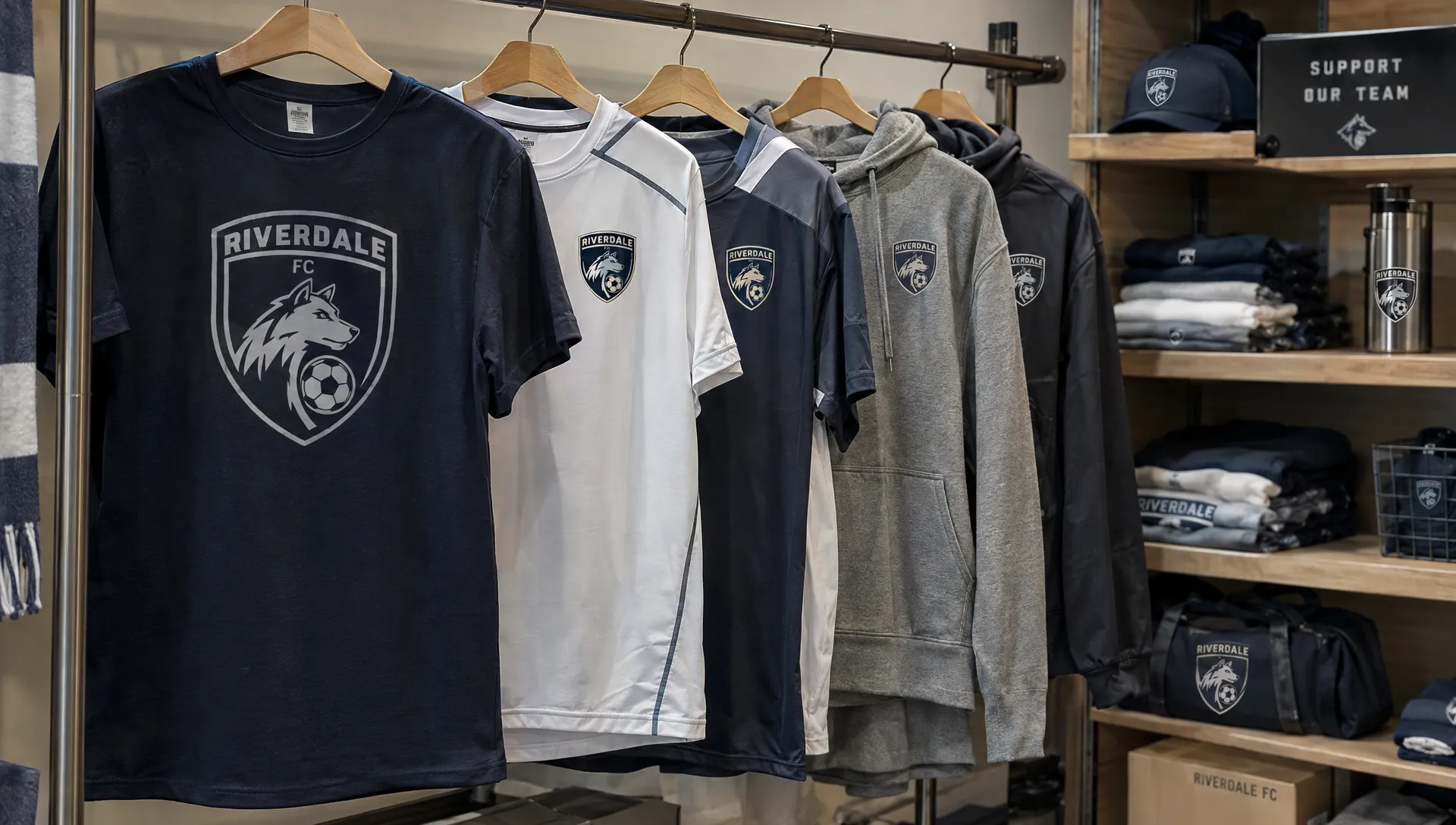
Keep the branding consistent while varying how prominently it appears. A large graphic can suit a supporter shirt, while a smaller embroidered crest may appeal to someone who wants everyday clothing.
To compare garments for your opening range, explore Extreme Sportswear’s teamwear options and shortlist the styles that match your audience.
Build a focused assortment instead of adding every option
The strongest starting range for custom sports merchandise usually gives each product a distinct role. One item provides an accessible entry point, another supports everyday wear and a higher-priced piece serves customers seeking a more substantial garment.
Separate permanent products from seasonal releases
Keep a small core collection available for recurring demand. This might include a team T-shirt, a training top and a hoodie, depending on your sport and climate. Add event-specific designs only when there is a clear buying occasion, such as a tournament or anniversary.
A core collection makes replenishment easier. Limited releases create a reason to revisit the store, but their order windows and delivery dates need to be credible. Avoid artificial scarcity or deadlines that the production schedule cannot support.
Control size and color combinations
Three styles offered in two colors and six sizes create 36 stock-keeping combinations before personalization. That is a meaningful inventory commitment for a small store.
Start with fewer colorways and use an inclusive size range based on customer needs and supplier availability. Track requests for missing sizes rather than assuming low historical sales mean low demand. Customers cannot buy sizes you have never offered.
Price products using contribution, not markup alone
Custom sports merchandise can increase revenue while still leaving the store short of cash if pricing ignores shipping, transaction fees and fulfillment costs. Calculate what remains from each order before deciding whether a product belongs in the range.
A practical formula is:
Contribution per item = net selling revenue minus landed product cost, payment fees and variable fulfillment costs.
Use net revenue after discounts and any taxes collected for remittance. Landed product cost should include manufacturing, inbound freight, applicable duties and other costs required to get the goods into your inventory.
For illustration only, consider an item sold for $40, excluding tax:
| Item | Illustrative amount |
|---|---|
| Selling revenue | $40.00 |
| Landed product cost | $18.00 |
| Payment fee | $1.50 |
| Variable fulfillment cost | $3.00 |
| Contribution before other expenses | $17.50 |
These figures are not supplier prices or an industry benchmark. They also exclude advertising, returns, fixed overhead and any shipping subsidy not already included.
If one-time launch expenses were $350, selling 20 units at that contribution would cover those expenses alone. This is not the same as reaching overall business profitability.
Bundles can help customers buy coordinated products, but check the combined contribution after the discount. Higher order value is useful only when the order still supports your costs.
Test demand before committing to production
Preorders and small opening runs can reduce the risk of expanding custom sports merchandise, provided the order process is transparent. They are different approaches: a preorder collects demand before fulfillment, while a small stock order lets you ship available products sooner.
Match the ordering model to the product
An evergreen supporter shirt may justify holding stock once demand is established. A tournament garment with a short selling season may be better suited to a defined preorder window.
State when the window closes, when delivery is expected and what happens if the minimum production quantity is not reached. Also explain whether personalized items have different return conditions, subject to the consumer laws that apply to your customers.
Confirm manufacturing details before launch
Extreme Sportswear offers custom sportswear manufacturing, private-label production, cut-and-sew services, low MOQ orders and fast sampling. Its customization options include sublimation printing, screen printing, embroidery, fabrics and packaging.
Those capabilities do not establish an exact minimum quantity or delivery date for every product. Request confirmation for each proposed style, including whether minimums apply by design, color or another production grouping.
Approve a physical sample where possible. Check measurements, fabric feel, decoration placement and performance after laundering according to the care instructions. Confirm bulk-production timing separately from sampling and allow for international shipping and customs.
The guide to ordering custom sportswear from manufacturers provides a useful foundation for preparing your supplier request.
Make the online store easy to shop
Adding garments will not help much if shoppers cannot choose the correct size or understand when their order will arrive. Product pages should answer those questions before checkout.
Show the actual design and explain the garment’s intended use, fabric information, fit and care requirements. Provide garment measurements and clarify how customers should use them. Avoid relying on labels such as “adult medium” without a supporting size chart.
Keep navigation tied to buying needs. Categories such as “Supporter Apparel,” “Training Wear” and “Youth” may be easier to browse than one long product grid. Clearly distinguish available stock from preorders.
For stores that need a website rebuild, BeBranded’s Webflow e-commerce design and integration services cover product-page design and connections for payments, inventory, SEO and analytics. Assess the platform against your specific requirements, particularly personalization, preorder handling and fulfillment workflows.
If you sell internationally, display currencies, shipping destinations and delivery information clearly. Tell buyers how import charges are handled and confirm applicable tax and consumer-law requirements with qualified local advisers. Do not promise duty-free delivery unless your shipping arrangement supports it.
Turn the first launch into a repeatable store program
The long-term value of custom sports merchandise comes from learning which products deserve replenishment and which should remain occasional releases. Review results by style, size and color rather than judging the entire collection by total revenue.
Track sell-through alongside contribution, exchanges and customer feedback. A product that sells quickly but generates frequent fit complaints may need revision before another order. A slower seller with strong contribution may simply need clearer photography or better placement.
A small set of operating measures is enough to start:
- Sell-through: The share of available stock sold during a defined period.
- Contribution per order: Revenue remaining after the relevant variable costs.
- Size-related exchanges: A signal to review fit, measurements or product descriptions.
- Repeat purchases: Evidence that customers return beyond the initial launch.
Schedule promotions around genuine club activity. Preseason, tournaments, alumni events and gifting periods can provide natural launch opportunities. Coordinate posts, email announcements and physical samples so customers see the same collection across channels.
Before reordering, compare recent sales with remaining stock and confirmed production lead times. Do not automatically repeat the original size split. Your first order is a test; later orders should reflect what customers actually bought.
Frequently asked questions
What products should a small team store launch first? Start with a few products that serve different needs, such as an accessible supporter T-shirt, a training garment and a seasonal layer. Choose the final mix using customer requests, climate and sample feedback rather than trying to cover every category.
Is custom sports merchandise suitable for a small club? Yes, if the range and ordering model fit the club’s demand and budget. Low MOQ production or a clearly managed preorder can help limit the initial commitment, but minimum quantities and total costs still need supplier confirmation.
Can we use team crests, sponsor logos and player names? Confirm permission for every protected logo and design before production. Check sponsor agreements for merchandise restrictions and obtain appropriate consent for personal information, especially where youth players are involved.
Should every product include personalization? No. Names and numbers may suit player apparel, while standard branded products can be simpler to stock and fulfill. If personalization is offered, confirm spelling, artwork approval, additional charges and applicable return conditions before accepting orders.
Plan your next team store collection
Choose a small range with a clear buyer for each product, approve samples and calculate costs before opening sales. Then use the first launch to improve your assortment rather than immediately adding more styles.
Extreme Sportswear’s custom manufacturing, decoration and private-label capabilities can support that process. Prepare a brief with garment types, estimated quantities, size requirements, branding files, delivery destinations and your intended launch date.
When you are ready to assess production options, contact Extreme Sportswear to request a custom manufacturing quote and confirm the MOQ, sampling process and lead times for your collection.