
Premium activewear is no longer just a category. In 2026, it is one of the clearest ways for a sportswear, fitness, or lifestyle brand to communicate quality before a customer ever reads a product description. The fabric feel, fit consistency, stitching, stretch recovery, branding details, and packaging all work together to tell buyers whether your brand is serious.
For newer brands, premium activewear can create instant credibility. For established brands, it can protect margins, improve customer loyalty, and open the door to better wholesale, teamwear, gym, and private-label opportunities. The difference is not simply charging more. It is building apparel that gives customers a better experience and gives your brand a stronger position in a crowded market.
Why premium activewear matters more in 2026
The activewear market has matured. Customers have already tried basic leggings, training shirts, joggers, tracksuits, and gym sets from dozens of online brands. In 2026, they are more selective, and they compare products quickly based on touch, comfort, reviews, fit photos, and brand presentation.
That means generic products are easier to ignore. A brand that sells the same silhouettes, same fabrics, and same prints as everyone else has to compete on discounts. A brand that invests in premium activewear can compete on identity, performance, and trust.
This shift aligns with broader fashion industry pressure. McKinsey’s State of Fashion research has repeatedly highlighted more cautious consumers, higher expectations, and the need for brands to be sharper about value. In activewear, “value” does not always mean low price. It often means a product that feels worth the price because it performs well, looks refined, and lasts beyond the first few wears.
Premium activewear also supports the way people dress now. Training clothes are no longer limited to the gym. Customers wear performance pieces for travel, errands, work-from-home days, recovery, and casual social settings. The brands that win are the ones that understand this hybrid lifestyle and create apparel that performs during movement while still looking polished.
What actually makes activewear premium?
Premium is not one feature. It is the combined result of material choice, product engineering, production quality, and brand presentation. A shirt made from a moisture-wicking fabric can still feel cheap if the seams twist after washing. A tracksuit can look stylish in photos but fail if the zipper, rib, or embroidery feels low quality.
The table below breaks down the elements that usually separate basic activewear from premium activewear.
| Premium element | What it means for the customer | What it means for your brand |
|---|---|---|
| Performance fabric | Better stretch, breathability, moisture control, and comfort | Stronger product reviews and fewer complaints |
| Fit development | Garments sit correctly during movement and daily wear | More consistent sizing and better repeat purchases |
| Construction quality | Strong seams, clean finishing, durable trims, and reliable shape retention | Higher perceived value and fewer defects |
| Custom branding | Labels, trims, prints, embroidery, and packaging match the brand identity | More memorable customer experience |
| Product consistency | Bulk production matches approved samples closely | Better trust with buyers, teams, and retailers |
| Functional design | Pockets, panels, waistbands, cuffs, and closures are designed with use in mind | Clearer differentiation from generic apparel |
The biggest mistake brands make is treating premium as decoration. A luxury-looking logo or bold print cannot compensate for poor fabric recovery, weak stitching, or an uncomfortable fit. True premium activewear starts with how the product feels and performs, then builds the visual identity around that foundation.
How premium activewear elevates your brand
It strengthens your positioning
Premium activewear helps customers understand where your brand belongs. Are you building for high-intensity training, lifestyle athleisure, team performance, modest fitness, wellness, or street-inspired sportswear? The materials, silhouettes, and finishing details should answer that question before your customer clicks “add to cart.”
A clearly positioned product line is easier to market. Instead of saying “we sell gym clothes,” your brand can communicate a sharper promise: breathable training apparel for serious athletes, polished activewear for everyday movement, or custom teamwear that looks professional on and off the field.
If you are still defining your product range, the guide on choosing the right fitness apparel for your brand is a useful next step because it focuses on product selection, fit, fabrics, and quality from a brand-building perspective.
It gives you more pricing power
Customers may resist a higher price when a product looks ordinary. But when the garment feels better, fits better, and arrives with thoughtful presentation, the price becomes easier to justify. Premium activewear gives your brand more room to build healthy margins because you are not relying only on low-cost basics.
This does not mean every product must be expensive. Many brands use a good, better, best structure. For example, a basic training tee can introduce customers to the brand, while a premium cut-and-sew tracksuit, performance hoodie, or private-label gym set becomes the higher-value product that defines the collection.
It improves customer trust
Trust is built through details. Customers notice when a waistband rolls, a seam rubs, a print cracks, or a shirt loses shape after washing. They also notice when the opposite happens. A product that continues to perform after repeated use turns a first-time buyer into a returning customer.
In activewear, trust is especially important because the product is worn during movement. Poor construction is not just a cosmetic issue. It affects comfort, confidence, and performance. Premium manufacturing reduces that risk and helps your brand earn stronger reviews, referrals, and repeat orders.
It creates better content and merchandising
Premium products are easier to photograph, style, and sell. Fabrics drape better. Prints look cleaner. Embroidery appears more refined. Fit consistency makes product photos more reliable. Packaging can also create a better unboxing experience, which matters for direct-to-consumer brands and influencers.
The more polished your product is, the more usable your content becomes across social media, website banners, ads, wholesale catalogs, and lookbooks. In a visual category like activewear, better product execution directly supports better marketing.
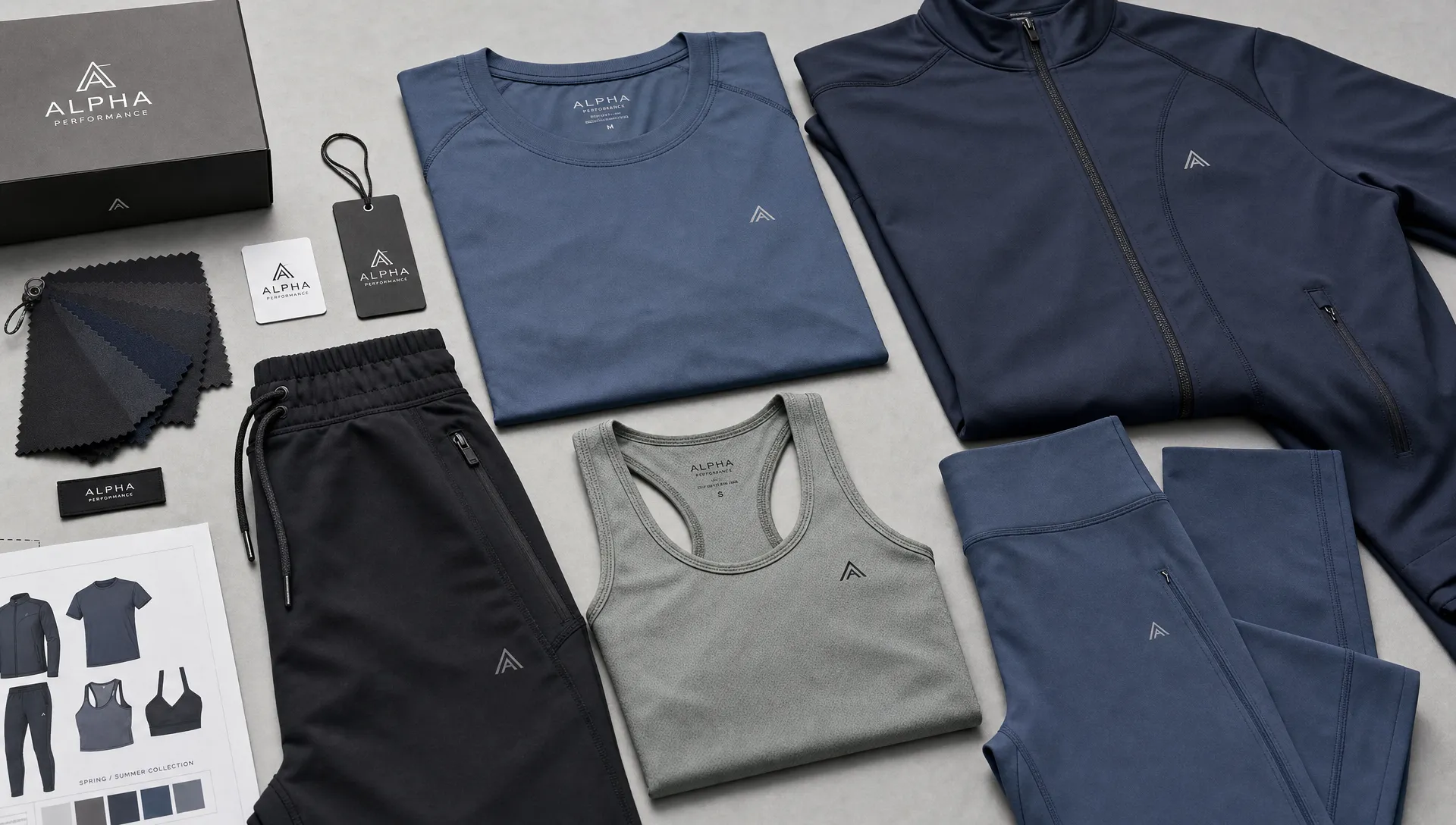
Product categories where premium details have the biggest impact
Not every product requires the same level of technical development. A simple cotton lifestyle tee has different requirements than compression leggings or a performance training jacket. The key is to invest premium details where customers will feel the difference most.
Training shirts benefit from breathable, moisture-managing fabrics, smooth seams, and a fit that allows shoulder movement without looking oversized. If performance fabric is central to your line, understanding the benefits of Dri-Fit-style apparel can help you think through comfort, sweat control, and workout use cases.
Leggings, shorts, and compression pieces require even more attention to stretch, opacity, waistband structure, and recovery. These are high-expectation products. A customer might forgive a slightly relaxed tee, but they will not forgive leggings that become transparent, slide down, or lose shape.
Tracksuits, hoodies, joggers, and warm-up sets are also powerful brand builders. They are visible, versatile, and often worn outside training environments. Premium finishing such as custom zippers, rib quality, panel design, embroidery, and clean topstitching can turn these pieces into signature products.
Teamwear and uniforms benefit from premium execution because they represent a group identity. When a club, gym, school, or sports team wears your apparel, every piece becomes a moving advertisement for your brand. Consistency across sizes, colors, logos, and trims matters.
The manufacturing choices that protect premium positioning
A premium brand promise can collapse if production is not aligned with the product vision. This is why manufacturer selection matters as much as design. The right partner should understand fabric behavior, printing methods, embroidery placement, grading, sampling, bulk consistency, and packaging requirements.
For activewear brands, cut-and-sew production is often a major advantage because it allows more control over patterns, panels, fit, and finishing than simply applying a logo to stock garments. Customization can include fabric selection, sublimation printing, screen printing, embroidery, trims, labels, and packaging.
Sampling is another critical step. A fast sample is useful, but an accurate sample is even more valuable. Before approving production, brands should test the garment for movement, wash behavior, print placement, shrinkage, stitching comfort, and size accuracy. The sample is not just a preview. It is the blueprint for the final product.
When comparing suppliers, look closely at these manufacturing factors:
- Fabric options that match your intended use, from breathable training materials to heavier lifestyle fleece.
- Customization capabilities such as sublimation, screen printing, embroidery, labels, trims, and packaging.
- Pattern and fit development support for your target customer and size range.
- Low MOQ flexibility if you want to test a collection before scaling.
- Export-quality production standards and clear communication throughout sampling and bulk manufacturing.
If you are evaluating production partners, the article on choosing an OEM sportswear manufacturer covers practical considerations such as material quality, manufacturing capabilities, customization, and production capacity.
2026 activewear trends brands should pay attention to
Trends can help your brand feel current, but they should never replace strategy. The strongest brands use trends selectively and adapt them to their audience. In 2026, several directions are especially relevant for premium activewear.
One major direction is “quiet performance.” This means technical apparel that does not look overly sporty. Think clean lines, subtle branding, refined textures, tonal panels, and versatile silhouettes. These pieces work for training, travel, and everyday wear, which increases their value to the customer.
Another direction is hybrid active-lifestyle dressing. Customers want pieces that transition from workouts to daily routines without feeling out of place. Joggers, quarter-zips, cropped hoodies, relaxed performance tees, and lightweight jackets are strong examples.
Inclusive fit is also becoming more important. Premium brands cannot rely on one generic fit block. Different markets, body types, and sports require different proportions. Better grading, size testing, and fit feedback can help brands serve more customers with confidence.
Responsible material choices will continue to matter, but customers are becoming more alert to vague sustainability claims. If you use recycled, organic, or specialty materials, communicate clearly and avoid exaggeration. Organizations such as Textile Exchange provide useful industry resources for understanding preferred fibers and responsible sourcing conversations.
Finally, private-label activewear is becoming more sophisticated. Gyms, fitness influencers, teams, and lifestyle businesses want apparel that feels like a real brand, not generic merchandise. This creates opportunity for businesses that can combine strong design direction with reliable custom manufacturing.
A practical roadmap for launching premium activewear
A premium activewear launch does not need to start with a huge collection. In fact, focused capsules often perform better because they are easier to sample, test, market, and refine. The goal is to launch products that prove your brand’s quality, then expand based on customer response.
| Launch stage | Key decision | Why it matters |
|---|---|---|
| Brand positioning | Define the customer, sport, lifestyle, and price level | Keeps your collection focused |
| Product selection | Choose a small number of hero products | Prevents overextension and improves quality control |
| Fabric development | Match materials to performance and comfort needs | Creates the core premium experience |
| Sampling | Test fit, movement, wash, and decoration quality | Reduces costly bulk production mistakes |
| Branding | Finalize labels, trims, packaging, and logo placement | Builds recognition and perceived value |
| Launch testing | Collect reviews, returns data, and customer feedback | Helps improve the next production run |
For many brands, the best starting point is a capsule of three to six products. This might include a performance tee, training shorts, leggings, joggers, hoodie, and lightweight jacket. A gym or teamwear brand may start with uniforms and warm-up sets. A lifestyle activewear brand may prioritize joggers, cropped tops, oversized tees, and zip hoodies.
The important thing is coherence. Every piece should feel like it belongs to the same brand world. Colors, fabric weight, logo placement, fit style, and packaging should support one clear identity.
How to measure whether premium activewear is working
Premium activewear should improve more than appearance. It should create measurable business advantages. After launch, monitor the indicators that show whether customers truly value the product.
Return rate is one of the first signals. If customers frequently return items because of fit, transparency, discomfort, or quality concerns, the product needs adjustment. Review language is another valuable signal. Look for repeated comments about softness, fit, stretch, durability, and compliments.
Repeat purchase rate shows whether customers trust your brand enough to buy again. Average order value can also increase when premium products are bundled into sets or collections. For teamwear and wholesale buyers, reorder consistency is especially important because it shows confidence in your production quality.
Do not treat feedback as criticism only. Treat it as product development data. Premium brands improve through iteration. Each sample, launch, review, and reorder gives you information that can make the next collection stronger.
Frequently Asked Questions
What is premium activewear? Premium activewear is sportswear or fitness apparel made with better fabrics, stronger construction, improved fit, and more refined branding details than basic activewear. It is designed to perform well, feel comfortable, and support a stronger brand image.
Why should a brand invest in premium activewear in 2026? Premium activewear helps brands stand out in a crowded market, justify better pricing, improve customer trust, and create products that work for both performance and lifestyle use.
Does premium activewear always require high order quantities? Not always. Some manufacturers offer low MOQ options, which can help brands test a premium capsule collection before committing to larger production runs.
Which customization options matter most for premium activewear? Fabric selection, fit development, sublimation printing, screen printing, embroidery, custom labels, trims, and packaging all influence how premium the final product feels.
How do I avoid making my activewear look generic? Start with a clear brand position, develop custom fit and fabric choices, use distinctive but practical design details, and make sure branding elements such as labels, prints, and packaging feel consistent.
Build a premium activewear line with the right production partner
Premium activewear can elevate your brand only when the product execution matches the promise. Strong design needs reliable sampling, quality materials, accurate decoration, and consistent production.
Extreme Sportswear is a Pakistan-based custom clothing manufacturer specializing in sportswear, activewear, teamwear, and private-label apparel. With cut-and-sew production, low MOQ options, fast sampling, sublimation printing, screen printing, embroidery, and fabric and packaging customization, Extreme Sportswear helps brands and teams create apparel built for performance and presentation.
If you are planning a premium activewear collection for 2026, start with a focused product idea, define the customer experience you want to create, and work with a manufacturing partner that can turn that vision into export-quality apparel.