
Choosing the right blank hoodie manufacturer is one of the most important decisions you will make before launching or scaling a hoodie line. A great design can fail if the fabric shrinks, the fit is inconsistent, the stitching feels weak, or the supplier cannot repeat the same quality after the first sample.
A blank hoodie may look simple, but for a brand it is the foundation of everything that follows. It affects your pricing, customer reviews, decoration results, packaging experience, and reorder potential. Whether you plan to sell minimalist streetwear, gym-ready fleece, school merch, or hoodies for printing, your manufacturer should be able to turn a basic garment into a reliable retail product.
This guide breaks down how to evaluate a blank hoodie manufacturer before you commit to sampling, bulk production, or a long-term private-label partnership.
Define what “blank hoodie” means for your brand
Before contacting suppliers, get specific about what you mean by “blank.” Some brands use blank hoodies as undecorated stock for later screen printing or embroidery. Others want fully private-label hoodies with custom fabric, labels, trims, packaging, and no visible manufacturer branding.
Those are very different production needs.
A print shop may only need a consistent pullover hoodie with a smooth surface. A premium streetwear brand may need a heavyweight oversized fit, custom ribbing, a specific hood shape, and retail packaging. A fitness brand may prefer a lighter fleece blend that moves well and feels breathable.
If you are still shaping your product idea, it can help to review broader planning resources such as this guide on how to start a hoodie line before you finalize your manufacturer brief.
Your first step is to create a clear product specification. At minimum, include:
- Hoodie type, such as pullover, zip-up, oversized, cropped, heavyweight, or performance hoodie
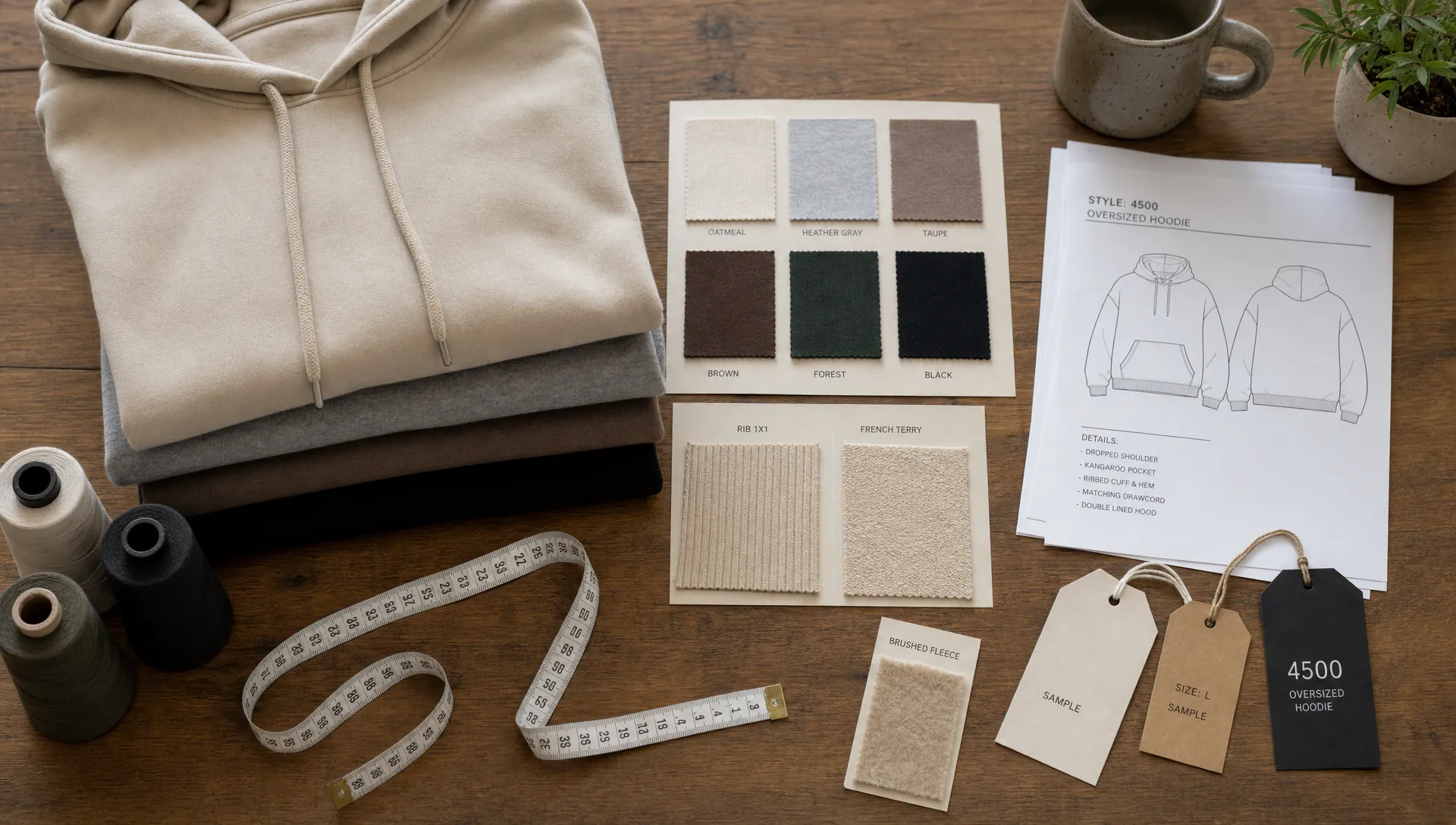
- Target fabric, such as cotton fleece, cotton-poly fleece, French terry, or brushed fleece
- Approximate fabric weight, often measured in GSM
- Fit direction, such as regular, relaxed, boxy, athletic, or oversized
- Decoration plans, such as screen printing, embroidery, sublimation, patches, or plain retail blanks
- Labeling needs, such as woven neck labels, size labels, hangtags, care labels, and polybags
- Order quantity for sampling, first production, and expected reorders
The clearer your brief, the easier it becomes to compare manufacturers fairly.
Choose the right manufacturing model
Not every supplier makes hoodies the same way. Some sell ready-made blanks from existing inventory. Others offer cut-and-sew manufacturing, where the hoodie is produced from fabric according to your custom pattern, sizing, and construction requirements.
For a serious clothing brand, the difference matters.
| Manufacturing model | Best for | Main advantage | Main limitation |
|---|---|---|---|
| Stock blanks | Fast merch drops, simple printing, small test runs | Quick availability | Limited control over fit, fabric, and labeling |
| Semi-custom blanks | Brands that need basic labeling or color changes | More brand control than stock blanks | Still limited by existing patterns or materials |
| Cut-and-sew production | Private-label brands, streetwear labels, sportswear brands | Full control over fit, fabric, trims, and finish | Requires clearer specs and sampling |
| Full-package manufacturing | Brands that want sourcing, production, decoration, and packaging in one place | Streamlined production process | Requires careful communication and approval stages |
If your goal is to create a recognizable brand rather than resell generic garments, a cut-and-sew or full-package blank hoodie manufacturer is usually the better fit.
Evaluate fabric knowledge, not just fabric options
Fabric is where many hoodie projects succeed or fail. Two hoodies can both be described as cotton fleece, but feel completely different after washing and wearing. A reliable manufacturer should be able to explain how the fabric behaves, not just list available materials.
Ask how the fabric performs in areas such as shrinkage, softness, pilling, stretch recovery, colorfastness, and print compatibility. If you plan to print large graphics, the hoodie surface should be stable and smooth enough for clean results. If you plan to sell premium blanks, the hand feel and drape become even more important.
Common hoodie fabric options include cotton fleece, cotton-poly fleece, French terry, brushed fleece, and performance blends. None is automatically best. The right choice depends on your audience, climate, retail price, and decoration method.
For example, a heavyweight cotton fleece can feel premium and structured, which works well for streetwear. French terry may feel lighter and more breathable, which can work better for transitional seasons or active lifestyles. A cotton-poly blend may help with durability and shrinkage control, depending on construction and finishing.
If a supplier cannot explain why a fabric suits your intended product, keep looking.
Check the manufacturer’s blank hoodie specialization
Many garment factories claim they can make everything. That does not mean they are the right partner for hoodies. Hoodie manufacturing involves details that differ from basic T-shirts or lightweight activewear.
A strong blank hoodie manufacturer should understand:
- Hood shape, depth, lining, and drawcord placement
- Kangaroo pocket positioning and reinforcement
- Rib cuff and waistband recovery
- Shoulder slope and sleeve length balance
- Zipper quality for full-zip hoodies
- Seam strength in high-stress areas
- Fleece finishing, brushing, and shrinkage control
- Consistent grading across sizes
Look for suppliers who can show relevant hoodie samples, not just general apparel samples. If you need blanks for printing, review options like bulk hoodies for printing so you can think through fabric, sizing, logo placement, and order requirements before production.
Review customization capabilities carefully
Even if you are ordering blank hoodies, customization still matters. Your hoodie can remain visually blank while still being fully branded through labels, fit, trims, fabric, and packaging.
Ask whether the manufacturer can support:
- Custom fabric selection or fabric development
- Custom patterns and size grading
- Private-label neck labels and care labels
- Custom drawcords, eyelets, zippers, and ribbing
- Screen printing, sublimation printing, and embroidery if needed later
- Branded hangtags, polybags, cartons, and packaging inserts
- Color matching for brand-specific shades
This is especially important if you plan to start with blank hoodies and later expand into printed drops, embroidered collections, or teamwear. Choosing a manufacturer with broader customization options can reduce the need to switch suppliers as your brand grows.
Extreme Sportswear, for example, supports custom sportswear and private-label apparel production in Pakistan, including cut-and-sew services, fabric customization, sublimation printing, screen printing, embroidery, and packaging customization. If you want a more tailored production route, you can explore its hoodie manufacturing options in Pakistan.
Understand MOQ before you compare quotes
MOQ, or minimum order quantity, can shape your entire launch strategy. A low MOQ allows you to test products, validate demand, and reduce inventory risk. A higher MOQ may reduce unit cost but can tie up cash in unsold stock.
When evaluating a blank hoodie manufacturer, do not only ask, “What is your MOQ?” Ask what changes the MOQ.
MOQ may vary by fabric, color, size range, custom dyeing, labels, trims, printing, embroidery, and packaging. For example, using an available fabric color may require a lower MOQ than dyeing a custom Pantone shade. Adding private-label trims may also affect minimums.
A good manufacturer should help you understand the trade-off between customization and order size. For a first drop, you may want to simplify the hoodie specification so you can test the market without overcommitting.
Make sampling a serious approval process
A sample is not just a preview. It is your opportunity to identify problems before bulk production begins.
When you receive a hoodie sample, review it like a customer and like a product developer. Try it on different body types if possible. Wash it according to the care instructions. Measure it before and after washing. Check the hood, cuffs, waistband, pocket, seams, label placement, and overall feel.
Here is a simple sample review checklist:
| Checkpoint | What to inspect | Why it matters |
|---|---|---|
| Fit | Chest, shoulder, sleeve, body length, hood size | Determines customer satisfaction and return risk |
| Fabric | Weight, softness, stretch, shrinkage, pilling | Affects comfort, durability, and perceived value |
| Stitching | Seam strength, loose threads, pocket attachment | Prevents defects and improves product lifespan |
| Branding | Labels, hangtags, packaging, logo placement | Creates a professional retail experience |
| Decoration readiness | Print surface, embroidery stability, color consistency | Helps avoid poor decoration results later |
| Wash performance | Shrinkage, twisting, fading, texture changes | Shows how the hoodie will perform after purchase |
Do not approve bulk production based only on photos. Photos are useful, but fabric feel, weight, fit, and finishing must be checked physically whenever possible.
Ask about quality control at every stage
Quality control should not happen only at the end of production. By then, mistakes can be expensive to fix. A dependable manufacturer should have checks during fabric inspection, cutting, stitching, finishing, packing, and final inspection.
Ask how the factory handles measurement tolerances, shade variation, needle damage, stains, skipped stitches, label errors, and packaging mistakes. Also ask what happens if bulk goods do not match the approved sample.
For blank hoodies, consistency is everything. Your customers may order multiple colors or reorder the same size later. If every production run fits differently, your brand loses trust.
Operational reliability also matters. If your supplier stores your custom labels, branded packaging, trims, or finished stock, ask how materials are protected and tracked. The same diligence companies use when selecting business security providers such as Locked Safe can apply to apparel supply chains: controlled access, accountability, and documented procedures help reduce avoidable risk.
Compare pricing based on total value, not unit cost alone
A low unit price can look attractive until you factor in poor quality, delays, high defect rates, weak packaging, or inconsistent sizing. When comparing quotes, ask what is included and what is not.
Your total cost may include sampling, pattern development, fabric sourcing, trims, labels, printing or embroidery, packaging, inspection, freight, duties, and payment fees. A slightly higher production quote may be better if it includes stronger fabric, better finishing, reliable communication, and fewer defects.
Be cautious if one quote is dramatically lower than the rest. It may indicate lower fabric quality, lighter GSM, weaker stitching, limited quality control, or unclear assumptions. Always compare quotes against the same product specification.
A useful question is: “What would you change to reduce cost without hurting the brand experience?” A good manufacturer can suggest practical adjustments, such as simplifying packaging, choosing available fabric colors, or optimizing the size ratio.
Look for communication that prevents mistakes
Good apparel production depends on communication. Your manufacturer should ask questions, confirm details, and document approvals. If a supplier rushes into quoting without understanding fabric, fit, labels, quantities, or decoration plans, that is a warning sign.
Strong communication includes clear timelines, written specifications, sample comments, updated invoices, production photos when appropriate, and confirmation before key steps. You should know what is being made, when it is being made, and what is needed from you to keep production moving.
Because many clothing brands work with overseas manufacturers, time zone differences and language clarity matter. Choose a partner who responds professionally and can explain technical points in a way you understand.
Confirm production capacity and reorder consistency
Your first order may be small, but your manufacturer should be able to grow with you. Ask how they handle repeat orders, size grading, color matching, and fabric availability over time.
If your hoodie becomes a core product, customers will expect the same fit and quality in future drops. That means your manufacturer must maintain patterns, measurement specs, fabric records, label details, and packaging instructions.
Before choosing a blank hoodie manufacturer, ask these questions:
- Can you keep our approved pattern and size specs for reorders?
- What happens if the original fabric is unavailable later?
- Can you scale from a low MOQ order to larger production runs?
- How do you manage color consistency between batches?
- Can you support additional styles if our brand expands?
A manufacturer that can handle both small test runs and larger export-quality production gives your brand more flexibility.
Watch for red flags before placing an order
Some warning signs appear early. Do not ignore them because you are eager to launch.
Be careful if a manufacturer refuses to provide samples, avoids written specifications, gives vague answers about fabric, cannot explain MOQ, pushes you to pay quickly, or promises unrealistic timelines. Also be cautious if the supplier shows only polished marketing images but no real production examples or garment details.
Another red flag is poor understanding of your market. A hoodie made for low-cost promotional use is not the same as a hoodie made for a premium streetwear brand. Your manufacturer should understand your positioning and help you make production choices that support it.
Why Pakistan can be a strong choice for hoodie manufacturing
Pakistan is widely known for textile and garment manufacturing, including cotton-based apparel, sportswear, activewear, uniforms, and private-label production. For brands looking for blank hoodie manufacturing, Pakistan can offer a practical balance of fabric access, cut-and-sew capability, customization, and export experience.
The key is to choose a manufacturer that matches your product goals. If you need custom fleece hoodies, private labels, low MOQ production, or decoration options, look for a supplier that clearly supports those services rather than a generic trading company.
Extreme Sportswear is based in Pakistan and focuses on custom sportswear, activewear, teamwear, and private-label apparel. For brands that want blank hoodies with custom production support, that combination can make sourcing more efficient.
Final checklist before choosing a blank hoodie manufacturer
Before you place your first production order, make sure you can answer yes to the most important questions.
Your manufacturer should understand your product brief, provide a physical sample, explain fabric choices, confirm MOQ, support your branding needs, communicate clearly, document approvals, and offer a realistic timeline. They should also be able to reproduce the same hoodie quality in future orders.
If any part of the process feels unclear, slow down. It is better to spend extra time on sampling and specifications than to receive hundreds of hoodies that do not match your brand standard.
Frequently Asked Questions
What is a blank hoodie manufacturer? A blank hoodie manufacturer produces undecorated hoodies that brands can sell as minimalist apparel or customize with labels, printing, embroidery, packaging, and other private-label details.
Should I choose stock blanks or cut-and-sew blank hoodies? Stock blanks are useful for quick merch or simple printing, while cut-and-sew blank hoodies are better when you want control over fabric, fit, sizing, labels, and long-term brand consistency.
What MOQ should I expect for blank hoodies? MOQ depends on the manufacturer, fabric, colors, customization, and packaging requirements. Low MOQ options are helpful for new brands testing their first hoodie drop.
How do I know if a hoodie sample is good quality? Check fit, fabric weight, stitching, hood shape, pocket placement, rib recovery, label placement, and wash performance. A good sample should match your spec and feel suitable for your target retail price.
Can blank hoodies still be private label? Yes. A hoodie can look blank on the outside while still including custom neck labels, care labels, hangtags, packaging, fabric choices, and a unique fit developed for your brand.
Build your blank hoodie line with the right manufacturing partner
The best blank hoodie manufacturer is not simply the cheapest supplier. It is the partner who understands your brand, produces consistent quality, communicates clearly, and can support your growth from sample to reorder.
If you are planning a hoodie launch, Extreme Sportswear can help with custom hoodie manufacturing, private-label production, low MOQ orders, cut-and-sew services, printing, embroidery, and fabric and packaging customization. Start with a clear product brief, request a sample, and build a hoodie your customers will want to wear again and again.