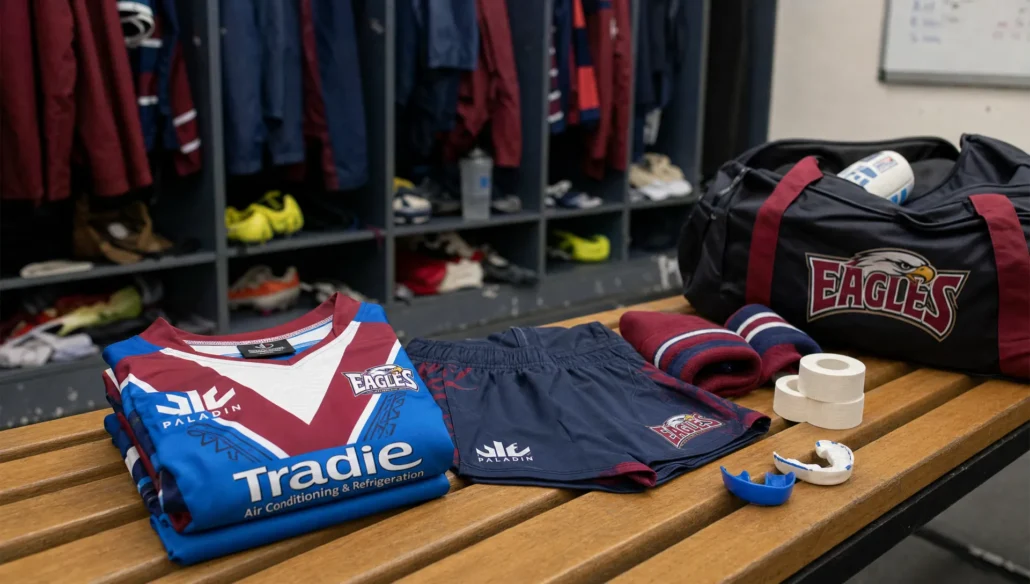
If you want to design your own NRL jersey, the goal is not just to make something that looks good in a mockup. Rugby league players judge a jersey by how it feels in contact, how it moves under pressure, how it represents the club and whether it still looks sharp after repeated washing, tackles and travel.
For grassroots clubs, academy programs, social teams, supporter groups and private labels, the phrase NRL jersey usually means an elite rugby league look with a performance fit. This guide focuses on creating your own custom rugby league jersey inspired by professional standards, not copying official team kits. Existing NRL club names, logos, sponsor marks and protected artwork should only be used if you have written permission.
A player-approved jersey balances four things: comfort, toughness, identity and practical production. If one of those fails, the design may look exciting online but disappoint when the kit arrives. The process below will help you make better decisions before you approve artwork, order samples or send a full team order into production.
Start With the Player, Not the Artwork
Most jersey projects begin with colors, logos and patterns. That is understandable, but it is not how players experience the garment. Players notice the neckline first when they are breathing hard, the shoulder and underarm fit when they pass or tackle and the fabric when it becomes wet with sweat or rain.
Before you sketch a chevron, stripe or sponsor panel, define who will wear the jersey. A junior team has different fit needs than a senior men’s side. A women’s rugby league squad may need size grading that respects different body shapes. A touring club may care more about presentation, while a competitive team will prioritize durability and mobility.
Your design brief should answer the practical questions that affect every later decision:
- Who will wear the jersey, including age group, gender mix and playing level?
- Will it be used for matches, training, travel, retail or supporter wear?
- Does the competition require specific number size, sponsor placement or color contrast?
- Do players prefer a tight athletic fit, a regular club fit or a relaxed supporter fit?
- Will the jersey need matching shorts, socks, warmups or off-field apparel?
- Is this a one-time order, a seasonal kit or a private label product line?
Once you have these answers, the visual design becomes easier. You are no longer choosing patterns in isolation. You are creating a jersey that matches a specific group of players, a specific competition and a specific use case.
Build the Jersey Around Rugby League Contact
Rugby league jerseys are not the same as soccer shirts or general activewear tops. The sport involves repeated tackling, pulling, wrestling in the ruck and explosive upper-body movement. That means the jersey has to resist stress without feeling stiff or heavy.
Fit is one of the biggest choices. A closer fit reduces loose fabric that opponents can grab, but it must still allow shoulder rotation and torso flex. A jersey that is too tight across the chest can restrict passing and tackling. A jersey that is too loose can feel sloppy and create unnecessary grab points.
Fabric selection matters just as much. Look for performance polyester or polyester blends that can handle sublimation, manage moisture and recover shape after stretching. Breathability helps players stay comfortable in warm weather, while a strong knit structure helps the garment survive contact. For cold or wet climates in Europe, Canada or parts of Australia, clubs may also consider layering strategy rather than making the jersey too thick.
Construction should support the way rugby league players move. Shoulder seams, side panels, sleeve openings and collar design all affect comfort. A neckline that looks clean on a mannequin may irritate players if it sits too high or stretches poorly. Side panels can improve fit, but they need to be positioned so they do not twist or pull during play.
| Jersey decision | What players feel | What to specify before production |
|---|---|---|
| Fit type | Freedom of movement and confidence in contact | Athletic, regular or relaxed fit with size grading |
| Fabric | Heat, sweat, stretch and durability | Performance knit, moisture control and print compatibility |
| Neckline | Comfort during breathing and tackling | V-neck, crew neck, collar style or hybrid neckline |
| Sleeve cut | Passing motion and shoulder comfort | Sleeve length, arm opening and seam placement |
| Panel layout | How the jersey sits on different body types | Front, back, side and shoulder panel shapes |
| Numbers and logos | Visibility and professional finish | Size, placement, color contrast and decoration method |
If performance is the main priority, it is worth reviewing sport-specific guidance before approving artwork. Extreme Sportswear’s guide to rugby league jersey design tips for better on-field performance goes deeper into fit, fabric, panel placement and sample testing.
Choose a Visual Identity Players Feel Proud Of
A jersey players want to wear has to feel like it belongs to them. That does not mean every design needs to be loud. Some of the strongest rugby league kits are simple, with clear colors, strong contrast and a crest that looks intentional.
Start with the club’s core identity. Your primary color should be recognizable from distance. Secondary colors should support it rather than compete with it. If you use three or more strong colors, make sure there is a hierarchy. Otherwise the jersey can look busy, especially once sponsor logos, numbers and names are added.
Classic rugby league design language includes chevrons, shoulder blocks, horizontal bands, side panels and chest panels. These elements work because they create structure on a powerful athletic silhouette. Modern designs may add gradients, abstract textures or cultural patterns, but the base layout should still read clearly from the sideline.
For teams with heritage, a subtle detail can carry more meaning than a crowded design. A founding year inside the collar, a tonal map pattern, a small sleeve mark or a club motto on the upper back can give players a sense of ownership without overwhelming the main artwork.
Brand safety also matters. If you are creating a custom jersey for your own club, do not copy an existing NRL team’s crest, mascot, sponsor arrangement or distinctive artwork. IP Australia explains trade marks as signs used to distinguish goods or services, which can include logos, names and other brand identifiers. If in doubt, create original artwork and get permission for any third-party assets.
Pick the Right Decoration Method
When you design your own NRL jersey, the decoration method affects comfort, durability and cost. A design with many colors, gradients and sponsor logos usually suits sublimation. A simpler design with bold placements may use screen printing or embroidery for selected elements.
Sublimation is common for rugby league jerseys because the artwork becomes part of the fabric surface rather than sitting as a thick layer on top. This keeps the jersey lightweight and allows full-body patterns, color fades, sponsor marks, names and numbers to be integrated cleanly. The tradeoff is that sublimation works best on suitable synthetic fabrics.
Screen printing can work well for bold logos or specific placements, but it may add a surface feel. Embroidery gives crests a premium look, especially for off-field apparel, but large embroidered areas can feel stiff on a match jersey. Many teams use a combination across their full kit range, such as sublimation for match jerseys and embroidery for polos, jackets or retail pieces.
| Method | Best use | Player-focused consideration |
|---|---|---|
| Sublimation printing | Full jersey artwork, numbers, names and sponsor layouts | Lightweight feel with strong design flexibility |
| Screen printing | Bold logos, simple graphics and selected placements | Check stretch, hand feel and wash durability |
| Custom embroidery | Crests, premium trims and lifestyle apparel | Keep match-jersey embroidery small to avoid stiffness |
| Cut and sew panels | Contrast fabrics, shaped fit and structured designs | Panel placement must support movement and comfort |
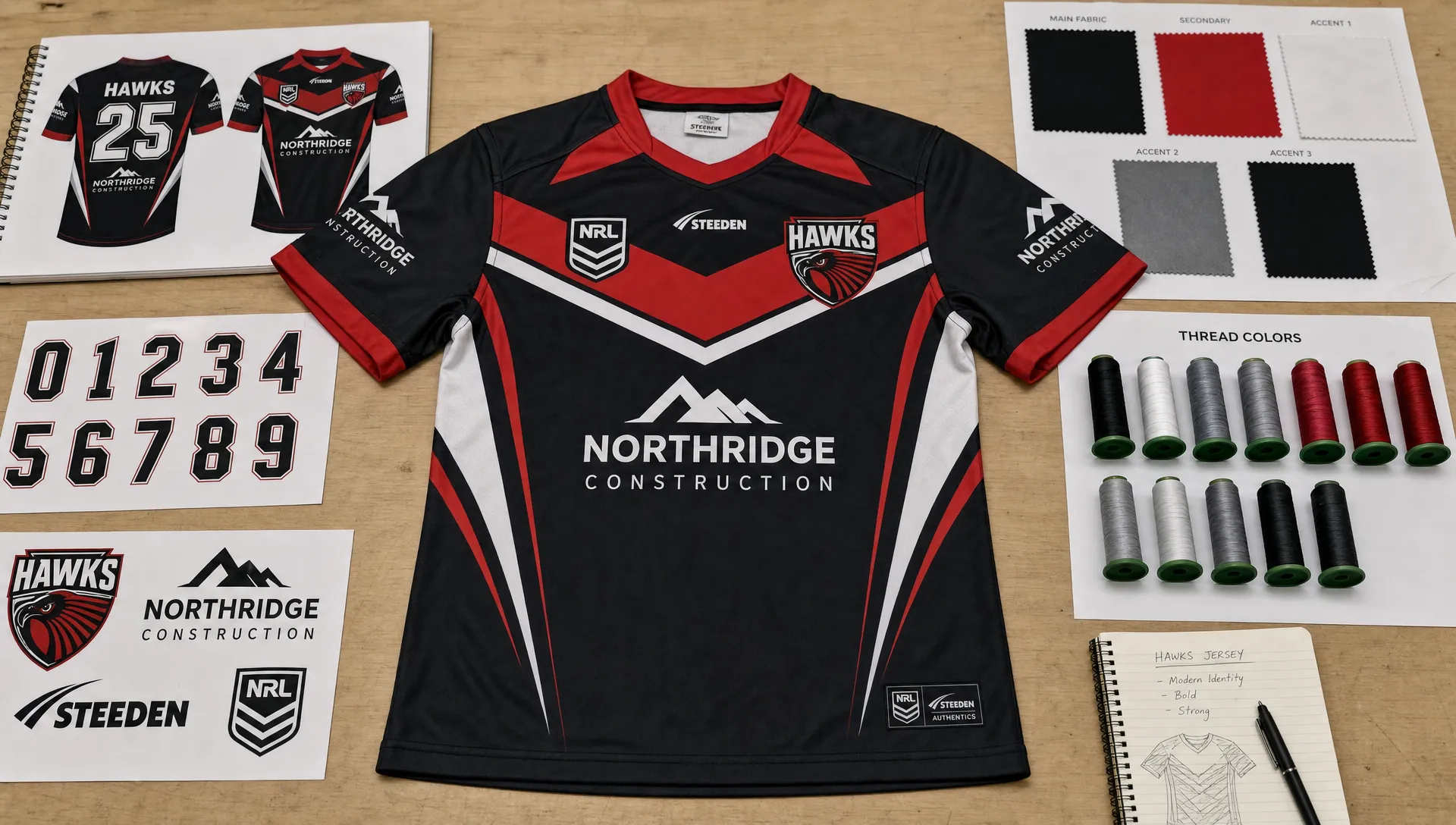
Make Sponsor and Number Placement Practical
Sponsor placement can make or break a rugby league jersey. The front chest sponsor often gets the most attention, but sleeve marks, upper-back sponsors and lower-back placements also need careful spacing. When these elements are added late, the jersey can start to look cluttered.
Plan sponsor areas before final artwork. If the main design has a strong chevron or diagonal graphic, leave clean spaces where sponsor logos can sit without losing contrast. If a sponsor logo has colors that clash with the club palette, consider approved one-color or reversed versions. Always get sponsor artwork in vector format when possible so edges stay crisp in production.
Numbers need more than style. They need to be readable from distance, visible on broadcast or photography and compliant with competition rules. High contrast usually matters more than decorative type. A dark number on a dark gradient may look stylish in a mockup but fail on the field.
Player names are optional for many teams, but if you include them, check the spelling before production and standardize capitalization. Small errors in names are among the most frustrating jersey mistakes because they are personal to the player.
Use Sizing and Sampling to Win Player Buy-In
A great jersey design can still fail if the sizing is wrong. Rugby league teams often include different body types, from smaller halves and hookers to larger forwards. A single generic size chart may not be enough, especially for international teams ordering from the USA, Canada, Europe, Germany, Poland, Brazil or Australia.
The best approach is to use a clear size chart, collect player measurements and confirm whether the jersey is built for a tight playing fit or a regular fit. If your team has worn custom jerseys before, compare the new size chart with garments players already know. Ask whether they want the same feel, a tighter match fit or more room.
Sampling is where player trust is built. A sample lets coaches, captains and kit managers check the fabric, neckline, fit, colors, logo scale and number visibility before the full order. It also gives players a chance to point out discomfort that is hard to see in a digital mockup.
Fast sampling is especially useful when a season launch, tournament or merchandise drop is approaching. Do not treat the sample as a formality. Wear it, stretch it, wash it and photograph it in daylight. If a sponsor logo is too low, a collar feels rough or the color looks different in person, fix it before bulk production.
Prepare a Manufacturing File That Prevents Delays
Manufacturers can produce better results when the file and instructions are complete. A clean production handoff reduces back-and-forth, prevents wrong placements and helps the sample match the approved design.
Your tech pack or order brief should include the final artwork, size breakdown, fabric choice, decoration method, logo files, sponsor approvals, name list, number list and packaging requirements. If you are ordering private label jerseys, include neck labels, hang tags, poly bag details or any brand-specific packing instructions.
| Production item | Why it matters | Common mistake to avoid |
|---|---|---|
| Vector logo files | Keeps logos sharp at print size | Sending low-resolution screenshots |
| Pantone or color references | Improves color consistency | Relying only on screen colors |
| Size breakdown | Prevents shortages by size | Ordering too many average sizes |
| Name and number sheet | Reduces personalization errors | Changing names after approval |
| Sponsor approval | Protects relationships and deadlines | Printing unapproved logo versions |
| Packaging instructions | Supports team issue or retail sales | Leaving labels and bags until the end |
A custom clothing manufacturer can help translate your idea into a production-ready jersey, but the clearest briefs usually get the smoothest outcomes. For a rugby league club, that means connecting the visual design with the realities of match play, sizing and delivery.
Common Mistakes That Make Jerseys Stay in the Bag
The first mistake is designing only for the front view. Players, spectators and cameras see the jersey from every angle. The back needs strong number contrast, the sleeves need balanced branding and the side panels should not look like an afterthought.
The second mistake is overloading the jersey with effects. Gradients, textures, shadows, sponsor marks and multiple patterns can all work, but not all at once. A busy jersey often looks weaker from distance and can make sponsors less readable.
The third mistake is ignoring the players who will actually wear it. A coach, designer or sponsor may approve a great-looking concept, but players are the ones who feel the collar, sweat in the fabric and see how the fit handles contact. Getting feedback from a small player group before bulk production is not a delay. It is risk control.
The fourth mistake is copying professional kits too closely. Your jersey can feel elite without looking like a replica of an existing NRL club. Original design is safer, more memorable and better for long-term team identity.
Frequently Asked Questions
Can I design your own NRL jersey for my local team? Yes, you can design a custom rugby league jersey with an NRL-inspired performance look for your local team. You should not use official NRL club logos, names, sponsor marks or protected artwork unless you have permission.
What fabric is best for a rugby league jersey? Most teams choose a durable performance polyester or polyester blend that supports moisture control, stretch recovery and sublimation printing. The best option depends on climate, fit preference and whether the jersey is for matches, training or supporter wear.
Is sublimation better than embroidery for match jerseys? Sublimation is usually better for full match jersey artwork because it keeps the garment lightweight and allows detailed designs. Embroidery is excellent for premium crests and off-field apparel, but large embroidered areas can feel stiff during play.
How do I make sure players like the final jersey? Start with player needs, confirm fit preferences, use a clear size chart and order a sample before bulk production. Let a few players test the sample for movement, comfort, color accuracy and number visibility.
What should I send to a manufacturer before production? Send final artwork, vector logos, size breakdown, player names and numbers, sponsor approvals, fabric preferences, decoration method and packaging details. The more complete your brief is, the easier it is to produce an accurate sample.
Turn Your NRL Jersey Concept Into a Wearable Team Kit
A jersey players want to wear is built from the inside out. Start with comfort and contact performance, then layer in identity, sponsors, numbers and finishing details. When the design looks sharp and the garment feels right, players are more likely to wear it with pride on game day.
Extreme Sportswear manufactures custom sportswear, teamwear, activewear and private-label apparel with cut and sew production, low MOQ options, fast sampling, sublimation printing, screen printing, custom embroidery and fabric and packaging customization for teams and brands worldwide.