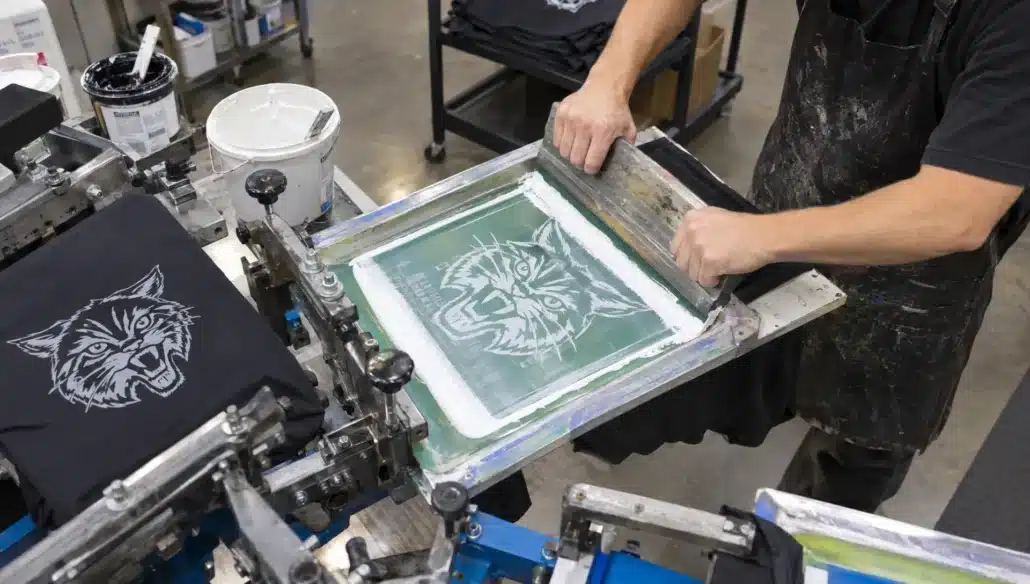
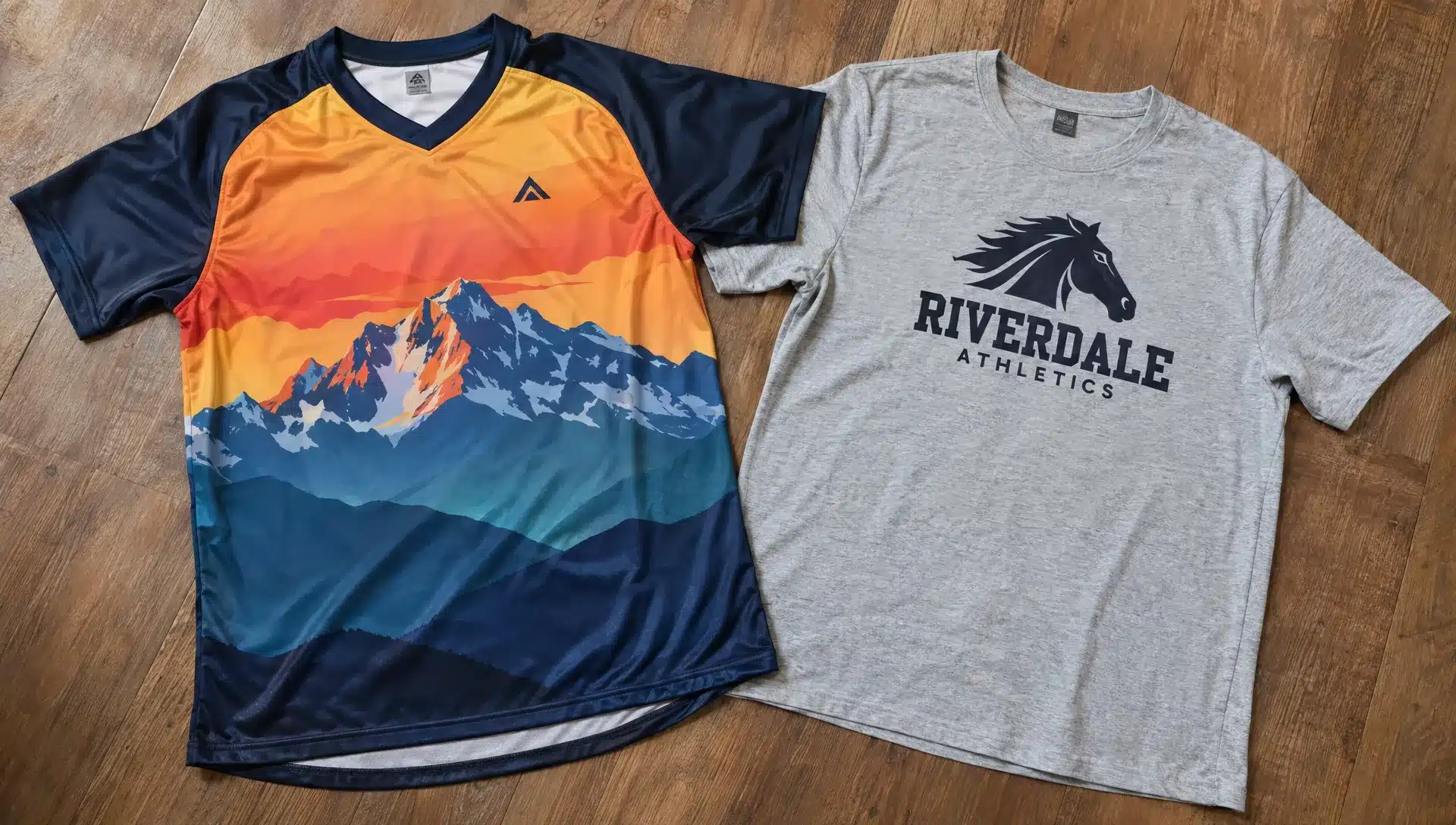
Choosing between sublimation sportswear and screen printing starts with the garment you need, not simply the appearance of the artwork. A lightweight polyester match jersey with individual player names has different production requirements from a cotton team T-shirt with one chest logo. Both methods can produce professional results, but they differ in fabric compatibility, print coverage, feel and cost structure.
For teams, apparel brands and private-label buyers, the best choice is the one that matches the fabric, design and reorder plan. This comparison explains the trade-offs and what to verify before approving production.
The main differences at a glance
Sublimation dyes suitable polyester fibers, while screen printing generally applies ink to the fabric surface. That distinction explains most of the practical differences below.
| Buying consideration | Dye sublimation | Screen printing |
|---|---|---|
| Best-suited fabrics | White or light-colored polyester and compatible polyester-rich fabrics | Cotton, polyester and blends, using an appropriate ink system |
| Print coverage | Well suited to all-over designs, especially when panels are printed before sewing | Well suited to defined print areas; all-over work needs specialized production |
| Colors and detail | Multicolor artwork, gradients and photographic elements | Spot-color artwork; detailed and process-color printing are also possible |
| Individual names and numbers | Can be incorporated into each garment’s digital artwork | Usually require additional setups or a separate personalization method |
| Print feel | No added surface ink layer | Varies with ink, coverage and application |
| Cost structure | Driven by fabric, coverage, production workflow and quantity | Strongly influenced by quantity, print locations and color separations |
Neither process automatically produces a better garment. Sublimation sportswear is often the more practical option for detailed polyester uniforms, while screen printing can be a strong choice for simple branding on cotton or blended apparel.
Start with the fabric, not the logo
Polyester performance fabrics favor sublimation
Conventional dye sublimation uses heat to transfer dye into compatible polyester fibers. White fabric provides the clearest starting point because the dye does not include an opaque white layer. A dark-looking sublimated jersey can still begin as white fabric, with the background color printed alongside the design.
For vivid, full-color uniforms, 100% polyester is commonly the most straightforward choice. Polyester-rich blends may also work, but the unprinted fibers can reduce color intensity or create a heathered appearance. Stretch fabrics need sampling to check their response to heat and how the artwork looks under tension.
Specify the exact fabric composition when ordering sublimation sportswear rather than assuming that every garment labeled “performance fabric” will print equally well.
Cotton and mixed collections favor screen printing
Screen printing offers more flexibility across cotton, polyester and blended fabrics when the printer selects a compatible ink system and curing process. This makes it useful for club merchandise, training tees and lifestyle collections that include several garment types.
Polyester still needs special attention. Heat can cause garment dyes to migrate into the printed ink, changing its appearance. Depending on the material, the printer may need low-cure inks, dye-blocking layers or another tested approach. Ask to see a sample on the actual fabric, especially for dark polyester garments with light logos.
Match the process to your artwork and personalization
A small chest emblem and an all-over geometric jersey are different production jobs, even if both use the same team colors.
Sublimation is particularly useful when the design includes gradients, patterned backgrounds, multiple sponsor marks and individual player details. Digital artwork can combine these elements without requiring a separate screen for each color. However, preparing roster files, checking spellings and managing different sizes still take time and need accurate approval.
Screen printing is often efficient for repeated artwork with a limited number of colors. A white club crest on several hundred dark training shirts may suit it well. Full-color screen printing is also possible, but separations, underbases and registration requirements affect the setup.
For all-over work, ask whether the supplier prints fabric panels before sewing or prints finished garments. Preprinted panels allow extensive coverage, but seams still require planning. A logo crossing a side seam may not align perfectly across every size.
For sublimation sportswear with a full player roster, approve both the visual layout and the name-and-number spreadsheet. Extreme Sportswear’s sublimation-printed basketball jerseys provide a relevant starting point for discussing personalized team uniforms.
Compare comfort and durability realistically
Sublimation adds no raised ink film, so the printed area retains the underlying fabric’s surface feel. This can be valuable when graphics cover most of a lightweight competition jersey.
That does not mean every sublimated garment is breathable or moisture-wicking. Those characteristics depend on fiber choice, fabric construction, weight and finishing. A heavy, tightly knitted fabric will not become lightweight mesh because it has been sublimated.
Screen-printed comfort varies considerably. A small, well-applied logo may have little noticeable effect, while a large solid print can feel heavier and reduce airflow through that area. Ink selection and deposit thickness matter.
Both methods also depend on production quality. Poorly cured screen prints can crack or lose adhesion. Sublimation can show ghosting, uneven transfer or color inconsistency when processing is not controlled. Neither decoration method prevents seam failure, pilling or abrasion damage.
Well-produced sublimation sportswear avoids the peeling associated with an applied print layer, but fabric quality and construction still determine much of its useful life. For a closer look at those factors, the guide to what makes sublimated rugby league jerseys last longer examines durability beyond the printed design.
Compare total cost, not just the unit quote
Understand what drives each price
Screen printing involves preparation for the artwork’s separations and print locations. On a large order with the same simple design, those setup costs can be spread across many garments. Additional colors, locations or design changes can alter the economics.
Sublimation does not require a physical screen for each color. That can make complex artwork and individual personalization more practical, but it does not make unlimited customization free. Artwork preparation, fabric consumption, cutting, sewing and quality checks remain part of the cost.
There is no universal quantity at which one method becomes cheaper. Compare quotes for the same fabric, construction, size range and decoration scope. A ready-made screen-printed T-shirt is not a like-for-like alternative to a fully custom cut-and-sew jersey.
Include reorders and delivery costs
When pricing sublimation sportswear, ask how a small replacement order would be handled after the main production run. Keep approved artwork, color references and fabric specifications so future orders have a clear production reference, while recognizing that different fabric lots can still vary.
For international orders, confirm the delivery terms and which costs remain your responsibility. Freight, duties, taxes, sample charges and packaging can change the landed cost. Also confirm whether names, numbers and private-label details are included in the quotation.
A useful quote separates the garment specification, customization scope, sampling charges and delivery basis instead of presenting an unexplained unit price.
What to check before approving production
A digital mockup confirms design intent, not finished garment quality. Request a sample using the proposed fabric, print process and construction. If a different sample material is used, record that difference before approving bulk production.
Use the following checks to make the approval specific:
- Color and artwork: Compare the physical sample with the agreed color reference and check logos, sponsor placements, spelling and numbers.
- Fabric and fit: Confirm composition, weight, stretch, garment measurements and size grading.
- Print behavior: Examine fine lines, solid areas, opacity where relevant and the appearance of graphics when the fabric stretches.
- Wash performance: Follow the proposed care instructions and inspect color change, staining, print damage and garment distortion.
- Construction: Check seams, panel alignment, trims, labels and finishing against the specification.
For formal wash-fastness requirements, ask whether testing can be arranged to ISO 105-C06 or another agreed method. A home wash check is useful for screening a sample, but it is not equivalent to a controlled laboratory test.
For sublimation sportswear, inspect pale panels next to dark colors and check edges for unwanted shadows or transfer marks. For screen printing, examine light inks on dark polyester for dye migration and check whether the print responds appropriately to normal garment stretch.
Keep an approved physical sample as the production reference. This gives both buyer and manufacturer a more useful standard than a screen image alone.
When to choose sublimation sportswear or screen printing
Choose sublimation when the core requirement is a polyester uniform with extensive color coverage, detailed artwork and individual player information. It is especially useful when printed graphics would otherwise cover a large proportion of the garment with surface ink.
Choose screen printing when the garment needs to be cotton or a particular blend, the artwork is repeated across the order and the design uses defined print locations. It is also worth considering when the collection relies on opaque graphics over an existing dark garment color.
A mixed collection does not need one printing method throughout. A club might use sublimated match jerseys alongside screen-printed cotton merchandise. An activewear brand might choose different processes for competition tops and casual tees while maintaining the same visual identity.
The deciding question is not which method is more advanced. It is which process delivers the required fabric, appearance and performance at an acceptable total cost. Before comparing prices, write one shared specification so every supplier is quoting the same job.
Frequently asked questions
What kind of shirt is best for sublimation? A white or light-colored polyester shirt is generally the most suitable starting point for vivid results. Check the fabric’s suitability for the transfer process and approve a printed sample. Cotton does not accept conventional polyester dye sublimation in the same way without a separate treatment or transfer system.
How much does a sublimation jersey cost? There is no reliable universal price for sublimation sportswear. The quote depends on fabric, construction, quantity, personalization, labels and delivery terms. Request pricing against a defined specification and ask whether sampling, artwork preparation and shipping are included.
Can screen printing work on polyester sportswear? Yes. The printer must select inks and curing conditions suited to the specific fabric. Dye migration, heat sensitivity and stretch are important considerations. A successful sample on cotton does not demonstrate that the same ink setup will work on polyester.
Is DTF better than sublimation for uniforms? DTF, or direct-to-film transfer printing, can apply graphics to a wider range of fabric types and colors, but it adds a transfer layer. Sublimation suits compatible polyester and extensive coverage without that layer. DTF can be useful for localized decoration, depending on the required feel, stretch and wash performance.
Get a quote based on your actual uniform requirements
Extreme Sportswear offers custom sportswear manufacturing, cut-and-sew production, sublimation printing and screen printing, along with fabric, labeling and packaging customization. Low MOQ orders and sampling are available, with the details to be confirmed for your project.
Send your artwork, intended fabric, quantity, size breakdown and delivery destination. State whether you need individual player details or repeat orders so the quotation reflects the complete requirement. Whether you are sourcing sublimation sportswear or screen-printed team apparel, approve the material and decoration together before committing to production.