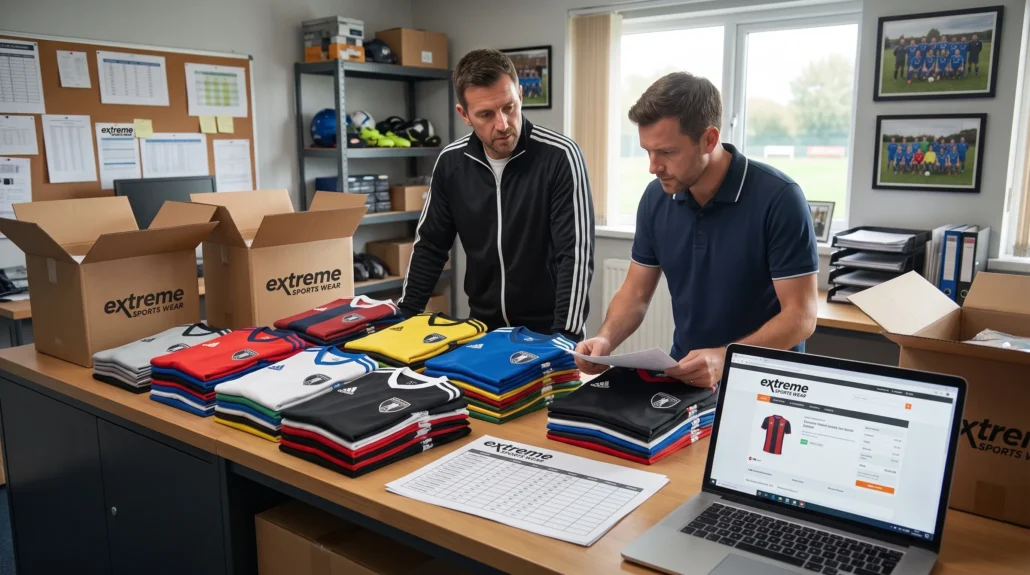
Choosing a private label soccer jersey maker is not the same as ordering blank shirts with a logo. You are building a product that carries your brand name, fits your customers or team, survives training sessions and arrives ready to sell or distribute.
A good private label soccer jersey manufacturer should guide you through design, fabric selection, sampling, production, decoration, labeling, packing and export details. The best partner will also help you avoid the expensive mistakes that happen when sizing, colors, trims or print methods are not confirmed before bulk production.
For sportswear brands, clubs, academies and teamwear resellers in the USA, Canada, Europe, Australia, Germany, Poland and Brazil, the right expectations make the sourcing process smoother from the first quote to repeat orders.
A private label maker should act like a production partner
A basic supplier sells what already exists. A private label soccer jersey manufacturer helps you create a jersey that belongs to your brand. That difference matters if you want consistent sizing, your own labels, custom packaging, unique colorways or a collection that can be reordered season after season.
Private label production usually includes more decisions than a standard team order. You may need to choose the jersey cut, sleeve style, collar, fabric weight, mesh panels, sponsor placement, trims, woven labels, care labels and packaging. If shorts or full kits are part of the project, you also need matching fabrics, waistband construction and coordinated sizing.
A capable maker should ask questions before quoting. That is a good sign, not a delay. The manufacturer needs to understand whether the jerseys are for elite match play, amateur clubs, youth academies, merchandise, fanwear or retail sportswear. The intended use affects fabric, fit, decoration and cost.
Expect a structured discovery process
Before production begins, your manufacturer should collect clear information about the product. This discovery stage helps prevent confusion once the jersey moves into sampling or bulk cutting.
You should be ready to provide your logo files, preferred colors, size range, order quantity, delivery country, target retail price and any design references. If you already have a tech pack, share it. If not, the maker should still be able to work from mockups, measurements and written specifications.
A reliable private label soccer jersey manufacturer will normally clarify details such as:
- Jersey style, including regular fit, slim fit, relaxed fit or youth fit
- Fabric type, breathability, stretch level and approximate weight
- Decoration method, such as sublimation, screen printing or embroidery
- Labeling needs, including neck labels, care labels, hang tags and poly bags
- Quantity per size, packing method, shipping address and reorder expectations
If your project is more focused on outfitting one club rather than launching a branded apparel line, you may also want to review how to choose a soccer team uniform manufacturer so the buying criteria match your use case.
Fabric and fit should be discussed early
Soccer jerseys need to balance comfort, durability and performance. The fabric should handle sweat, motion and repeated washing without feeling heavy. Most modern soccer jerseys use polyester-based performance fabrics because they dry quickly and accept sublimation well. Depending on the design, your maker may also suggest mesh inserts, stretch panels or different fabric textures for body and sleeve sections.
Fit is just as important as fabric. A retail jersey sold in the U.S. or Europe may need a different size curve from a tight match jersey for competitive players. Youth teams, adult clubs and fanwear buyers also have different expectations. Ask whether the manufacturer can provide a size chart and whether measurements are taken from garment width, body measurements or both.
The best approach is to approve fit before bulk production. If you are selling under your own label, inconsistent sizing can create returns, complaints and inventory problems. If you are supplying teams, poor fit can delay a season launch.
| Decision | What to confirm | Why it matters |
|---|---|---|
| Fabric | Weight, texture, stretch and moisture performance | Controls comfort, print result and durability |
| Fit | Slim, regular, relaxed, youth or custom measurements | Reduces sizing complaints and return risk |
| Construction | Collar, sleeve, seams, panels and hem finish | Affects appearance, comfort and perceived quality |
| Size range | Adult, youth, women’s or extended sizes | Helps serve different markets and team rosters |
| Care performance | Washing instructions and color behavior | Protects your brand after the first few washes |
Customization should go beyond logo placement
Private label soccer jerseys are built around brand identity. That means your maker should support more than a front crest and player number. Expect conversations about all visible and sellable details, including color palette, sponsor zones, sleeve graphics, neck tape, inside labels, packaging and matching shorts.
Sublimation is a common choice for soccer uniforms because the artwork becomes part of the fabric rather than sitting as a heavy layer on top. It works especially well for gradients, all-over graphics, names, numbers and sponsor layouts. You can learn more about the branding advantages in this guide to sublimated soccer uniforms.
Screen printing, embroidery and heat-applied details may still be useful depending on the design. Embroidery can give a crest or logo a premium look, but it may not be ideal for very lightweight performance zones. Screen printing can work for certain logos and sponsor marks, but large prints can change the hand feel of the jersey. A good manufacturer should explain these tradeoffs before you approve the final method.
Sampling is where expectations become real
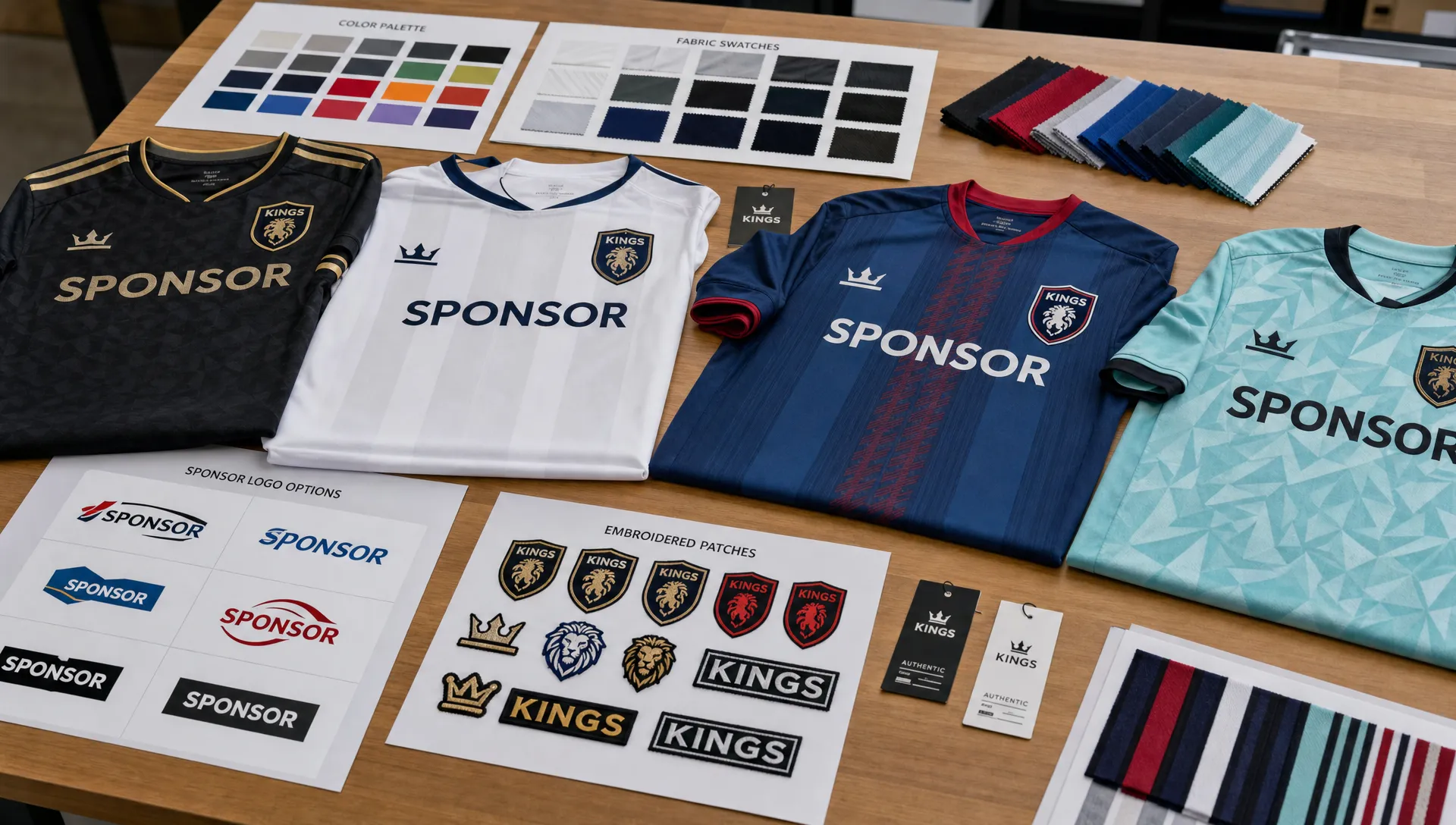
Sampling is one of the most important stages of private label manufacturing. A digital mockup can show the layout, but a physical sample reveals fabric feel, print color, stitching, logo scale and fit. Even when you are in a hurry, skipping samples can create problems that cost far more than the time saved.
The first sample should be checked carefully. Review the color under natural light, compare the logo to your source file, test the fit on a real wearer and inspect the stitching. If the jersey includes names, numbers or sponsor graphics, confirm placement and proportion. For private label work, also check the neck label, care label and packaging presentation.
A private label soccer jersey manufacturer that offers fast sampling can help you move from concept to approval more efficiently. Still, fast does not mean careless. The purpose of sampling is to catch small issues before they become bulk production defects.
For brands creating a complete soccer kit, it is also useful to compare the sample against your target selling channel. A jersey for a team store may need a polished retail presentation. A kit for academy players may prioritize comfort, wash resistance and easy reordering.
MOQ, pricing and lead times should be transparent
Low MOQ can be a major advantage for new sportswear brands, resellers and clubs testing a design. It lets you launch without committing to excessive inventory. However, the minimum order quantity still depends on the complexity of the jersey, material availability, decoration method and whether custom labels or packaging are required.
Expect your quote to reflect more than unit cost. Private label production may include sample charges, pattern work, custom trims, printing setup, labeling, packing and shipping. A clear quote should state what is included and what is not. If a manufacturer gives a price without asking about quantity, sizing, artwork or destination, the estimate may not be reliable.
Lead times also vary. Sampling, artwork approval, fabric sourcing, bulk production, quality control and international shipping all take time. For buyers in North America, Europe, Australia or Brazil, plan around seasonal demand. Clubs often order before a season begins, and brands often need inventory before a launch date, tournament or retail campaign.
Quality control should be part of the process, not an afterthought
Quality control is where a professional maker protects your brand. Soccer jerseys may look good in a photo but fail when stitching opens, colors fade, size measurements shift or logos peel. Ask how your manufacturer checks fabric, cutting, print alignment, sewing and packing before shipment.
The International Football Association Board’s Law 4 on players’ equipment is a useful reminder that match uniforms must meet certain competition expectations, although clubs and leagues may add their own rules. If you are making jerseys for official play, confirm number placement, sponsor rules and kit contrast with the league or federation before final production.
For private label retail sales, labeling matters too. U.S. buyers can review the Federal Trade Commission’s guidance on textile labeling requirements. Buyers selling in the EU, including Germany and Poland, should also confirm local textile labeling, language and importer obligations with a qualified compliance advisor.
| Quality checkpoint | What the maker should inspect | Common problem it prevents |
|---|---|---|
| Fabric inspection | Defects, shade consistency and stretch | Uneven color or weak fabric panels |
| Print inspection | Logo clarity, color accuracy and alignment | Misplaced graphics or blurred artwork |
| Stitching review | Seams, hems, collar and stress points | Open seams after wear or washing |
| Measurement check | Size chart tolerance across the order | Inconsistent fit across sizes |
| Packing check | Labels, poly bags, quantities and carton marks | Retail or distribution delays |
Export-ready production requires clear communication
International buyers should expect a manufacturer to communicate clearly about packing lists, invoices, shipping terms and delivery timelines. You do not need to know every logistics term on day one, but you should know who is responsible for freight, customs clearance, duties and taxes.
For brands importing into the USA, Canada, the EU, Australia or Brazil, ask for carton dimensions, gross weight, net weight and item descriptions before shipment. If your customs broker needs HS codes or country-of-origin details, discuss them early. Delays often happen when commercial documents are incomplete or product descriptions are vague.
Time zone differences are normal in global apparel sourcing. What matters is whether the maker responds with clear answers, organized files and written confirmations. Approvals should not live only in casual chat messages. Final artwork, size charts, label files and packing instructions should be documented before production starts.
What you should prepare before contacting a maker
You do not need a perfect design package to start, but the more organized you are, the faster your manufacturer can quote accurately. If you are comparing several suppliers, send the same information to each one so the quotes are easier to compare.
A useful inquiry includes your brand name, product type, target quantity, size range, design images, required decoration, delivery location and preferred timeline. If you need private label services, say so clearly. That tells the manufacturer to include labels, hang tags, packaging or other branding requirements in the conversation.
For soccer-specific product ideas, you can also review Extreme Sportswear’s custom soccer jersey options to understand the kinds of customization details that can shape your quote.
Red flags when evaluating a private label maker
A low price is not always a bad sign, but it should not be the only reason you choose a supplier. Jerseys carry your brand in public, on the field and often in social media photos. A poor production decision can make your company look unreliable.
Be careful if a maker refuses sampling, cannot explain fabric options, avoids written specifications or gives the same answer to every question. Also watch for unclear ownership of artwork files, missing label discussions, vague shipping terms and no quality control process.
The strongest partners are usually specific. They can explain why one fabric suits sublimation better, why a logo needs adjustment for embroidery or why a size chart should be tested before bulk production. Specific answers show production experience.
Why brands work with Extreme Sportswear
Extreme Sportswear is a Pakistan-based custom clothing manufacturer producing sportswear, activewear, teamwear and private-label apparel for international buyers. For soccer jersey projects, the company offers cut-and-sew production, full customization, low MOQ orders, fast sampling, sublimation printing, screen printing, custom embroidery, uniform manufacturing, fabric customization and packaging customization.
That combination is useful for brands that want to develop more than a one-off jersey. A private label soccer jersey manufacturer with these capabilities can help you move from first concept to branded production while keeping design, fit, decoration and packaging aligned.
Frequently Asked Questions
What does a private label soccer jersey maker do? A private label soccer jersey maker produces jerseys under your brand name. This can include custom fabric, fit, design, printing, embroidery, neck labels, care labels, hang tags, packaging and bulk production.
How is private label production different from buying custom team jerseys? Custom team jerseys are often made for one club or season. Private label production is usually built for resale, brand consistency, repeat orders and retail presentation, so labeling, packaging and size consistency become more important.
Should I choose sublimation for soccer jerseys? Sublimation is often a strong option for soccer jerseys because it handles complex graphics, sponsor logos, names and numbers without adding a heavy print layer. The right choice still depends on your design, fabric and target use.
What information do I need for an accurate quote? Share your quantity, size range, design references, logo files, fabric preferences, decoration method, private label requirements, shipping destination and deadline. If you have a tech pack, include it.
Can new brands order with a low MOQ? Many new brands start with low MOQ production to test a market before scaling. MOQ depends on the design, fabric, trims, labels, packaging and production method, so ask for a project-specific quote.
Build your private label soccer jersey line with confidence
The right maker should make the process clearer, not more complicated. Expect guidance on fabric, fit, sampling, decoration, labeling, quality control and export details. When those pieces are handled professionally, your jersey is easier to sell, easier to reorder and stronger as a representation of your brand.
If you are planning a custom soccer kit, teamwear collection or retail jersey line, Extreme Sportswear can help you develop export-quality production with private label customization.