
Ordering customized sportswear online can save time, expand your supplier options, and give your team or brand more control over design. It can also feel risky if you are approving fabric, fit, colors, logos, and payment from a distance.
The difference between a stressful order and a confident one is preparation. When you know what to ask, what to confirm in writing, and what to review before production, ordering customized sportswear online becomes a structured business decision rather than a gamble.
This guide walks you through the process from your first product brief to final shipment, with practical checks for teams, gyms, clubs, schools, startups, and private-label apparel brands.
Start With a Clear Product Brief
Before contacting a manufacturer, define what you actually need. A vague message like I need custom jerseys or I want activewear gives the supplier too much room to guess. A clear brief helps the manufacturer quote accurately, recommend the right production method, and avoid revisions later.
Your brief does not need to be complicated, but it should answer the key production questions. Include the product type, sport or use case, quantity, sizes, preferred fabric feel, colors, logo placements, deadline, and whether you need custom labels or packaging.
For example, a strong brief might say: We need 80 custom soccer uniforms for a youth club, short-sleeve jersey and shorts, lightweight breathable fabric, full sublimation design, club crest on chest, player names and numbers, delivery needed before tournament season.
A useful custom sportswear brief should include:
- Product category, such as jerseys, tracksuits, leggings, T-shirts, hoodies, shorts, or uniforms
- Intended use, such as training, competition, retail, staff uniforms, or promotional wear
- Quantity and size range
- Design references, brand colors, logos, and artwork files
- Preferred customization method, if known
- Fabric expectations, such as stretch, breathability, warmth, or moisture management
- Target delivery date and shipping destination
- Private label needs, including neck labels, hang tags, poly bags, or packaging
The more specific you are at the beginning, the less likely you are to face surprise costs, production delays, or products that do not match your expectations.
Understand Your Customization Options
Not every custom sportswear order is made the same way. Some orders are created by decorating ready-made blank garments. Others are produced through cut-and-sew manufacturing, where the garment is made from fabric panels according to your design, sizing, and construction requirements.
If you are ordering for a brand, team, or long-term program, cut-and-sew production usually gives you more control over fit, fabric, trims, print placement, and branding. If you only need a small promotional run, simpler logo decoration may be enough.
| Customization option | Best for | What to confirm before ordering |
|---|---|---|
| Sublimation printing | Full-color jerseys, teamwear, cycling wear, all-over designs | Fabric compatibility, color accuracy, name and number placement |
| Screen printing | Bold logos, T-shirts, training tops, promotional apparel | Print size, number of colors, wash durability, setup cost |
| Embroidery | Premium logos, polos, jackets, caps, uniforms | Stitch count, logo detail, thread colors, fabric thickness |
| Cut-and-sew manufacturing | Private label sportswear, unique patterns, team uniforms, activewear collections | Size chart, fabric selection, seams, trims, labels, sample approval |
If you are unsure which method fits your order, ask the manufacturer to explain the pros and limitations based on your design. A reliable supplier should help you choose a process that supports performance, appearance, and budget.
Vet the Manufacturer Before You Share Payment Details
Ordering customized sportswear online requires trust, but trust should be earned through evidence. A professional manufacturer should be able to explain its production process, customization options, sampling steps, payment terms, and communication timeline.
Look for signs that the company understands sportswear production specifically. Sportswear is not only about appearance. It needs movement, durability, wash performance, comfort, and fit consistency. A supplier that handles custom sportswear, activewear, teamwear, and private-label apparel is usually better prepared to discuss these details than a general promotional clothing vendor.
Review the company website, product pages, previous work, customer communication style, and whether it clearly describes services such as fabric customization, sublimation, screen printing, embroidery, and cut-and-sew production. If you are building a long-term apparel business, it also helps to understand how to evaluate suppliers more broadly through a guide on finding a custom clothing manufacturer for your business.
Pay close attention to how quickly and clearly the supplier answers your questions. Slow communication before payment often becomes slower communication after payment. Confident ordering starts with a manufacturer that gives direct answers, asks smart questions, and documents details instead of relying on assumptions.
Confirm Sizing Before Approving Production
Sizing is one of the biggest reasons custom apparel orders disappoint buyers. Online ordering makes this more important because you cannot physically try on every garment before production.
Always ask for a size chart and confirm whether the measurements are based on body size or finished garment size. These are not the same. Body measurements describe the wearer. Finished garment measurements describe the actual product laid flat or measured around key points.
For team orders, collect sizing carefully. Do not guess based on everyday clothing sizes because athletes may prefer different fits depending on the sport. A basketball warmup top, compression shirt, baseball jersey, and cycling jersey all have different fit expectations.
For brand orders, think beyond small, medium, and large. Your size chart becomes part of your customer experience, especially if you plan to reorder. If the first batch fits well, future sales and repeat team orders become much easier.
If you are still developing your visual concept, it is worth reviewing how to design your own sports uniform online with fewer mistakes before approving final artwork. Design errors are often easier to fix before they become production errors.
Review Artwork Like a Production File, Not Just a Pretty Mockup
A digital mockup helps you imagine the finished product, but it is not always enough for production approval. You need to confirm artwork details in a way that leaves little room for interpretation.
Check logo resolution, color codes, spelling, player names, numbers, sponsor placements, print size, and panel alignment. If you are using brand colors, provide Pantone, CMYK, RGB, or HEX references where possible. Keep in mind that colors can look different on screens, paper, and fabric, so ask what level of color matching is realistic for your chosen production method.
Also confirm whether your artwork files are suitable for production. Vector files are often preferred for logos because they can be scaled without losing quality. Common file types include AI, EPS, PDF, SVG, and high-resolution PNG when appropriate.
A confident approval process should include a final mockup or tech pack that both you and the manufacturer agree on before bulk production begins.
Do Not Skip the Sample Stage
A sample is your best opportunity to catch issues before they multiply across a full order. Even if you are working with a reputable manufacturer, a sample helps confirm fabric feel, fit, print quality, construction, color placement, and overall appearance.
For simple orders, a digital mockup plus a pre-production confirmation may be enough. For private-label sportswear, new patterns, new fabrics, or retail collections, a physical sample is strongly recommended.
Sampling may add time, but it can save money by preventing bulk mistakes. This is especially important when ordering customized sportswear online for the first time with a new supplier.
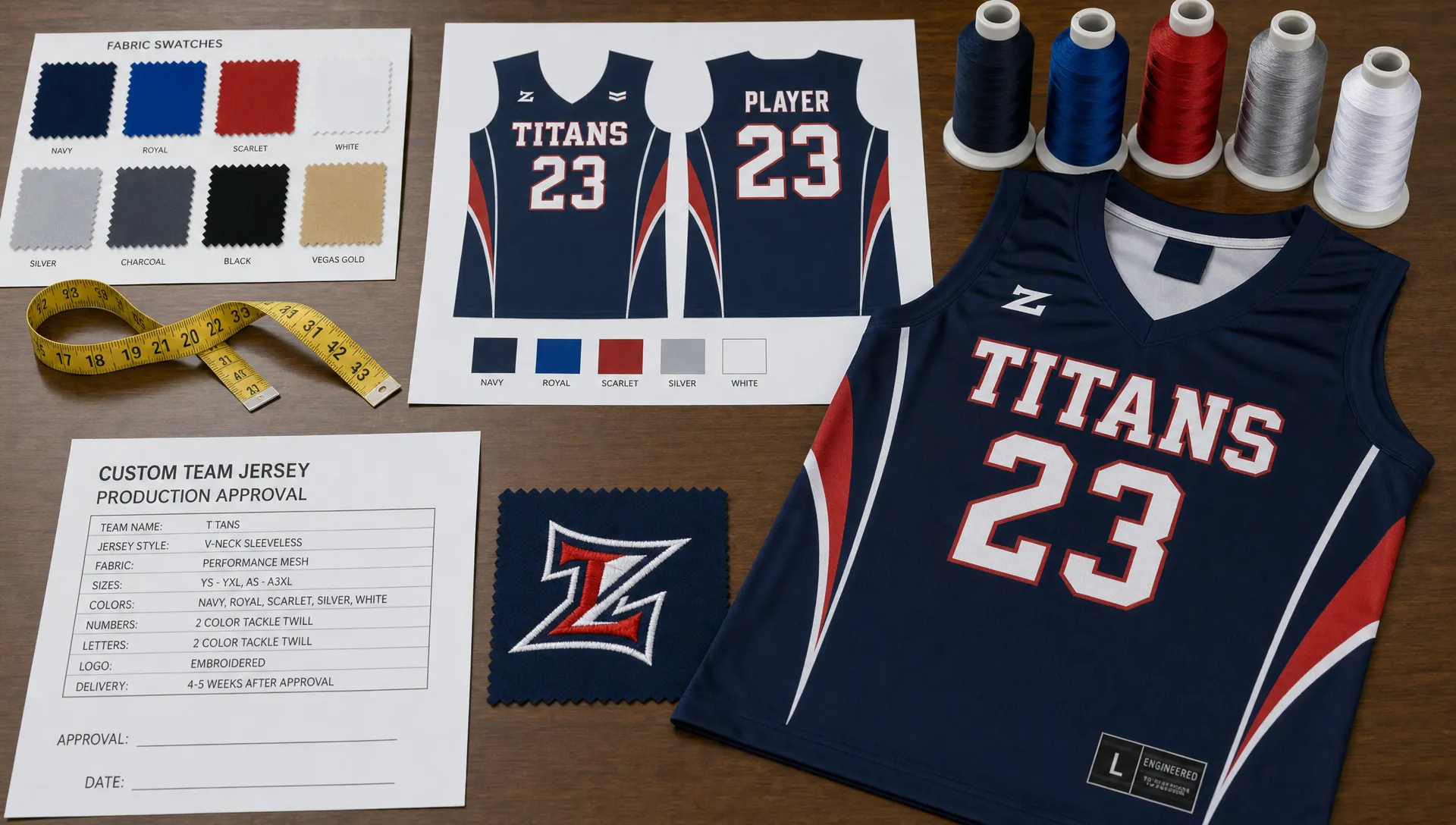
When reviewing a sample, do not only ask whether it looks good. Wear it, stretch it, wash it if possible, and compare it to your original brief. If the item is for sport, test the movement. Raise the arms, bend, run, cycle, stretch, or simulate the activity it is made for.
Read the Quote Carefully Before You Approve
A quote should be more than a price. It should clarify what is included, what is excluded, and what could change. Many problems happen because buyers compare only the final number instead of comparing the full scope.
Ask whether the price includes customization, labels, packaging, sampling, taxes, shipping, artwork setup, and payment fees. Confirm the currency and whether the quote is based on a specific quantity. Unit pricing can change when quantities increase or decrease.
| Quote detail | Why it matters | Question to ask |
|---|---|---|
| Quantity and size breakdown | Affects fabric use, labor, and unit price | Is this quote based on the exact size ratio I provided? |
| Fabric and GSM | Impacts comfort, durability, and cost | What fabric composition and weight are included? |
| Decoration method | Changes price and production time | Is the quote for sublimation, screen printing, embroidery, or another method? |
| Labels and packaging | Important for brands and resale | Are neck labels, hang tags, and poly bags included? |
| Sampling cost | Prevents confusion before production | Is the sample charged separately or adjusted in the bulk order? |
| Shipping terms | Affects landed cost and delivery planning | What shipping method is included, and what is the estimated transit time? |
Once everything is clear, ask for a written order confirmation or invoice that reflects the agreed details. Do not rely only on chat messages spread across multiple conversations.
Use Safe Online Buying Habits
Customized apparel orders involve money, artwork, deadlines, and sometimes brand assets. Treat the transaction with the same caution you would use for any online business purchase.
Check that the supplier has a professional website, clear contact details, secure payment options, and a consistent online presence. Read reviews where available, ask for real product photos, and request clarification on refund, revision, or remake policies before paying.
The same habits consumers use when buying premium products online also apply to custom apparel sourcing. For example, shoppers looking for authentic sneakers and streetwear from retailers such as BigBoiSneakers often check product details, payment security, size guidance, and trust signals before purchasing. When you order customized sportswear online, your manufacturer should be equally clear about product specifications, order terms, and support.
For larger orders, consider splitting the process into stages: sample payment, sample approval, deposit for bulk production, and final balance before shipment. Many manufacturers use staged payments because it protects both sides and keeps the order moving with documented approvals.
Track Production Without Micromanaging
Once production begins, you should not need to message the manufacturer every day. However, you do need agreed checkpoints. A simple timeline helps you know when to expect updates and when your feedback is required.
Common checkpoints include artwork approval, sample completion, sample revision if needed, fabric cutting, printing or embroidery, stitching, finishing, quality control, packing, and shipment.
Ask your manufacturer how updates will be shared. Photos and short production updates can help you confirm that the order is progressing correctly. For private-label apparel, request images of labels, packaging, and finished pieces before shipment.
Good communication is not about sending more messages. It is about making sure every important decision is confirmed at the right time.
Check Quality Before Shipment
Quality control is where confidence becomes measurable. Before the order ships, ask what inspection process the manufacturer follows. At minimum, finished goods should be checked for sizing, stitching, stains, print placement, color consistency, logo accuracy, labeling, packaging, and quantity.
For team orders, confirm names, numbers, and sizes carefully. One wrong digit or misspelled name can create a major issue if the uniforms are needed for an event. For brand orders, consistency is even more important because your customers will judge your label by the final garment.
If you are trying to build products customers will buy again, focus on fabric performance and repeatable fit rather than only the first impression. The article on how to source sports wear that customers want to reorder explains why comfort, finishing, and consistency matter so much for repeat orders.
When possible, keep a reference sample from your first approved order. This gives you and the manufacturer a benchmark for future reorders.
Plan for Reorders From the Beginning
Many buyers think only about the first order, but the smartest approach is to plan for reorders before production starts. This is especially important for teams that add new players, gyms that need staff uniforms, or brands that expect repeat sales.
Ask the manufacturer whether your pattern, artwork, size chart, fabric information, and print files can be saved for future production. Confirm whether the same fabric will remain available or whether substitutes may be needed later.
If your design includes seasonal colors, limited trims, or special fabric, ask about availability. A good reorder system saves time, reduces sampling needs, and helps keep your products consistent.
Common Mistakes to Avoid
Most online custom sportswear problems come from unclear expectations. The good news is that many are preventable.
Avoid approving production without a final mockup. Avoid placing a bulk order without checking the size chart. Avoid choosing the lowest quote without comparing fabric, customization, and shipping. Avoid sending low-resolution artwork and expecting a sharp logo. Avoid assuming that delivery time starts before you approve the sample or pay the deposit.
Also avoid changing details after production has begun. Small changes can affect patterns, printing, labels, and timelines. If you need revisions, make them during the design or sample stage, not after bulk production starts.
Confidence comes from slowing down before production so the order can move faster once approved.
Why the Right Manufacturing Partner Matters
The manufacturer you choose affects the entire experience. A supplier that offers custom sportswear manufacturing, private-label production, low MOQ options, fast sampling, cut-and-sew services, sublimation printing, screen printing, embroidery, uniform manufacturing, and fabric or packaging customization can support a wide range of order types.
This matters because many buyers start small and grow. A team may begin with jerseys and later need warmups. A fitness brand may start with custom T-shirts and later add leggings, hoodies, and full activewear sets. A business may begin with employee uniforms and later need seasonal apparel or branded merchandise.
Working with a manufacturer that understands both performance apparel and branding gives you more flexibility as your needs change.
Frequently Asked Questions
How do I order customized sportswear online for the first time? Start with a clear brief that includes product type, quantity, sizes, design files, fabric needs, and deadline. Then request a quote, review the mockup, approve a sample when needed, confirm production details in writing, and track the order through agreed checkpoints.
What is the safest way to choose a custom sportswear manufacturer online? Look for a manufacturer with clear services, responsive communication, product examples, written quotes, sampling options, secure payment methods, and transparent production steps. Avoid suppliers that rush payment before answering basic questions.
Do I need a sample before ordering bulk sportswear? A sample is highly recommended for first-time orders, private-label apparel, new patterns, new fabrics, and retail products. It helps you confirm fit, fabric, color, print quality, and construction before committing to bulk production.
What files do I need for custom sportswear artwork? Vector logo files such as AI, EPS, PDF, or SVG are often best. High-resolution PNG files may work for some designs. You should also provide color references, placement instructions, names, numbers, and any branding guidelines.
Can I order customized sportswear online with a low MOQ? Yes, some manufacturers offer low MOQ orders, which can be useful for startups, small teams, and test runs. Always confirm the minimum quantity, sample cost, unit price, and whether pricing changes at higher quantities.
Ready to Order Customized Sportswear Online?
Ordering online does not have to mean guessing. When you prepare a clear brief, verify sizing and artwork, review samples, confirm quotes, and work with a transparent manufacturer, you can order customized sportswear online with much more confidence.
If you are looking for a Pakistan-based custom clothing manufacturer for sportswear, activewear, teamwear, uniforms, or private-label apparel, Extreme Sportswear can help you turn your design into production-ready custom apparel.