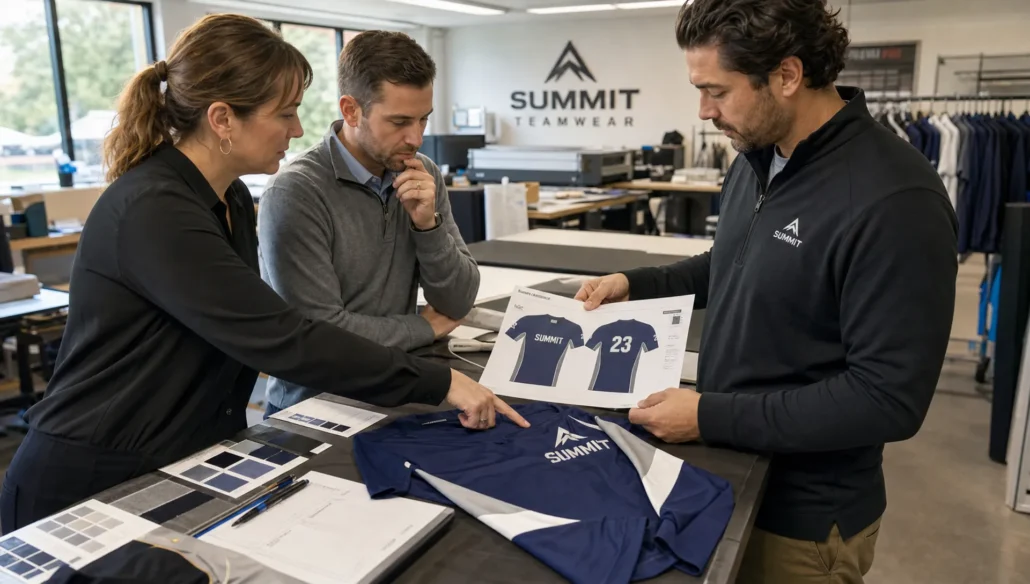
A rugby league jersey creator can make kit planning faster, but it can also hide small choices that become expensive once the jersey moves into cut-and-sew production. A sponsor logo that looks clean on a flat mockup may sit across a seam, a color that looked sharp on screen may print darker on polyester, and a collar choice may clash with the way players actually tackle, pass and train. The safest approach is to treat the creator as the start of manufacturing, not just a design playground.
For clubs, schools, academies, private-label brands and tournament organizers, design errors usually cost more than the artwork itself. They can delay sampling, force reprints, create inconsistent uniforms or make players reject the kit. A stronger process helps buyers in the USA, Canada, Europe, Australia, Germany, Poland and Brazil move from digital concept to match-ready jersey with fewer revisions.
How to Use a Rugby League Jersey Creator as a Production Tool
A digital creator is useful because it lets you test color blocks, sponsor layouts, sleeve styles and back designs before committing to production. The mistake is assuming the mockup is the final manufacturing file. In real production, the jersey has panels, seams, stretch zones, neck construction, sleeve shaping and size grading.
Use the creator to make decisions, then translate those decisions into a production brief. That brief should include the jersey style, fit, fabric preference, decoration method, color references, logo files, name and number rules, sizing range and sample approval steps. If you skip that bridge, the factory has to interpret your mockup, and interpretation is where many errors begin.
Start with the jersey type before the graphics
Before you open a rugby league jersey creator, decide what kind of jersey you are building. A match jersey needs a different fit, fabric weight and reinforcement logic than a supporter jersey or warm-up top. Rugby league involves repeated pulling, contact and high-speed movement, so a loose fashion fit can become uncomfortable during play.
A clean design starts with the base: collar shape, sleeve length, body fit, side panels and hem style. Once those choices are settled, the graphic work becomes easier because you know where every logo, stripe and color block has to land.
Lock the size range early
Size grading changes how a design behaves. A chest stripe that sits perfectly on a medium jersey can sit too high on a youth size or too low on a 3XL if the artwork is not planned for grading. The same issue affects sponsor logos, shoulder graphics and back numbers.
Ask for a size chart before final approval. For international orders, confirm whether measurements are in inches or centimeters and whether the fit is based on athletic, regular or relaxed sizing. This matters for mixed rosters, club shops and private-label ranges where players and fans may order from different countries.
Costly Design Errors to Catch Before Sampling
Most expensive mistakes are not dramatic. They are small gaps between digital design and production reality. A good review process catches those gaps before fabric is cut, printed or sewn.
The biggest danger is approving a mockup based only on how it looks from the front. Rugby league jerseys must work from every angle: front, back, sleeves, side panels, collar, cuffs and lower hem. If the creator only shows a flat front and back, ask your manufacturer how the design wraps around the body.
Sponsor logos in the wrong zones
Sponsor placement is one of the most common sources of rework. Logos can lose visibility if they sit across side seams, under the arm, too close to the collar or too low on the torso. On sublimated jerseys, logos can be integrated into the fabric print, but they still need enough clear space to remain readable.
When using a rugby league jersey creator, mark every sponsor zone by priority. Main chest sponsor, upper back sponsor, sleeve sponsors and lower back sponsors should each have a defined size, position and spacing rule. That keeps the jersey commercial without making it look crowded.
Colors that do not match in production
Screen color is not fabric color. RGB mockups can look bright on a phone or laptop, then print differently on polyester. Lighting, monitor calibration and fabric finish all affect perception. If your club has a strict identity system, provide Pantone, CMYK or manufacturer-approved color references.
The safest step is to request a fabric or print sample when exact color matters. This is especially useful for clubs with heritage colors, schools with official branding or brands producing repeat collections across several seasons.
| Risk in the creator | What to check before sampling | Why it matters |
|---|---|---|
| Logo crosses a seam | Confirm placement on the actual pattern | Prevents distortion and poor visibility |
| Screen color looks different | Provide color references or request a print test | Reduces mismatch between mockup and fabric |
| Crest file is low resolution | Send vector artwork when possible | Keeps logos sharp on sublimation or print |
| Stripe stops at panel edge | Review side, sleeve and back continuity | Makes the jersey look intentional from all angles |
| Numbers are too small | Confirm number height and contrast | Improves readability during matches |
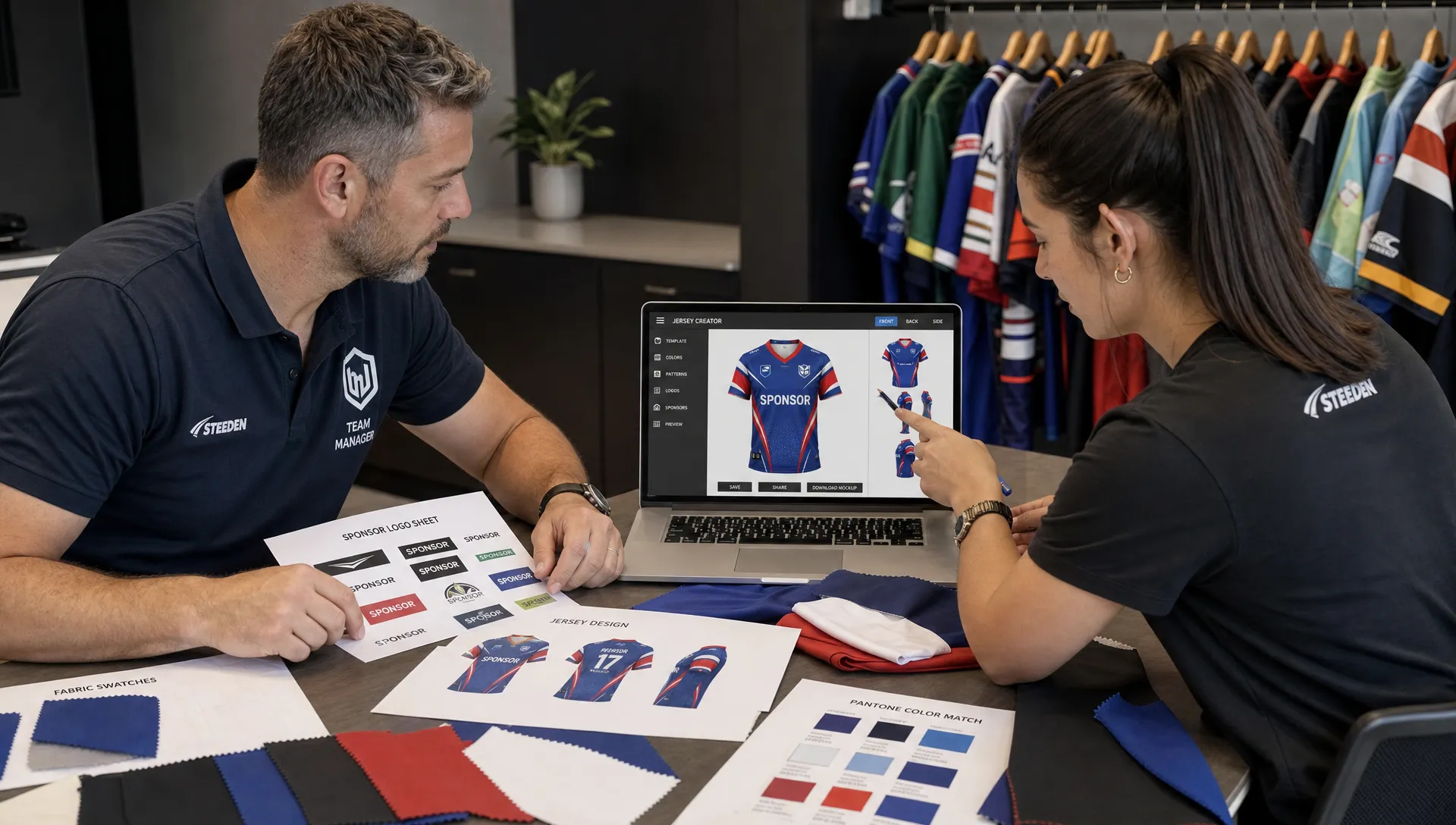
Turn the Mockup Into Factory-Ready Artwork
The best rugby league jersey creator is only as reliable as the artwork you feed into it. A screenshot is not enough for professional manufacturing. Your factory needs clean assets and precise placement notes, especially if the jersey includes crests, sponsor logos, sleeve patterns, player names and numbers.
Vector files are preferred for crests and sponsor logos because they can scale without becoming blurry. If vector files are not available, send the highest-resolution transparent files you have and ask whether they are acceptable before sampling. Low-quality logos may look passable on a small screen, but they become obvious on the finished jersey.
Choose the decoration method that fits the design
Different decoration methods suit different outcomes. Sublimation printing is strong for all-over graphics, gradients, patterns and sponsor-heavy designs because the artwork becomes part of the fabric. Screen printing can suit bold logos or simpler layouts. Embroidery gives crests and details a premium feel, but it may not be suitable for every lightweight performance panel.
Extreme Sportswear offers sublimation printing, screen printing, custom embroidery, cut-and-sew services and fabric customization, so the right method depends on the design goal. If you are comparing full uniforms across several sports, this guide on how to design your own sports uniform online with fewer mistakes covers the same approval mindset beyond rugby.
Build a simple production specification
A spec sheet does not need to be complicated, but it should remove guesswork. Include front, back and sleeve views, plus notes for fabric, fit, collar, cuffs, print method, logo dimensions and packaging if your order is private label.
When a rugby league jersey creator exports only a visual mockup, add written instructions beside it. State whether the crest should be embroidered or sublimated, whether names are individual player names or fixed retail graphics and whether sponsor logos change between adult and youth sizes.
Sample Before You Approve a Full Order
Sampling is where the digital jersey becomes physical. It checks color, fit, fabric feel, stitching, logo clarity and comfort before the full run begins. For teams working with limited budgets, this step may feel like an extra cost, but it is usually cheaper than correcting a full batch.
A sample should be tested by someone who will actually wear the jersey. Ask them to raise their arms, twist, sprint, pass, tackle in training conditions if possible and check whether the collar or sleeve opening feels restrictive. Rugby league jerseys should look sharp, but they also need to survive contact.
Use approval stages to control cost
If you are ordering for a full club, do not approve production from a single image in a group chat. Set one decision-maker for final approval, then collect feedback in a structured way. Too many late opinions can create delays and redesign fees.
For larger club or retail orders, plan sizing and quantities before the sample is approved. The advice in this guide to planning a smarter wholesale rugby jersey order is useful if you need to manage team allocation, spare stock, reorder timing and total order cost.
| Approval stage | What to confirm | Who should review it |
|---|---|---|
| Digital mockup | Layout, colors, sponsors and basic style | Club manager, brand owner or buyer |
| Artwork check | Logo quality, number rules and placement | Designer and manufacturer |
| Fit sample | Size, comfort, collar, sleeve and length | Players or wearer group |
| Print sample | Color, sharpness and decoration method | Decision-maker and sponsor contact |
| Final approval | Quantity, size breakdown, packaging and delivery details | Buyer or purchasing lead |
Mistakes That Hurt Brand Perception
Design errors are not only production problems. They affect how a club or brand is perceived. Crooked logos, mismatched blues, tiny names, stretched sponsor marks and inconsistent sizing can make a professional organization look rushed.
A rugby league jersey creator helps you visualize ideas quickly, but brand consistency comes from discipline. Keep one approved crest file, one sponsor file folder, one color reference and one numbering style. If your club sells fan jerseys, training tops or replica shirts, use the same visual system across the range.
Think beyond the first match
Many buyers design only for launch day. Smarter buyers think about reorders, replacement players, sponsor changes and future seasons. If you want repeatability, ask the manufacturer to keep the pattern, artwork and fabric notes on file where possible.
Private-label brands should also think about labels, tags, packaging and collection consistency. Extreme Sportswear supports private label production, low MOQ orders and packaging customization, which can help smaller brands test a rugby range without committing to oversized stock levels.
Quick Pre-Production Checklist
Before you approve anything, slow the process down for one final review. This short checklist can prevent the most common design and manufacturing errors.
- Confirm the jersey is designed for rugby league, not just general sportswear.
- Check all logos on front, back, sleeves and side panels.
- Provide vector files or high-resolution artwork for every crest and sponsor.
- Confirm color references instead of relying only on screen appearance.
- Review size chart, fit type and grading for youth, adult and larger sizes.
- Approve decoration methods, including sublimation, screen printing or embroidery.
- Test a sample for movement, comfort, fabric feel and logo clarity.
This is also the point to verify shipping details, import requirements and communication timelines, especially for international buyers. A well-prepared brief helps your manufacturer quote more accurately and produce with fewer delays.
Frequently Asked Questions
Can I use a rugby league jersey creator for final production artwork? You can use it to develop the visual concept, but final production usually needs proper artwork files, pattern placement notes and manufacturer approval. A screenshot alone is rarely enough.
What file type is best for rugby jersey logos? Vector files such as AI, EPS or SVG are usually best because they scale cleanly. If you only have PNG files, send the highest-resolution transparent version and ask your manufacturer to review it.
Should rugby league jerseys be sublimated or embroidered? Sublimation works well for full jersey graphics and sponsor-heavy designs. Embroidery can work for premium crests or selected details, but the best choice depends on fabric, weight, placement and budget.
How do I avoid sizing problems on a custom order? Use a manufacturer size chart, confirm the intended fit and test a sample before the full run. For team orders, collect player measurements instead of guessing from casual clothing sizes.
Ready to Produce a Cleaner Rugby League Jersey?
If your club, teamwear brand or private-label label has already used a rugby league jersey creator, the next step is turning that mockup into a production-ready jersey with the right fabric, fit, decoration and approval process.