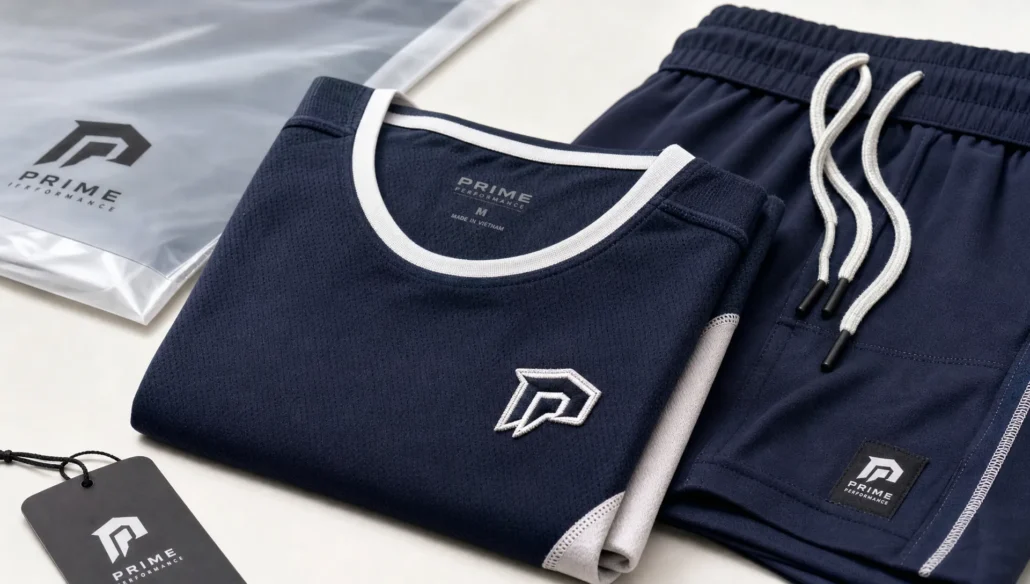
Premium sportswear rarely sells because of one feature alone. A buyer may notice the fabric first, but the purchase decision is usually confirmed by the finish: how clean the seams look, how sharp the logo sits, how the garment feels in the hand, how the packaging arrives, and whether the product still looks premium after repeated wear.
For sportswear brands, teams, gyms, and retailers, the right finish is not a small production detail. It is the difference between a garment that looks like a basic blank and one that feels retail-ready. In a competitive market, finishing is one of the clearest ways to communicate quality before a customer ever reads the product description.
That is why premium sportswear sells better when manufacturing, branding, printing, stitching, and final presentation all support the same message: this product is worth more.
The finish is where premium becomes visible
Premium sportswear starts with performance fabric, but it does not end there. The finish is the complete final impression of the garment. It includes the way panels are cut, how seams sit on the body, how logos are applied, how trims feel, how colors hold, and how the product is packed for delivery.
A sports shirt made from good fabric can still look cheap if the print cracks, the neckline twists, or the stitching is uneven. On the other hand, a well-finished garment can instantly feel more valuable because every detail appears intentional.
This matters because customers do not evaluate apparel in a laboratory. They judge it quickly through sight, touch, fit, and confidence. The cleaner the finish, the easier it is for them to believe the product will perform well during training, competition, travel, or daily wear.
For brands planning a higher-value collection, this is closely connected to how premium activewear can strengthen brand perception through quality, trust, and presentation.
What the right finish means in sportswear manufacturing
The right finish depends on the product, the audience, and the selling channel. A gym brand, a football club, and a private-label athleisure store may all need different finishing choices. Still, premium products usually share a few common qualities.
Clean construction
Construction quality is one of the first things buyers notice after trying on sportswear. Seams should look neat, feel comfortable, and support movement without pulling or irritation. In activewear, construction also affects performance because garments are stretched, washed, and worn frequently.
Flat seams, reinforced stress points, balanced stitching, and accurate panel matching can make a garment feel more durable and professional. Poor construction creates the opposite effect. A loose thread may look minor, but to a customer it can signal weak quality control.
Sharp branding
A premium finish makes branding look integrated rather than added at the last minute. Logos, labels, embroidery, prints, and woven patches should match the quality of the garment.
For example, sublimation printing can create vivid, long-lasting designs for teamwear and performance jerseys. Embroidery can add depth and prestige to polos, jackets, and uniforms. Screen printing can work well for bold graphics when the ink quality, placement, and curing are controlled properly.
The finish should support the brand identity. A minimalist performance line may need subtle labels and tonal logos, while a teamwear collection may need strong color contrast, names, numbers, and sponsor marks.
Better hand feel
Hand feel is the texture and comfort a customer experiences when touching or wearing the garment. In premium sportswear, buyers expect fabric that feels smooth, breathable, flexible, and appropriate for the activity.
Finishing can influence this through fabric selection, washing, brushing, moisture-wicking treatments, and the way trims are applied. A waistband that feels rough or a neck label that scratches can weaken the entire product experience, even if the main fabric is good.
Retail-ready presentation
The final stage of finishing is presentation. Folding, labeling, hang tags, barcodes, polybags, inserts, and packaging all shape the first impression. This is especially important for private-label brands and online stores because the unboxing experience often replaces the physical retail experience.
Packaging does not need to be excessive to feel premium. It needs to be clean, consistent, protective, and aligned with the brand.
Why finishing has a direct impact on sales
Premium finishing helps sportswear sell better because it reduces doubt. When customers see clear signs of quality, they feel more comfortable paying a higher price and recommending the product to others.
This expectation is not limited to clothing. In appearance-led markets, from performance apparel to aesthetic clinics such as Laprin Clinic, customers often judge quality by visible refinement, consistency, and confidence in the final result. Sportswear works the same way. The final look must support the promise.
It increases perceived value
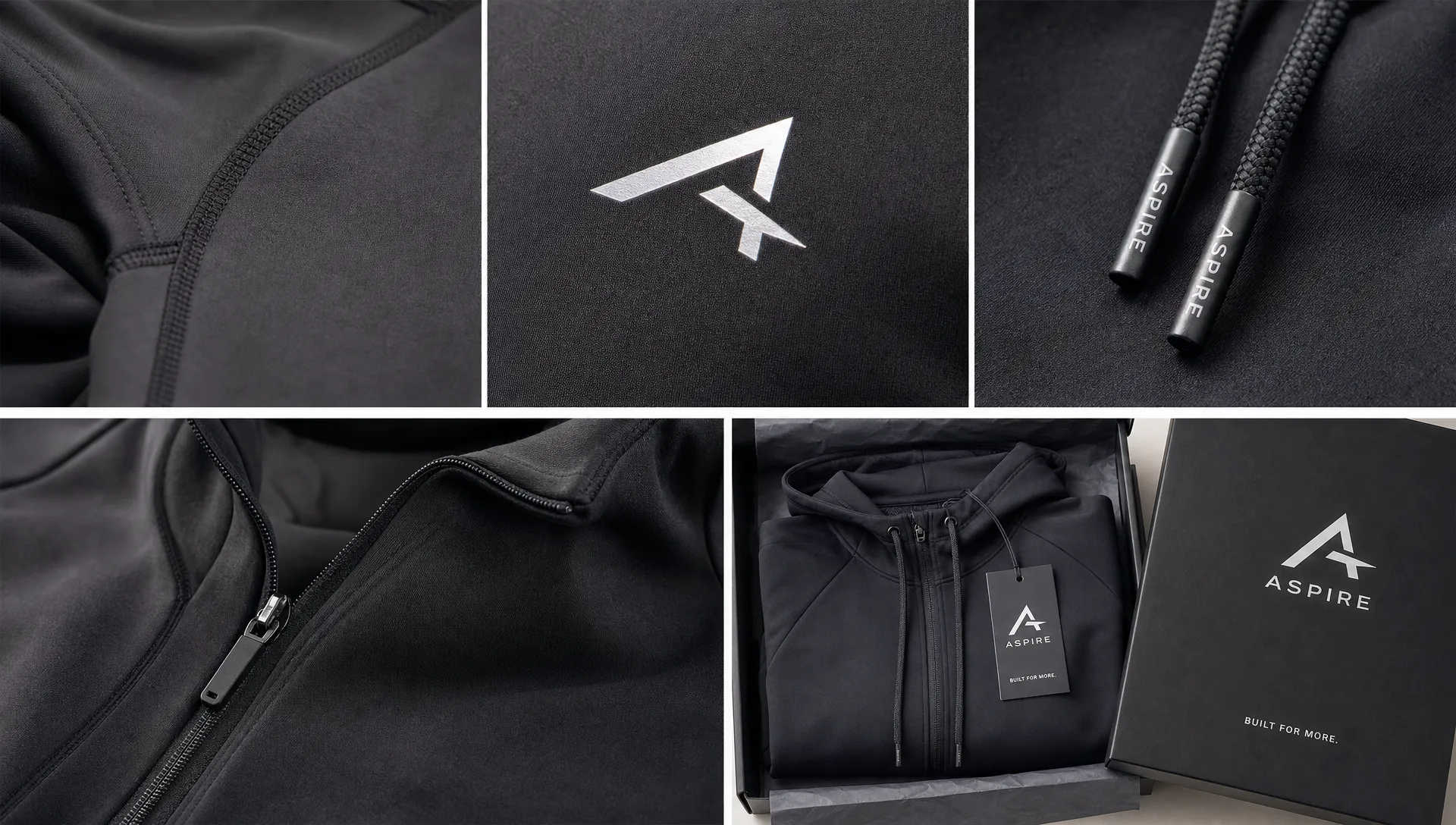
Perceived value is what a customer believes a product is worth before and after purchase. Finishing plays a major role in that belief. A hoodie with clean stitching, premium drawcords, soft fabric, and a strong logo application can justify a higher retail price than a similar hoodie with basic trims and uneven sewing.
For online brands, perceived value is even more important because customers cannot always touch the garment before buying. Product photography must capture details that communicate quality, such as seam lines, fabric texture, logo finish, and packaging.
It builds trust faster
Customers often make quick decisions. If a garment looks professional, they assume the brand is more reliable. If the finish looks inconsistent, they question the whole purchase.
This is why finishing matters for new brands. When customers do not yet know your name, the product must create trust on its own. Consistent finishing helps your apparel look established, even if your brand is still growing.
It supports repeat purchases
The first sale matters, but repeat sales build the business. If sportswear keeps its shape, color, logo quality, and comfort after use, customers are more likely to reorder.
Poor finishing often creates problems after the sale. Prints peel, seams open, labels fade, and fabrics lose structure. These issues lead to complaints, returns, and weaker reviews. A better finish helps protect the customer experience long after checkout.
Finish details that make premium sportswear more sellable
The following table shows how finishing choices influence customer perception and commercial performance.
| Finish area | What buyers notice | Why it improves sales |
|---|---|---|
| Stitching and seams | Neat lines, comfort, durability | Signals better quality and reduces complaints |
| Logo application | Sharp placement, color accuracy, strong adhesion | Makes branding look professional and memorable |
| Fabric finish | Softness, stretch recovery, breathability | Improves try-on experience and repeat wear |
| Trims and accessories | Zippers, drawcords, labels, waistbands | Adds a premium feel and supports higher pricing |
| Packaging | Clean folding, tags, protective packing | Creates a stronger first impression for retail and e-commerce |
| Quality control | Consistent sizing, fewer defects, reliable finishing | Builds trust and reduces returns |
Match the finish to the product category
The best finish is not always the most expensive option. It is the option that matches the product purpose, customer expectation, and brand position.
For performance shirts, breathability, stretch, moisture management, and lightweight construction may matter more than heavy decorative details. For hoodies, customers may focus more on softness, structure, rib quality, pocket finishing, and drawcords. For teamwear, color accuracy, sublimation quality, names, numbers, and consistent sizing are critical.
Private-label apparel requires another layer of finishing because the brand owner is often trying to create a distinct identity. Custom neck labels, woven labels, hang tags, packaging, and fabric selection can make the collection feel exclusive rather than generic.
This is where working with a capable manufacturing partner matters. A brand that wants custom fabrics, cut-and-sew production, sublimation, screen printing, embroidery, and packaging customization should evaluate whether the supplier can manage the entire finish consistently. If you are comparing production partners, it helps to understand what to look for when choosing an OEM sportswear manufacturer.
How the right finish improves brand positioning
Premium sportswear does not compete only on function. It competes on identity. Customers buy gym wear, team uniforms, and activewear because they want to feel confident, organized, athletic, stylish, or connected to a group.
Finishing supports that emotional value. A team uniform with sharp sublimation and consistent sizing creates unity. A private-label fitness set with smooth seams and custom packaging feels more desirable. A corporate sports uniform with clean embroidery looks more professional.
The finish tells customers where your brand belongs in the market. If the details look basic, buyers expect a lower price. If the details look refined, buyers are more open to premium pricing.
This is why sportswear brands should think beyond the product sketch. The final finish should be part of the brand strategy from the start, not a last-minute production decision.
Common finishing mistakes that make sportswear look cheaper
Many brands lose sales not because the product idea is weak, but because the final execution does not match the price point. Small mistakes can make a premium product feel average.
One common issue is choosing a logo technique without considering the fabric. A print method that works on a cotton hoodie may not perform the same way on stretch performance fabric. Another issue is using trims that do not match the garment quality. A low-quality zipper on an otherwise premium jacket can reduce the perceived value immediately.
Sizing inconsistency is another major problem. If one medium fits differently from the next, customers lose confidence. Premium sportswear needs controlled patterns, accurate cutting, and consistent sewing.
Brands should also avoid packaging that feels disconnected from the product. If a premium garment arrives poorly folded or without proper labeling, the experience feels incomplete.
A practical finishing checklist for sportswear brands
Before approving a sample or bulk order, brands should review the details that customers will notice most. A simple checklist can prevent expensive mistakes.
- Confirm fabric weight, stretch, recovery, breathability, and hand feel before bulk production.
- Review seam type, stitch density, thread quality, and comfort against the skin.
- Test logo placement, print clarity, embroidery density, and color matching.
- Check trims such as zippers, drawcords, elastic, buttons, labels, and patches.
- Approve custom neck labels, care labels, hang tags, and packaging style.
- Wash and wear-test samples to see how the finish performs over time.
- Agree on quality checkpoints before production begins.
This process is especially useful for online sellers and growing apparel brands that need reliable production without overcomplicating the order process. If you are planning your first collection, this guide on how to order custom sportswear online from manufacturers can help you understand the steps before production starts.
The role of sampling in getting the finish right
Sampling is where finishing decisions become real. A tech pack or design mockup may look perfect, but the sample shows how the fabric, stitching, print, trims, and fit work together.
Fast sampling is valuable because it allows brands to make improvements before bulk production. You may decide to adjust a logo size, change thread color, improve seam placement, switch packaging, or refine fabric weight. These changes are easier and less costly before the full order begins.
For premium sportswear, brands should avoid approving samples too quickly. Try the garment on. Stretch it. Wash it. Compare it to the target price point. Ask whether the finish matches the brand story you want customers to believe.
Why premium finishing is worth the investment
The right finish may add time and planning to production, but it can improve margins, reviews, customer loyalty, and brand reputation. Premium sportswear customers are not only buying fabric. They are buying confidence that the product will look good, feel good, and last.
A better finish can help your brand:
- Present products more professionally online and in stores.
- Support stronger pricing without relying only on discounts.
- Reduce quality complaints related to stitching, logos, trims, and packaging.
- Create a more memorable brand experience.
- Encourage customers, teams, and retailers to reorder.
In a crowded sportswear market, details are not secondary. They are often the reason one product sells while another gets ignored.
Frequently Asked Questions
What does finish mean in premium sportswear? Finish refers to the final details that shape how a garment looks, feels, performs, and is presented. It includes stitching, seams, logo application, trims, labels, fabric feel, packaging, and quality control.
Can finishing really help sportswear sell better? Yes. A clean and professional finish increases perceived value, builds customer trust, supports higher pricing, and helps reduce complaints or returns. Buyers often judge quality through visible and tactile details.
Which finishing method is best for custom sportswear branding? It depends on the garment and design. Sublimation is popular for full-color teamwear, embroidery works well for a premium textured logo, and screen printing suits bold graphics when applied correctly.
How can a brand make sure bulk production matches the approved sample? Brands should approve detailed samples, confirm materials and trims, document measurements and logo placement, and work with a manufacturer that follows clear quality checkpoints during production.
Build premium sportswear with a finish that sells
If your brand wants to sell premium sportswear, the finish must support the promise. Fabric, fit, stitching, printing, embroidery, trims, labels, and packaging all work together to shape customer confidence.
Extreme Sportswear helps brands, teams, and retailers develop custom sportswear, activewear, teamwear, and private-label apparel with cut-and-sew production, low MOQ options, fast sampling, and multiple customization methods. When the finish is planned from the start, your product is easier to trust, easier to price, and easier to sell.
To create sportswear that looks as premium as it feels, start with the details customers notice first and remember longest.